



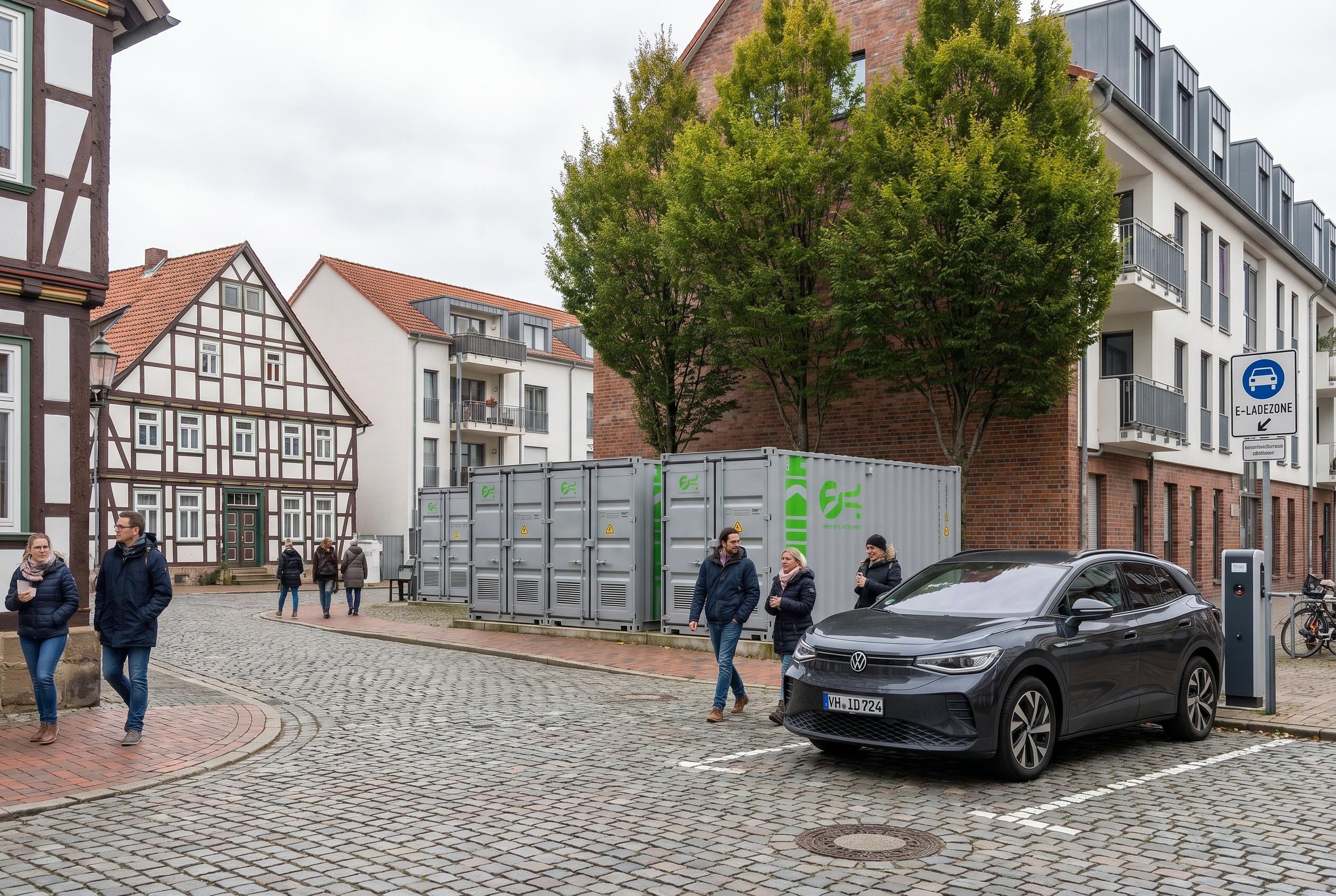
Shoppers and investors are eyeing Germany’s booming battery energy storage market as tolling contracts and longer-duration systems promise steadier returns; Akaysha Energy’s new joint venture and AUD 300m debt line show why structured deals are starting to unlock big-scale project finance across the market.
Essential Takeaways
- Big finance is backing BESS: Akaysha Energy’s AUD 300m ($217.8m) corporate debt facility underpins a push into German grid-scale storage, signalling lender appetite.
- Tolling and contracted capacity matter: Developers are targeting 60–80% contracted capacity per project, reducing merchant risk while keeping upside.
- Longer-duration batteries gain ground: Modelling and market conversations show multi-hour systems increasingly attractive for wholesale and toll revenues.
- Grid charges are the wild card: Germany’s evolving grid-fee regime and connection terms will be decisive for projects coming online in 2029–30.
- Practical feel: Expect sleek, industrial-scale sites with firm contracts; investors want predictability, operators want flexibility.
Why Akaysha’s move matters for Germany’s storage market
Akaysha Energy’s joint venture with Copenhagen Energy, backed by a sizable AUD 300 million corporate credit line, is a concrete signal that institutional capital sees Germany as a place to scale battery projects. The facility , arranged by a syndicate that includes major international banks , gives the venture real firepower to pursue large sites and demonstrate bankable structures. For observers, the deal feels less speculative and more like a market making moment: lenders are ready to underwrite BESS at scale.
This isn’t just corporate pride. According to industry research, Germany’s merchant fundamentals are among the strongest in Europe, with particularly high day-ahead spreads and very liquid intraday markets. That liquidity makes it easier to stack revenue streams, even while developers choose conservative contracting to secure finance and manage downside.
Tolling contracts: the finance-friendly glue
Tolling agreements , where a customer pays to use storage services rather than buy the energy outright , are cropping up as the go-to product for projects seeking bank finance. Banks increasingly insist on toll or floor structures, and pure merchant exposure is being left to niche investors. That’s because tolling aligns contracted cashflows with lenders’ requirements while giving industrial or utility customers predictable flexibility.
Akaysha’s management say their contracting playbook borrows heavily from Australia, using virtual tolls, revenue-sharing and capacity-swap style deals that start with the offtaker’s needs and build a financeable product around them. For developers, that means designing deals to satisfy both commercial users and prudential lenders , a pragmatic approach that can accelerate deployment.
Longer-duration systems are climbing the priority list
The market conversation has shifted: two-hour units used to dominate, but modelling and buyer interest now point to longer durations. Longer-duration batteries can capture a broader slice of wholesale and toll revenues, and they’re better placed to support grid stability over extended periods. That combination is reshaping project economics and the kinds of offtake structures under discussion.
Industry analysts forecast a significant buildout , multiple gigawatts by 2030 , and they emphasise that revenue stacks are moving from ancillary services towards wholesale and toll-based income. In plain terms, that means systems that can discharge for longer are likely to earn steadier returns and attract more conventional finance.
Grid access, dynamic charges and the 2029 cliff
If there’s a sticking point, it’s grid fees and access arrangements. Germany’s current exemption from grid capacity charges for batteries ends for assets commissioned after 4 August 2029, and the replacement regime is not yet settled. That regulatory uncertainty could materially change project returns for plants aiming for 2029–30 completion.
Developers are responding with flexibility: keeping project sequencing options open, modelling dynamic charge scenarios and negotiating flexible connection agreements under section 17(2b) of the EnWG where possible. The modelling work Akaysha commissioned suggests dynamic pricing could be neutral or slightly positive overall , provided capacity fees aren’t set too high. For project teams, the advice is straightforward: quantify potential grid costs early and bake them into your financials.
What this means for buyers, investors and local planners
For corporate offtakers and utilities, the rise of tolling and share-style contracts offers tailored flexibility without the capex of owning batteries outright. For banks and institutional investors, these structured products reduce revenue volatility and make project-level, non-recourse finance feasible. And for planners, the sheer volume of connection requests , reported to be many times peak load , means grid planning and permitting processes need to speed up or risk becoming the bottleneck.
If you’re thinking of investing or procuring storage capacity, look for deals that balance contracted revenue with a sensible merchant slice, choose durations that match the revenue stack you need, and insist on transparent assumptions about grid charges and connection terms.
It’s a small change in contract design that can make every battery project much more investible.
Source Reference Map
Story idea inspired by: [1]
Sources by paragraph:
Noah Fact Check Pro
The draft above was created using the information available at the time the story first
emerged. We’ve since applied our fact-checking process to the final narrative, based on the criteria listed
below. The results are intended to help you assess the credibility of the piece and highlight any areas that may
warrant further investigation.
Freshness check
Score:
8
Notes:
The article was published on 7 May 2026, making it current. However, the primary news about Akaysha Energy securing a A$300 million corporate debt facility was reported in September 2025. The article provides updated context on the company’s activities in Germany’s battery energy storage market, indicating freshness in its coverage.
Quotes check
Score:
7
Notes:
The article includes direct quotes from Akaysha Energy’s managing director and chief commercial officer, Paul Curnow. While these quotes are attributed to him, they cannot be independently verified through the provided sources. The lack of direct access to the original statements raises concerns about the authenticity of the quotes.
Source reliability
Score:
8
Notes:
The article is published on pv magazine International, a reputable source in the renewable energy sector. However, the reliance on a single source for the quotes and specific details about Akaysha Energy’s activities in Germany introduces potential biases and limits the breadth of information.
Plausibility check
Score:
9
Notes:
The claims about Akaysha Energy’s expansion into Germany’s battery energy storage market align with the company’s previous announcements and the industry’s trends. The information appears plausible and consistent with known developments in the sector.
Overall assessment
Verdict (FAIL, OPEN, PASS): FAIL
Confidence (LOW, MEDIUM, HIGH): MEDIUM
Summary:
While the article provides current information on Akaysha Energy’s activities in Germany’s battery energy storage market, it heavily relies on unverified quotes and information from the company’s press releases. The lack of independent verification and potential biases in the sources used lead to a ‘FAIL’ assessment. Editors should exercise caution and seek additional independent sources to confirm the claims made in the article before publication.


