



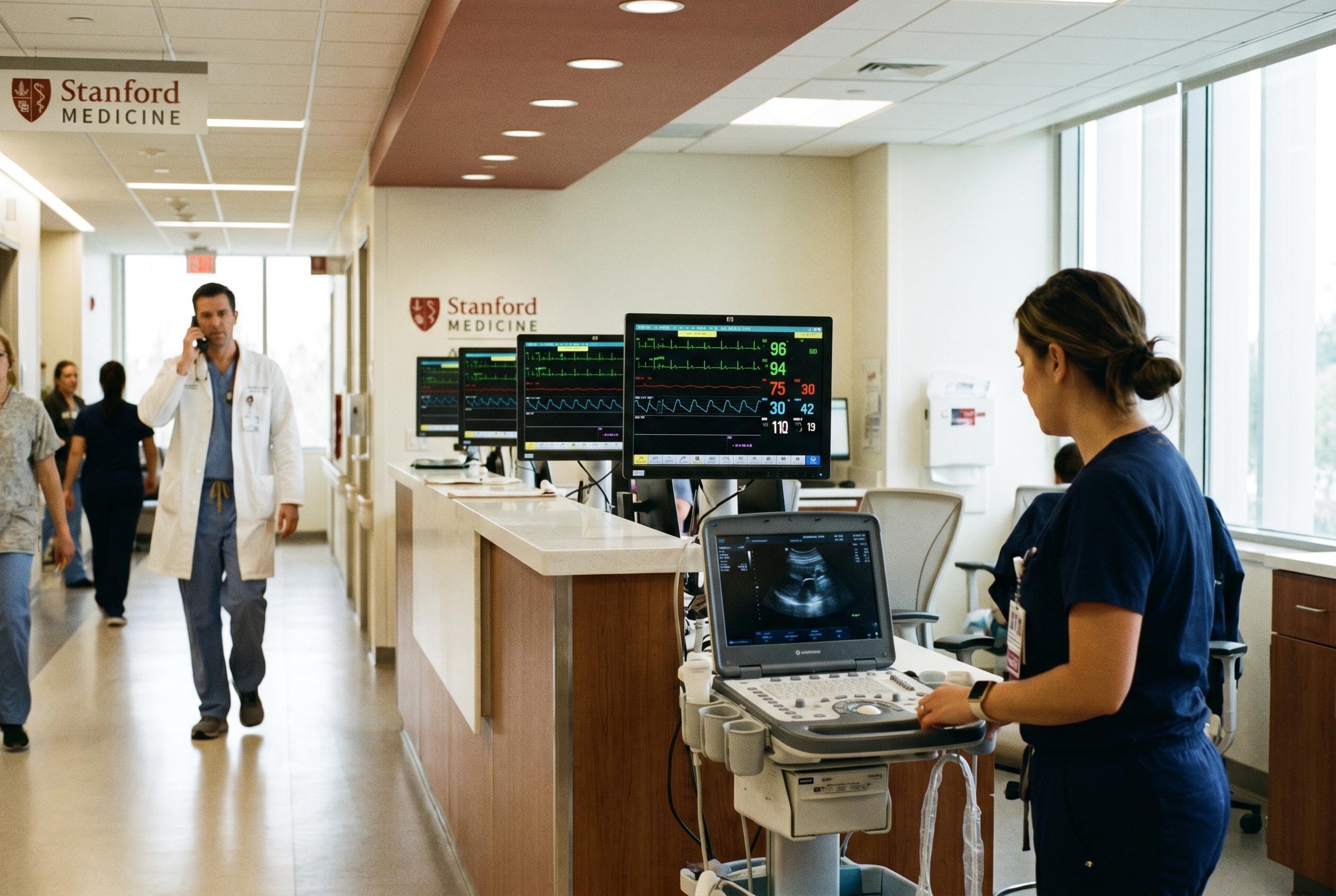
Shoppers and investors are turning to AI-powered healthcare tools as inflation and macro uncertainty bite; three stocks , GeneDx, Medtronic and Stryker , illustrate how genomics, surgical robotics and hospital platforms could reshape diagnostics, treatment and research. Here’s a clear-eyed look at what each company actually does and why it matters.
Essential Takeaways
- GeneDx focus: genomic sequencing for rare and paediatric disease, backed by an AI interpretation engine and a large rare‑disease dataset , high upside, and high execution risk.
- Medtronic scale: huge device footprint plus AI-rich surgical tools like the Hugo system, steady R&D and a modest dividend , stable exposure to workflow digitisation.
- Stryker strengths: robotics (Mako), orthopaedics and SmartHospital software , strong growth history but valuations and debt demand scrutiny.
- Practical risk note: these names tie to structural AI trends, not a quick macro hedge; expect volatility from reimbursement, recalls, cyber incidents and funding.
- Investor tip: match exposure to your time horizon , genomics may be a speculative growth play, device leaders are nearer to cash flow.
Why GeneDx is the genomics play to know , and why it’s delicate
GeneDx sits squarely at the intersection of AI and clinical genomics, offering whole‑exome and whole‑genome sequencing interpreted with an AI platform that helps clinicians spot rare or hereditary conditions. That gives the business a quietly powerful sensory cue: a clinician opening a report sees patterns they otherwise might miss, which can be transformative for families with undiagnosed children.
The company also monetises a growing rare‑disease dataset for biopharma partnerships, a classic long‑tail asset that becomes more valuable as more cases flow through the pipeline. But it’s not all runway and optimism; the stock remains loss‑making and is sensitive to reimbursement shifts and execution missteps. Recent guidance changes and a US$100m term loan underline the funding trade‑offs investors must weigh.
If you like the genomic data story, pressure‑test assumptions: how fast can revenue scale, will margins improve with volume, and how dependent is growth on third‑party payers? For long‑term buyers, this is a high‑reward but finely balanced idea.
Medtronic: size, surgical AI and an installed base that matters
Medtronic is the heavyweight here , think pacemakers, heart valves and a broad surgical and neurology footprint , and size brings a different kind of reassurance. The company pairs a roughly US$35.5bn revenue base with meaningful R&D investment, and its Hugo robotic‑assisted surgery platform shows how devices are becoming software‑driven tools rather than stand‑alone implants.
A practical advantage of that installed base is recurring relationships with hospitals and clinicians, plus the ability to push software updates and analytics into workflows already in place. That matters when you’re betting on AI improving efficiency in theatres and wards rather than hoping for speculative breakthroughs.
Risks are pragmatic: cybersecurity incidents, product recalls and stiff competition in diabetes and cardiac care can dent sentiment quickly. For income‑minded investors the roughly 3.6% yield is a useful cushion, but temper expectations , growth looks steady rather than spectacular.
Stryker’s robotics and hospital platforms , growth with a valuation caveat
Stryker pairs an orthopaedic implant franchise with robotics like Mako and hospital platforms that use AI to smooth workflows, and historically it’s delivered double‑digit earnings growth. The tactile reality is obvious: surgeons and theatre teams notice smoother procedures and more predictable recoveries when robotics improve accuracy, and hospitals prize systems that trim length of stay.
That said, the stock carries a high multiple and meaningful leverage, and a recent cyber incident showed how operational disruptions can ripple through a supply chain. So while the underlying market for joint replacements and surgical automation is appealing, investors need to weigh growth narratives against valuation and balance‑sheet risk.
If you want exposure to hospital automation, Stryker offers a consolidated way to play the trend , just be prepared to watch execution closely.
How AI actually helps hospitals, surgeons and researchers
AI in this context isn’t a buzzword used at conferences; it’s practical tooling that speeds image reading, flags genomic variants, assists surgeons with video overlays and powers telemedicine triage. In surgery, AI‑enhanced video and robotic platforms guide precision and may reduce surgeon fatigue, while in genomics algorithms prioritise variants that are clinically meaningful.
Industry reporting and product pages make the point: robotic systems combine hardware, software and training to change how procedures are planned and delivered. That convergence matters because it converts one‑off purchases into longer‑running software and services relationships, which in turn can stabilise revenue if hospitals sign multi‑year contracts.
For investors, the takeaway is to differentiate between companies selling one‑time hardware and those building recurring, software‑driven services. The latter tend to be better positioned to monetise AI over the long run.
How to choose between growth, yield and speculative genomic upside
Start with horizon and risk appetite. If you want steady cash flow and some AI exposure, medtech giants with large installed bases and dividends make sense. If you’re hunting potential outsized returns and can tolerate swings, genomics firms with unique datasets are the speculative ticket. For balanced exposure, combine a device leader with a growthy robotics or platform play.
Practically, check reimbursement trends for diagnostics, read product recall histories for devices, and scan cybersecurity risk disclosures , small operational shocks can change a thesis fast. Use a watchlist to follow quarterly catalysts: new approvals, the rollout of robotic systems, or commercial deals using genomic datasets.
And remember, AI is a multi‑year transition in healthcare; your patience will likely be repaid if you’ve picked companies that convert technical capability into recurring revenue.
It’s a small change that can make every investment thesis a little smarter.
Source Reference Map
Story idea inspired by: [1]
Sources by paragraph:
Noah Fact Check Pro
The draft above was created using the information available at the time the story first
emerged. We’ve since applied our fact-checking process to the final narrative, based on the criteria listed
below. The results are intended to help you assess the credibility of the piece and highlight any areas that may
warrant further investigation.
Freshness check
Score:
8
Notes:
The article was published on May 6, 2026, and appears to be original content. However, similar articles were published on April 7, 2026, and April 27, 2026, discussing the same companies and themes. This suggests the topic is currently trending, but the content may not be entirely fresh. ([simplywall.st](https://simplywall.st/stocks/us/healthcare/nasdaq-wgs/genedx-holdings/news/if-you-believe-in-ai-healthcare-then-these-three-stocks-coul?utm_source=openai))
Quotes check
Score:
7
Notes:
The article includes direct quotes from company websites and other sources. However, without access to the original sources, it’s challenging to verify the accuracy and context of these quotes. The reliance on company websites raises concerns about potential bias and the need for independent verification.
Source reliability
Score:
6
Notes:
The article originates from Simply Wall St, a financial analysis platform. While it provides detailed analyses, the platform’s content is often based on aggregated data and may lack original reporting. This raises questions about the independence and originality of the content.
Plausibility check
Score:
8
Notes:
The claims about AI’s impact on healthcare and the potential of the mentioned companies are plausible and align with current industry trends. However, the article lacks specific data points and references to support these claims, which diminishes its credibility.
Overall assessment
Verdict (FAIL, OPEN, PASS): FAIL
Confidence (LOW, MEDIUM, HIGH): MEDIUM
Summary:
The article presents plausible claims about AI’s impact on healthcare and the potential of the mentioned companies. However, it lacks original reporting, relies heavily on company websites for quotes, and has limited independent verification, raising concerns about its credibility and objectivity. ([simplywall.st](https://simplywall.st/stocks/us/healthcare/nasdaq-wgs/genedx-holdings/news/if-you-believe-in-ai-healthcare-then-these-three-stocks-coul?utm_source=openai))


