



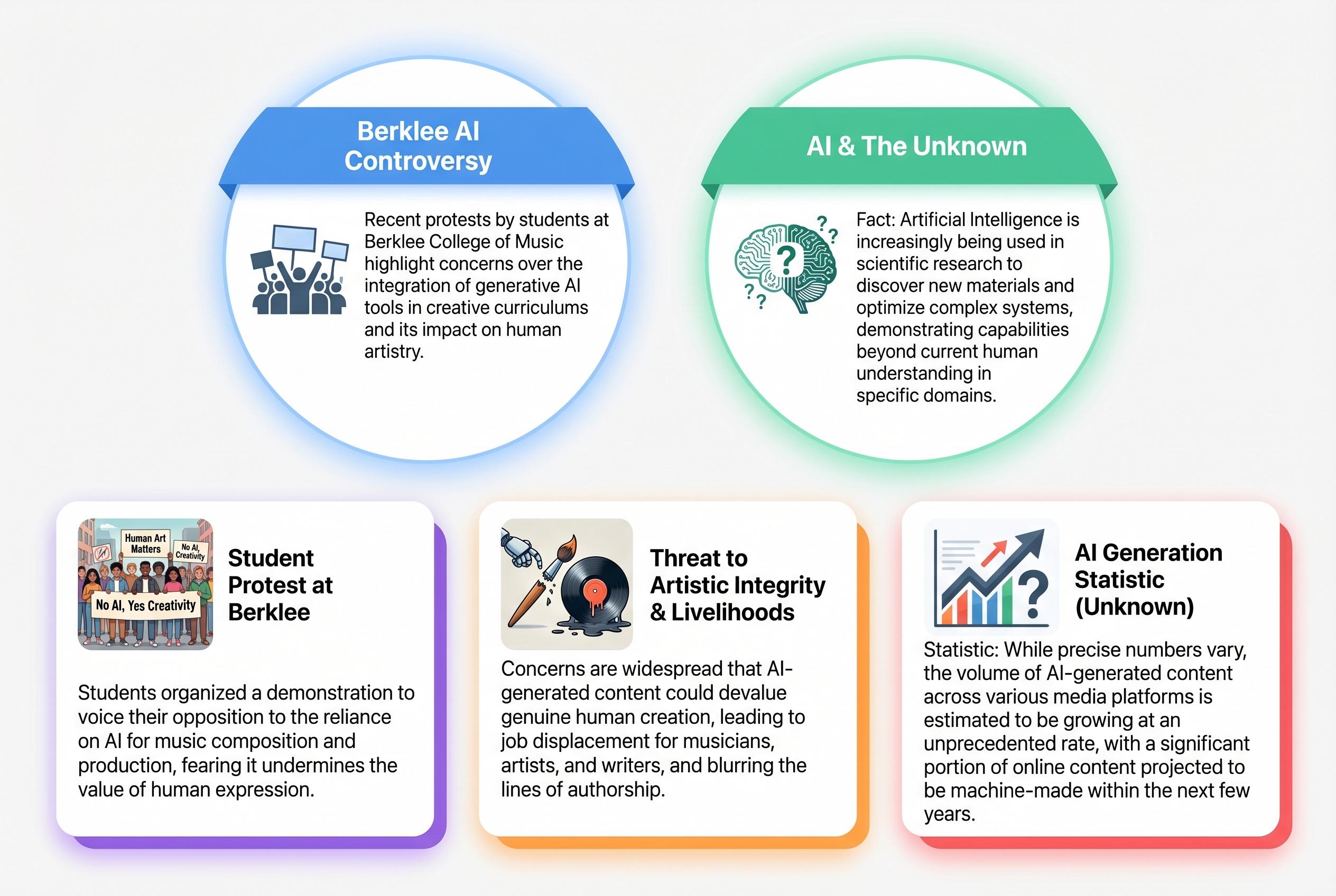
Hundreds of students at Berklee College of Music are protesting a new AI and songwriting class, igniting a debate on whether music schools should embrace generative tools that many fear threaten artistic integrity and livelihoods.
Hundreds of students at Berklee College of Music in Boston have objected to a new class on generative AI and songwriting, turning a campus course into a wider argument about whether music education should make room for tools many artists view as a threat. The dispute centres on “Bots and Beats: AI and the Future of Songwriting”, a two-credit offering that has drawn a petition demanding Berklee end what critics see as the school’s embrace of generative AI.
The petition, which had gathered 418 signatures by Tuesday, argues that systems such as ChatGPT and related creative tools are built on the unauthorised use of artists’ work and could damage both livelihoods and the culture of the industry. Alumni and current students left sharply worded comments beneath it, saying they felt let down by an institution long associated with training working musicians. One graduate told the petition page that the move was “very unfortunate behaviour from an esteemed creative/music college”, while another said they would be angry if asked to rely on AI instead of developing their own craft.
Berklee’s course description takes a more ambivalent line. It says students will examine how AI can assist songwriting while also considering its limits, and will study the technology’s effects on the music business and on the prospects for future composers and performers. The college has also set out broader guiding principles for AI and machine learning, saying its approach should reflect its values and help artists navigate a changing industry. According to Berklee, the school has a responsibility to prepare students for technologies reshaping the creative economy.
The controversy at Berklee fits into a much larger unease across the arts, where musicians, writers and other creators have worried that generative systems could flatten originality, dilute training and concentrate value away from human labour. Reporting by the Boston Globe has shown similar concerns among faculty and students over the use of AI tools in creative classes, while the college’s own statements suggest it sees the issue less as a choice between technology and tradition than as a test of how to teach future professionals to work within both.
Source Reference Map
Inspired by headline at: [1]
Sources by paragraph:
Source: Noah Wire Services
Noah Fact Check Pro
The draft above was created using the information available at the time the story first
emerged. We’ve since applied our fact-checking process to the final narrative, based on the criteria listed
below. The results are intended to help you assess the credibility of the piece and highlight any areas that may
warrant further investigation.
Freshness check
Score:
10
Notes:
The article is dated April 15, 2026, and reports on a recent petition against Berklee College of Music’s new AI songwriting course, ‘Bots and Beats: AI and the Future of Songwriting’. The course description is available on Berklee’s official website, indicating the information is current and original. ([college.berklee.edu](https://college.berklee.edu/courses/sw-303?utm_source=openai))
Quotes check
Score:
8
Notes:
The article includes direct quotes from alumni expressing concerns about the course. While the exact wording matches the petition comments, the absence of specific names or verifiable sources for these quotes makes independent verification challenging. ([futurism.com](https://futurism.com/artificial-intelligence/berklee-college-ai-music?utm_source=openai))
Source reliability
Score:
7
Notes:
The article is published by Futurism, a technology-focused news outlet. While it is a known publication, it is not as widely recognized as major news organizations like the BBC or Reuters. The article cites a petition and includes comments from alumni, but the lack of direct links to these sources raises questions about the depth of verification. ([futurism.com](https://futurism.com/artificial-intelligence/berklee-college-ai-music?utm_source=openai))
Plausibility check
Score:
9
Notes:
The concerns about AI’s impact on the music industry are plausible and align with ongoing debates in the creative sector. The course description from Berklee College of Music is publicly accessible, confirming the course’s existence. ([college.berklee.edu](https://college.berklee.edu/courses/sw-303?utm_source=openai))
Overall assessment
Verdict (FAIL, OPEN, PASS): PASS
Confidence (LOW, MEDIUM, HIGH): MEDIUM
Summary:
The article provides current and plausible information about a student petition against Berklee College of Music’s new AI songwriting course. However, the reliance on unverified quotes and the lack of direct links to primary sources reduce the overall confidence in the content’s accuracy. Further verification from independent sources is recommended before publication.


