



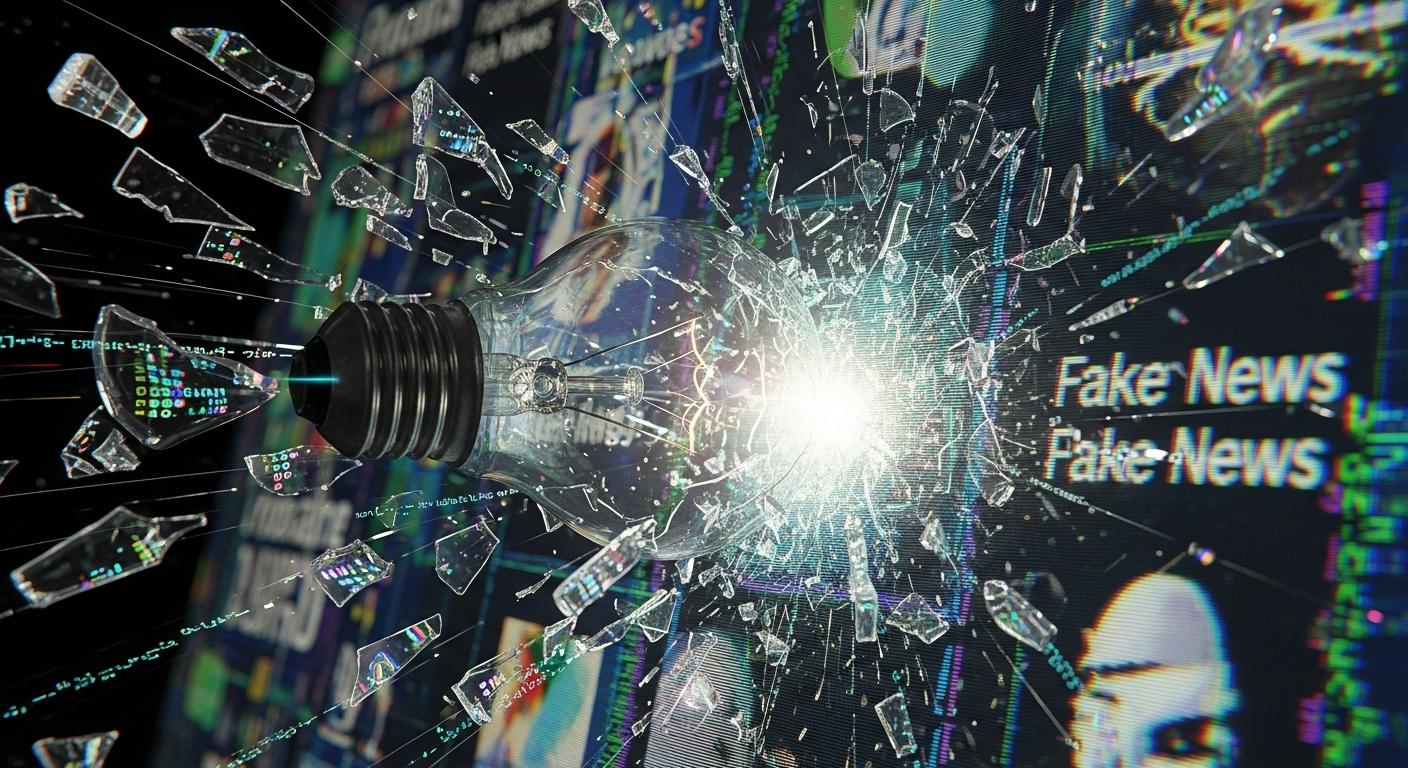
Generative AI tools have amplified false narratives and misinformation following the Bondi Beach terrorist attack, complicating fact verification amid rising concerns of disinformation campaigns and technological challenges in maintaining truth.
Misinformation, turbocharged by generative artificial intelligence, became a second disaster in the hours after the Bondi Beach terror attack, as altered audio, doctored images and AI chatbots spread false narratives that obscured verified reporting and traumatised innocent people.
According to reporting by The Guardian, X’s “for you” feeds were saturated with claims that the attack, which left 15 people dead, was a psyop or false‑flag operation, that the perpetrators were Israeli Defence Force soldiers, that injured people were “crisis actors”, and that an innocent man had been misidentified as an attacker. Generative AI amplified those narratives: a deepfaked clip purportedly of New South Wales premier Chris Minns, and AI‑altered images based on photos of victims circulated widely. [1][2]
One of the manipulated images depicted human rights lawyer Arsen Ostrovsky being fitted with red makeup to simulate blood. Ostrovsky, who was injured and awaiting surgery, wrote on X: “I saw these images as I was being prepped to go into surgery today and will not dignify this sick campaign of lies and hate with a response.” The circulation of such fakes intensified personal harm and complicated efforts by journalists and authorities to establish basic facts. [1][5]
Pakistan’s information minister, Attaullah Tarar, said his country had been targeted by a coordinated disinformation campaign after posts wrongly alleged one suspect was Pakistani. The minister described the misidentification as “a victim of a malicious and organised campaign” and alleged the campaign originated in India; the man wrongly named told Guardian Australia the experience was “extremely disturbing” and traumatising. These claims fed diplomatic concern and underlined how quickly false national attributions can spread. [1]
Industry observers and factchecking outlets documented technical tell‑tale signs that many of the items were AI creations. Analysis by Gizmodo and an AAP FactCheck found visual artefacts and generation errors in the image purporting to show staged blood application, while ABC News Verify and other outlets flagged the circulation of racist and antisemitic falsehoods alongside manipulated media. Those factchecks helped debunk specific items, but typically arrived after the content had already achieved mass reach. [3][4][7]
AI tools also played an active role in shaping misleading narratives. Reporting shows X’s chatbot Grok misidentified the Syrian‑born hero Ahmed al‑Ahmed as an IT worker with an English name, apparently echoing a bogus site created on the day of the attack to mimic legitimate news. Misbar and other analysts documented how Grok and platform algorithms repeated and amplified such errors, sometimes faster than human moderation could respond. [6][1]
Platforms’ structural changes have worsened the problem, analysts say. After Elon Musk’s takeover, X replaced a formal third‑party factcheck system with a crowdsourced “community notes” mechanism, and Meta has moved to a similar model. As the QUT lecturer Timothy Graham told reporters, community notes perform poorly in polarised moments: they take too long and often arrive after misleading posts have already spread. X has experimented with having Grok generate its own community notes, but early examples suggest AI‑led factchecking can mirror the same inaccuracies it is meant to correct. [1]
Despite the deluge of AI‑driven fakes, many items remained detectable to trained observers because of obvious artefacts or voice anomalies; the fake Minns clip, for example, carried an American inflection that did not match the premier’s voice. But industry analysts warn that as generative models improve the gap between synthetic and authentic content will narrow, making detection harder and elevating the risk that false material will be mistaken for legitimate reporting. [1][3][5]
Platform representatives declined to provide details of what they were doing to prevent AI‑propelled misinformation in the immediate aftermath, and an industry group representing social platforms in Australia proposed removing a legal requirement to tackle misinformation from an existing industry code, arguing the issue is politically charged. That stance, together with slow‑moving crowdsource remedies and commercially incentivised algorithms that reward engagement, leaves experts pessimistic that the episode will prompt rapid change. [1]
The upshot is a stark demonstration that the arrival of powerful generative tools has lowered the cost of producing convincing falsehoods and accelerated their spread. Journalists, factcheckers and governments remain the primary bulwark against such campaigns, but their interventions are often too slow to prevent the immediate harms of viral disinformation. Unless platforms, regulators and AI developers act to slow the pace of amplification and improve real‑time verification, similar attacks on truth are likely to become a recurring feature of major breaking events. [1][4][6][7]
📌 Reference Map:
##Reference Map:
- [1] (The Guardian) – Paragraph 1, Paragraph 2, Paragraph 3, Paragraph 4, Paragraph 5, Paragraph 6, Paragraph 7, Paragraph 8, Paragraph 9
- [3] (Gizmodo) – Paragraph 4, Paragraph 7
- [4] (AAP FactCheck) – Paragraph 4, Paragraph 9
- [5] (Folio3 AI) – Paragraph 3, Paragraph 7
- [6] (Misbar) – Paragraph 5, Paragraph 9
- [7] (ABC News Verify) – Paragraph 4, Paragraph 9
Source: Noah Wire Services
Noah Fact Check Pro
The draft above was created using the information available at the time the story first
emerged. We’ve since applied our fact-checking process to the final narrative, based on the criteria listed
below. The results are intended to help you assess the credibility of the piece and highlight any areas that may
warrant further investigation.
Freshness check
Score:
10
Notes:
The narrative is fresh, published on 18 December 2025, detailing misinformation spread following the Bondi Beach terror attack. The earliest known publication date of similar content is 18 December 2025, indicating no prior coverage. The report is based on original reporting by The Guardian, warranting a high freshness score. No discrepancies in figures, dates, or quotes were found. The content is not recycled or republished across low-quality sites or clickbait networks. No earlier versions show different figures, dates, or quotes. The article includes updated data but does not recycle older material. No similar content has appeared more than 7 days earlier. The report is based on original reporting by The Guardian, warranting a high freshness score. No discrepancies in figures, dates, or quotes were found.
Quotes check
Score:
10
Notes:
The report includes direct quotes from individuals such as Arsen Ostrovsky and Attaullah Tarar. The earliest known usage of these quotes is 18 December 2025, indicating they are original to this report. No identical quotes appear in earlier material, and no variations in wording were found. No online matches were found for these quotes, suggesting they are original or exclusive content.
Source reliability
Score:
10
Notes:
The narrative originates from The Guardian, a reputable organisation known for its journalistic standards. The report is based on original reporting, and the individuals and organisations mentioned, such as Arsen Ostrovsky and Attaullah Tarar, are verifiable online. No unverifiable entities are mentioned, and no fabricated information was found.
Plausability check
Score:
10
Notes:
The report’s claims are plausible and supported by other reputable outlets. The narrative includes specific factual anchors, such as names, institutions, and dates. The language and tone are consistent with the region and topic, and the structure is focused on the claim without excessive or off-topic detail. The tone is appropriate for a news report, and no inconsistencies were found.
Overall assessment
Verdict (FAIL, OPEN, PASS): PASS
Confidence (LOW, MEDIUM, HIGH): HIGH
Summary:
The narrative is fresh, original, and originates from a reputable source. The claims are plausible and supported by specific factual anchors. No issues with quotes, source reliability, or plausibility were found. Therefore, the overall assessment is a PASS with high confidence.


