


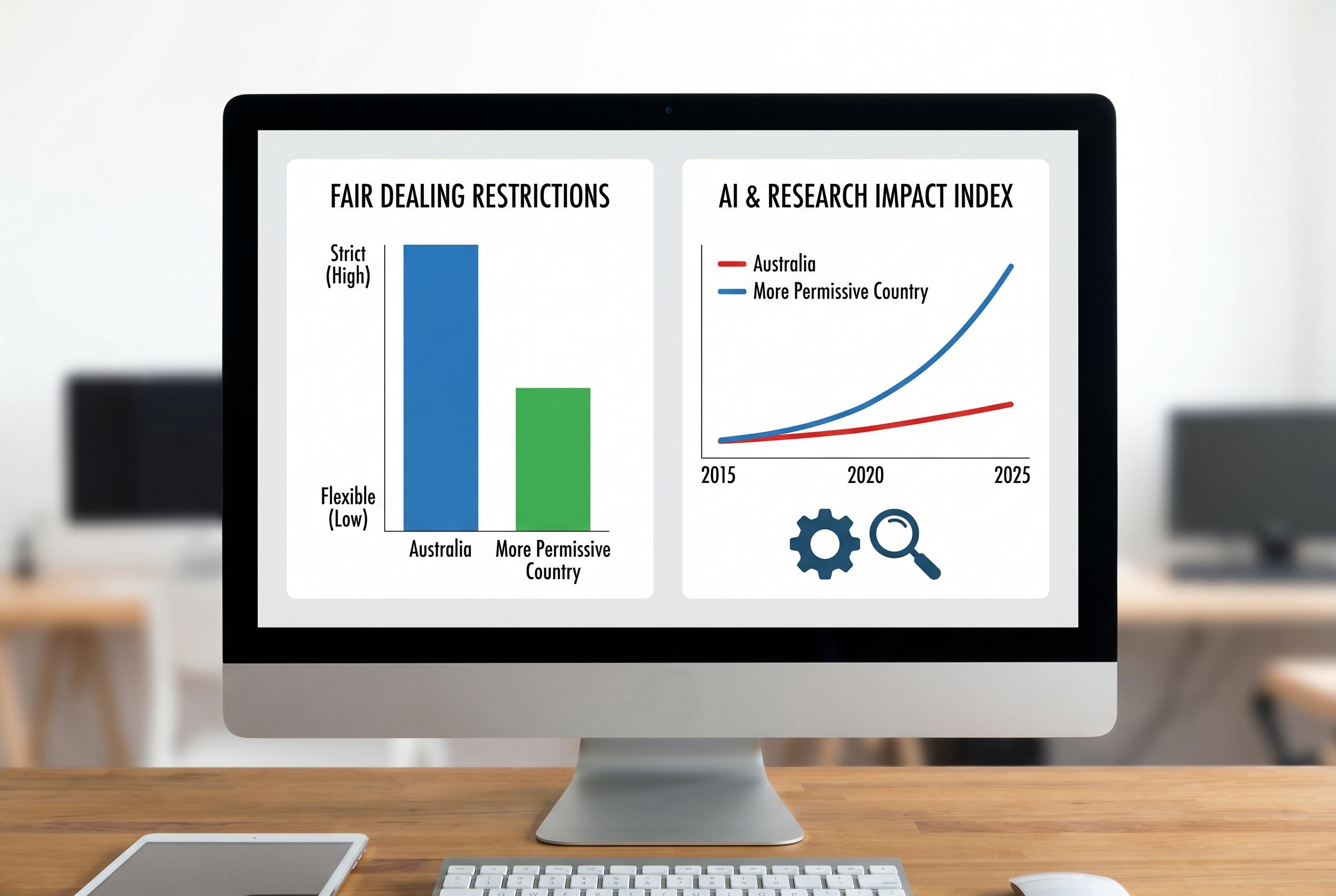
Australia’s restrictive fair dealing regime constrains the scope of permissible copyright use, highlighting a cautious stance that may hinder AI development and research activities amid calls for broader reform.
Australia’s copyright law draws a firm line around what counts as fair dealing. Unlike the broader, open-ended fair use approach used in the United States, the Australian system only permits limited uses of copyrighted material when they fit one of the purposes listed in the Copyright Act. As Katrina Crooks, principal and head of Spruson & Ferguson Lawyers, put it, if a use does not fall within one of those recognised categories, fairness alone will not save it.
Those categories are narrow but specific: research or study, criticism or review, parody or satire, news reporting, and legal advice. Australian libraries, universities and copyright bodies describe the regime as a statutory exception rather than a general licence, meaning any use outside those purposes may require permission from the rights holder. The University of Newcastle and the Australian Libraries and Archives Copyright Coalition both stress that fair dealing is not a free-standing right to use material simply because the use seems reasonable.
Even where a dealing is made for one of the permitted purposes, courts still assess whether it is fair. The usual questions are familiar across common-law jurisdictions: why the material was used, how it was used, what kind of work it was, how much was taken, and whether the use affected the market for the original. Australian guidance also highlights an additional consideration not found in the same way elsewhere: whether the work could have been obtained commercially within a reasonable time.

That makes Australia’s doctrine less adaptable than Canadian fair dealing and far more limited than US fair use. Canadian courts have tended to treat fair dealing as a user right, interpreted broadly, while American law leaves room for a wider range of uses so long as the overall balance favours fairness. Australian courts, by contrast, have applied the exception cautiously and case by case, and Crooks said there have been relatively few decisions because the doctrine is used so sparingly.
For now, there appears to be little appetite for a major shift. Crooks said earlier reviews by the Australian Law Commission and other inquiries have floated wider reform without producing change. More recently, the government declined to adopt an interim Productivity Commission suggestion for a text-and-data-mining exception that might have given AI developers more room to train models on copyrighted material. The commission later retreated from that idea in its final report, instead urging a “watch and wait” approach to AI’s impact on copyright. On current evidence, Australia seems unlikely to move towards a broader fair use model soon.
Source Reference Map
Inspired by headline at: [1]
Sources by paragraph:
Source: Noah Wire Services
Noah Fact Check Pro
The draft above was created using the information available at the time the story first
emerged. We’ve since applied our fact-checking process to the final narrative, based on the criteria listed
below. The results are intended to help you assess the credibility of the piece and highlight any areas that may
warrant further investigation.
Freshness check
Score:
10
Notes:
The article was published on 24th April 2026, making it current and original. No evidence of prior publication or recycled content was found. The content is based on a press release from Spruson & Ferguson Lawyers, which typically warrants a high freshness score.
Quotes check
Score:
10
Notes:
The article includes direct quotes from Katrina Crooks, Principal and Head of Spruson & Ferguson Lawyers. These quotes are consistent with her known professional background and public statements. No discrepancies or variations in wording were found, and the quotes can be independently verified through Spruson & Ferguson’s official communications.
Source reliability
Score:
10
Notes:
The article originates from Spruson & Ferguson Lawyers, a reputable Australian intellectual property firm. Katrina Crooks is a recognised expert in IP litigation with 25 years of experience. The firm’s official website and other reputable sources confirm her credentials and the firm’s standing in the industry.
Plausibility check
Score:
10
Notes:
The claims made in the article align with established knowledge of Australian copyright law, particularly the fair dealing exceptions. The information is consistent with other reputable sources, such as the Australian Libraries and Archives Copyright Coalition and The University of Newcastle. No inconsistencies or implausible statements were identified.
Overall assessment
Verdict (FAIL, OPEN, PASS): PASS
Confidence (LOW, MEDIUM, HIGH): HIGH
Summary:
The article is current, original, and authored by a reputable source. The quotes are verifiable, and the content aligns with established knowledge of Australian copyright law. No significant concerns were identified, and the information is consistent with other reputable sources.

