

Listen to the article
If you’re like most hunters in the lower 48, the allure of hunting in Alaska has probably always been on your mind. There’s something about that rugged and beautiful state that just captures our imaginations. And when you think of Alaska, it is hard not to dream of all the big game hunting opportunities there are. If you’re looking for a true wilderness adventure and have the DIY hunting spirit, you need to seriously think about DIY caribou hunting. Due to the rough terrain and remote locations that caribou tend to inhabit, you’re in for a real adventure should you decide to pursue this species.
But first, planning a DIY hunt is not always a simple thing – there’s a lot of planning that’s needed to do it right. You also need to realize that hunting caribou is not often as simple as just driving to a hunting location, getting out, shooting an animal, and packing up again. After flying into a major airport from your home state, you’ll very likely need to catch a smaller plane to a more rural setting. In some cases, you may even need an outfitter or bush pilot to fly you somewhere truly remote, like we did, for a caribou drop camp. Drop camp hunts involve a pilot literally dropping you off somewhere in the remote wilderness, where it is truly you against the natural world and little if any human influence for miles and miles. This kind of hunt is the one that really captures the DIY caribou hunting spirit. So if this sounds interesting to you, keep reading below for more information about caribou hunting.
Caribou Basics
Many people confuse caribou and reindeer, thinking they are the same thing. Technically, they are different subspecies – what most people know as “reindeer” occur in northern Europe and Russia, while “caribou” are the North American subspecies. Caribou are between a deer and elk size-wise, weighing in at about 300-400 pounds. Both males and females grow antlers, but only males get the large sweeping semi-circle antlers that they are known for.
They also have large hooves that act like snowshoes to help them move across both the soft tundra ground in summer and deep snows in winter. Yet, they are surprisingly fast moving across the thick brush of the tundra with this giant footwear. Caribou are migratory herd animals, moving several hundred miles between summer and winter ranges in very large groups. Some smaller herds do not migrate at all, however, and are called “resident herds” for that reason. They still cover a lot of ground on a daily basis, but they typically occupy the same general area throughout the year. These are the herds we targeted during our DIY caribou hunting drop camp.
Where to Hunt Caribou
As mentioned, caribou occur throughout Alaska and Canada and there are great hunting opportunities on both sides of the border. But for an easier process (regulation-wise), Alaska caribou hunts get the winning vote for most U.S. citizens. You don’t have to go through as many hoops when you’re a resident of the same country. Given the remote nature of caribou hunts, you should plan on at least a 10 to 12 day hunt window to account for travel time, unexpected delays, bad weather conditions, etc. That should still allow you enough time to hunt too.
Well before you plan on doing any DIY caribou hunting, spend some time researching – study the hunting regulations, look up good spots to target caribou herds, and get recommendations for reputable outfitters or bush pilot services. When you consider that this trip will be an investment, both financially and in time spent there, you need to be comfortable with your choices. As far as the hunting regulations go, you need to really pay attention in Alaska. You are required to pack out all of the meat (even the rib meat). Game wardens will check your game bags to be sure it’s legal and may even ask for the GPS coordinates of the carcass so they can confirm with a flyover. If you want to avoid any fines and unpleasantness, study the game laws.
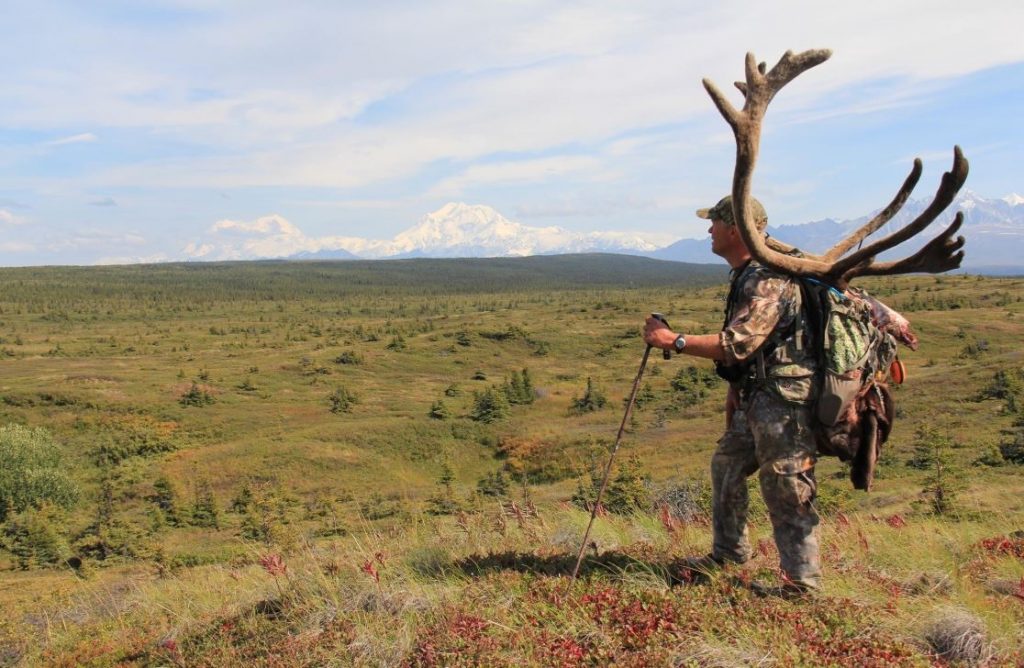
While the idea of hunting the large, migratory herds is a really appealing thought, it can also be a risky gamble. If you don’t time it well, you might totally miss the herds on their migration, and spend an awful long trip hunting nothing but tundra brush and mosquitoes. Then again, if you hit the right time period, you could potentially be hunting thousands of animals and it could be the best caribou hunting you could hope for. But a safer option is to hunt the various resident herds. There won’t be huge numbers of animals to hunt, but you will likely see at least a few caribou every day.
Basic Caribou Hunting Gear
With any hunts where you will have to pack your gear with you, the topic of which hunting gear to bring is a critical one. But it’s especially important for DIY caribou hunting. Bush pilots flying in Super Cubs really have to limit the weight on the plane ride, so don’t be surprised if they can only haul one hunter and about 100 pounds of gear at a time. That means you really can’t pack too heavily – weigh everything at home to be sure you will be able to fly to remote hunting locations once you arrive in Alaska. Try to cut out any unnecessary bulk and weight wherever you can, although this can be a little tricky when you’re packing bow hunting gear and want to keep everything safe and protected.
You should always be prepared for changing weather conditions in Alaska, but it really comes down to the time of year you’re hunting. During the early season months, be prepared to deal with thick mosquitoes using insect-treated clothing and mosquito head nets. As fall approaches, make sure you’ve got both warm and waterproof clothing options. Since you’ll truly be on your own in the wilderness, you need to be absolutely confident in the quality of your gear.
For our DIY caribou hunt, I depended on a large big game hunting pack to haul everything around with me. I brought both my Hoyt® bow and Browning® rifle, with the intent of using my bow (if I could stalk within range). You spend an awful lot of time glassing for caribou, and so your optics need to be top-notch too, which is why I used Vortex® spotting scopes. And if you’re lucky enough to actually put a caribou down, you need an extremely sharp and durable knife to skin and quarter it, which is why I used the Outdoor Edge® knives. Make sure you pack the best game bags you can find too to protect the meat from insects and keep it from getting contaminated by dirt and debris.
Caribou Hunting Tactics
Next, let’s dive into the specific DIY caribou hunting tactics you can use while out on the tundra. First, you should realize that days can be long in Alaska (at least in the early season). This is good because it allows you more hunting time, but the flip side is that you just don’t get as much sleep. Couple that with the grueling tundra walking, and you can tire out quickly. Keep your energy high with ample food (at least 3,000 to 4,000 calories a day) so that you can cover more ground. Scouting for caribou is both easy and hard at the same time. You could just find a slight hill and sit down to glass all day or you could continually walk the tundra hoping to intercept something along the way. Alternate your approach every other day to keep from exhausting yourself too quickly.
If you find a spot with very good visibility around you, take some time to use your spotting scope to thoroughly scan the horizon. Since caribou are always on the move, you may well have a few come within view where you can assess if you want to pursue them. If you decide to stalk them, stay low by remaining in valleys and approaching from behind brush or trees. But when you’re bow hunting caribou in Alaska, you don’t usually have that much cover to hide your approach, which makes stalking within bow range really hard. That’s why it’s nice to have a rifle along too.
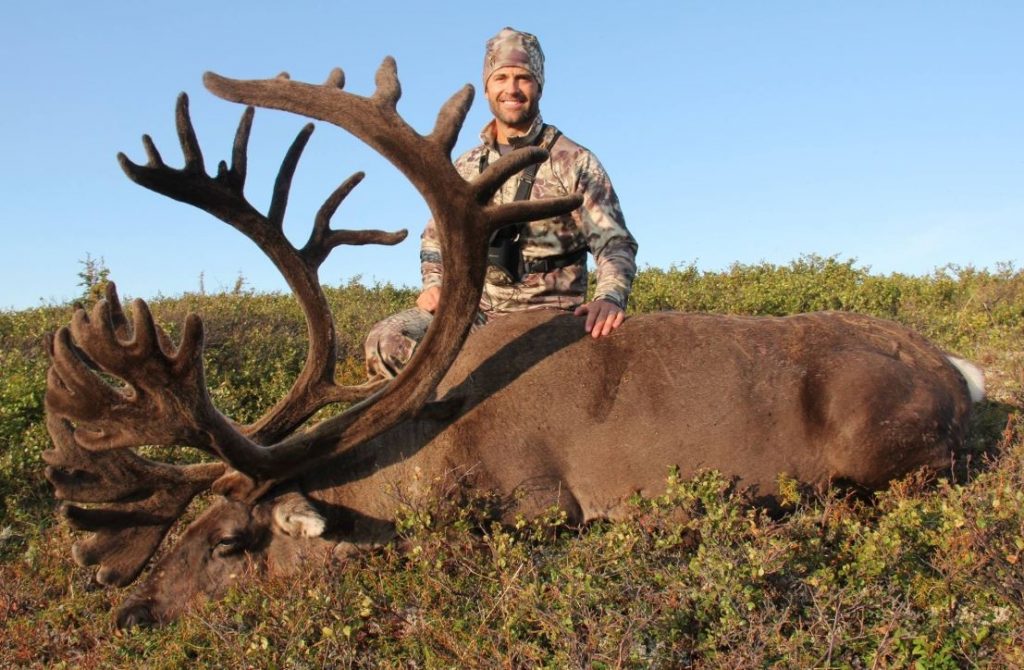
If you manage to kill a nice bull caribou, the real work is just beginning. You need to skin, quarter, and pack all the meat and antlers back to your spike camp, which could be located miles away. As mentioned, use game bags to keep the meat cleaner and keep flies off of it. And always be mindful of predators (e.g., bears or wolves) since you’re in a remote wilderness area. Keep the meat separated from your camp site by at least 50 yards to keep bears away from your tents. If you shoot a bull in velvet and you’d like to preserve it for a mount, there are preservative chemicals you can inject into the velvet tissue or paint on the antlers that start tanning the delicate tissue so it doesn’t fall off. If the weather is above freezing, you should try to get the caribou meat back to civilization as soon as possible to keep it from spoiling. Arrange some plans ahead of time with your pilot if hot weather is forecasted.
Start Caribou Hunting in Alaska
There you have it – does DIY caribou hunting sound like something you’d be interested in? It’s a lot of preparation and work to hunt them effectively and it takes a bit of luck to pull it all off, but it’s so worth it when the plan all comes together and you can share the experience with a hunting buddy.
Read the full article here

23 Comments
I’m concerned about the impact of hunting on caribou populations, the article mentions that caribou are migratory herd animals, but it doesn’t discuss the conservation efforts in place to protect them, what are some of the ways that hunters can ensure that their activities are sustainable?
I’ve always been fascinated by the idea of hunting in Alaska, the article mentions that it’s a true wilderness adventure, but what are some of the other hunting opportunities available in the state?
I’ve heard that caribou hunting can be a physically demanding activity, the article mentions that hunters need to be prepared to survive in a remote environment, what kind of physical conditioning is needed to undertake a DIY caribou hunt?
I’m excited to learn more about DIY caribou hunting and the adventure that comes with it, the idea of being dropped off in the remote wilderness with little to no human influence is a thrilling prospect.
The article mentions that caribou are surprisingly fast moving across the thick brush of the tundra, despite their large size, I wonder what kind of strategies hunters use to track and pursue them.
The article mentions that some smaller herds of caribou do not migrate at all and are called resident herds, I’m curious to know more about the habits of these resident herds and how they differ from the migratory herds.
The fact that caribou have large hooves that act like snowshoes to help them move across both the soft tundra ground in summer and deep snows in winter is fascinating, I wonder how they adapt to different environments.
I’m skeptical about the idea of drop camp hunts, where a pilot literally drops you off in the remote wilderness, it sounds like a thrilling adventure, but also a daunting task, what kind of preparation is needed to survive in such a remote environment?
The fact that both males and females grow antlers, but only males get the large sweeping semi-circle antlers, is a unique characteristic of caribou, I wonder what other unique features they have.
The article provides some valuable information about caribou hunting, but I’m curious to know more about the cost involved, what are some of the expenses that hunters need to consider when planning a DIY caribou hunt?
It’s interesting to note that caribou and reindeer are different subspecies, with caribou being the North American subspecies, I’ve always thought they were the same thing, thanks for the clarification.
The article mentions that caribou are migratory herd animals, moving several hundred miles between summer and winter ranges, I’m curious to know more about the best times to hunt them during these migrations.
The article mentions that caribou hunting is not often as simple as just driving to a hunting location, getting out, shooting an animal, and packing up again, what are some of the challenges that hunters face in terms of logistics and transportation?
I’m excited to learn more about the different types of caribou hunts available, the article mentions drop camp hunts, but what are some of the other options for hunters?
The fact that caribou are able to move across the tundra with their large hooves is a testament to their adaptability, I wonder what other unique characteristics they have that enable them to thrive in such a harsh environment.
I’m excited to learn more about the cultural significance of caribou hunting, the article mentions that it’s a true wilderness adventure, but what are some of the cultural and historical aspects of caribou hunting that make it so unique?
The idea of hunting caribou in the remote wilderness of Alaska is a daunting task, but the article provides some valuable insights into the planning and preparation needed to make it a success, I’m looking forward to learning more.
The fact that caribou have a unique adaptation to move across both soft tundra ground and deep snows is impressive, I’m curious to know more about their other adaptations and how they survive in such a harsh environment.
I’ve always been interested in hunting caribou, but I’ve never considered the regulations and logistics involved, the article mentions that Alaska caribou hunts are easier to regulate for U.S. citizens, what are some of the specific regulations that hunters need to be aware of?
I’ve always been fascinated by the idea of hunting in the remote wilderness of Alaska, the article mentions that it’s a challenging and rewarding experience, what are some of the personal skills and qualities that hunters need to have to be successful in this type of environment?
I’ve always been fascinated by the idea of DIY caribou hunting in Alaska, and the fact that caribou can weigh between 300-400 pounds is impressive, I wonder what kind of equipment is needed to hunt them effectively.
I’ve heard that caribou meat is highly prized for its flavor and nutritional value, the article doesn’t mention much about the meat itself, what are some of the ways that hunters can prepare and utilize the meat after a successful hunt?
I’ve heard that caribou hunting in Alaska can be challenging due to the rough terrain and remote locations, but the rewards are well worth it, what are some of the most common challenges that hunters face in these areas?