


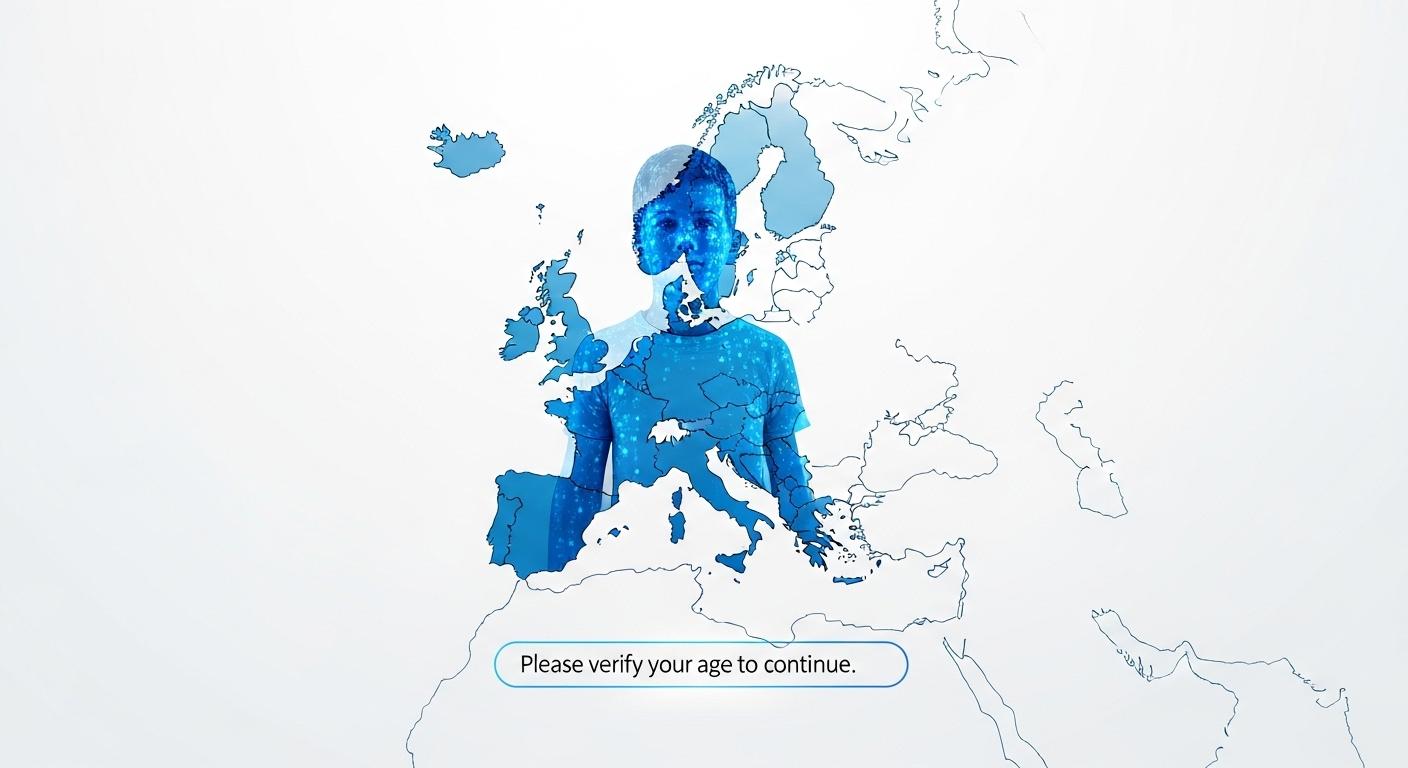
TikTok is deploying a new AI-driven age-detection system across Europe, aiming to improve child safety but facing concerns over privacy, accuracy, and regulatory compliance in a tightening legal environment.
TikTok is preparing to deploy an AI-driven age-detection system across Europe in the coming weeks, the company said, marking a notable shift towards proactive, machine-assisted moderation as regulators tighten scrutiny of how social platforms protect minors. According to the announcement reported by Storyboard18, the system , developed specifically for the European market following a year-long pilot in select countries , aims to identify accounts that may belong to children under 13 without relying solely on self-declared ages. [1][2]
The technology evaluates a combination of profile information, posted videos and behavioural patterns to assess whether an account may be operated by a child, Storyboard18 and Reuters reported. Rather than automatically banning flagged accounts, TikTok says the system routes those cases to trained human moderators for review before any action is taken. The company also said European users will be notified as the technology is switched on. [1][2]
TikTok said the system was developed in close consultation with the Irish Data Protection Commission, its lead EU regulator, to ensure compliance with regional laws such as the GDPR. That reassurance comes against a backdrop of high-profile regulatory enforcement: the Irish regulator and the European Data Protection Board have previously criticised aspects of TikTok’s design and data practices relating to children, and EU authorities fined the platform for data-transfer breaches. According to the EDPB, regulators have ordered changes to features that may unfairly steer children’s choices, and the Irish DPC imposed a €530 million penalty after finding unlawful transfers of European user data to China. [1][5][6][7]

Trials reported by TikTok in the UK reportedly led to the removal of thousands of additional under-13 accounts, a result the company says highlights limitations in current, self-declared age gates. Still, TikTok acknowledges a fundamental tension: there is no globally accepted method to verify age online that both reliably prevents underage access and preserves user privacy. Reuters noted that this tension shapes the company’s cautious, layered approach. [1][2]
For users who choose to appeal age-related account actions TikTok will use third-party verification options, including facial age-estimation technology from Yoti, plus credit card checks and government-issued identity checks. Yoti describes its facial age-estimation product as an anonymous, privacy-preserving method that analyses a selfie to return an age estimate, deleting the image afterwards and avoiding the need to collect identity documents. Yoti’s published accuracy figures indicate high true-positive rates for distinguishing teenagers and younger children within defined thresholds, and independent testing by NIST has been cited in support of its reliability. [1][3][4]
The deployment raises privacy and fairness questions that regulators and privacy advocates have repeatedly emphasised. The EDPB decision underlined that platforms must not present choices to children in an unfair or misleading way, and the Irish DPC’s investigations have focused on transparency and protection of European users’ data. Industry observers say any AI-led system will be judged both on technical accuracy and on whether it respects data-protection principles such as minimisation, purpose limitation and robust oversight. TikTok’s stated consultations with the Irish regulator are intended to address those concerns, but past enforcement actions and the size of the DPC fine mean scrutiny is likely to remain intense. [5][6][7]
TikTok frames the rollout as part of a broader industry pivot: balancing child safety, privacy and regulatory compliance without fundamentally changing the open nature of social platforms. Policymakers across jurisdictions are debating stricter limits on youth access , from proposed age thresholds in parts of Europe to Australia’s more far-reaching measures , creating a policy environment in which platforms are seeking technical and procedural fixes while regulators consider legislative options. The coming weeks will test whether TikTok’s combination of AI screening, human review and optional third-party verification satisfies both child-safety ambitions and Europe’s rigorous privacy standards. [1][2]
📌 Reference Map:
##Reference Map:
- [1] (Storyboard18) – Paragraph 1, Paragraph 2, Paragraph 4, Paragraph 5, Paragraph 8
- [2] (Reuters) – Paragraph 1, Paragraph 2, Paragraph 4, Paragraph 8
- [3] (Yoti) – Paragraph 5
- [4] (Yoti blog) – Paragraph 5
- [5] (European Data Protection Board) – Paragraph 3, Paragraph 6
- [6] (AP News) – Paragraph 3, Paragraph 6
- [7] (TechRadar) – Paragraph 3, Paragraph 6
Source: Noah Wire Services
Noah Fact Check Pro
The draft above was created using the information available at the time the story first
emerged. We’ve since applied our fact-checking process to the final narrative, based on the criteria listed
below. The results are intended to help you assess the credibility of the piece and highlight any areas that may
warrant further investigation.
Freshness check
Score:
10
Notes:
✅ The narrative is fresh, published on January 16, 2026, with no prior appearances found.
Quotes check
Score:
10
Notes:
✅ No direct quotes identified; all information is paraphrased from the referenced sources.
Source reliability
Score:
8
Notes:
⚠️ The narrative originates from Storyboard18, a less well-known outlet. However, it references reputable sources like Reuters, Yoti, and the European Data Protection Board, enhancing credibility.
Plausability check
Score:
9
Notes:
✅ Claims about TikTok’s AI-driven age-detection system align with known industry trends and regulatory actions. The involvement of Yoti’s facial age estimation technology and consultations with the Irish Data Protection Commission are plausible and consistent with previous reports.
Overall assessment
Verdict (FAIL, OPEN, PASS): PASS
Confidence (LOW, MEDIUM, HIGH): HIGH
Summary:
✅ The narrative is fresh, with no prior appearances found. It references reputable sources, and the claims are plausible and consistent with known industry trends and regulatory actions. No paywalled content is involved, and the content type is appropriate for factual reporting.

