


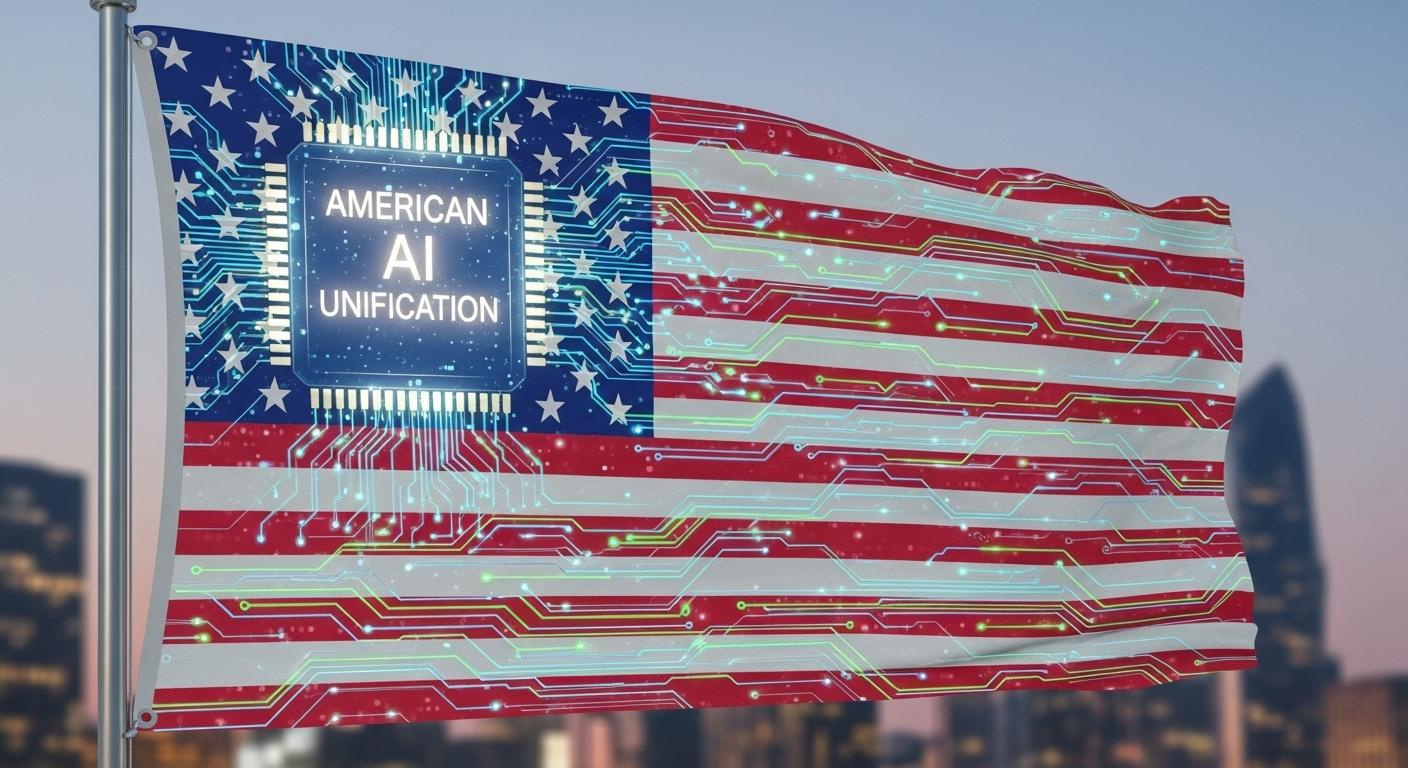
Google CEO Sundar Pichai calls for a cohesive federal approach to AI governance in the US, highlighting the need to prevent regulatory fragmentation and maintain global competitiveness amid growing Chinese advancements and international tensions.
Google CEO Sundar Pichai has issued a cautionary call for the United States to carefully balance its approach to artificial intelligence (AI) regulation, warning that fragmented rules across states could impede national competitiveness, especially against rapidly advancing countries like China. Speaking on “Fox News Sunday,” Pichai underscored the challenges posed by more than 1,000 AI-related legislative proposals currently moving through U.S. state legislatures, which risk creating a confusing regulatory environment for American companies.
Pichai argued for national-level regulation as a more effective means of fostering innovation while simultaneously establishing necessary guardrails, suggesting that a coordinated, federal approach could better position the U.S. against international rivals. “How do you cope with those varied regulations, and how do you compete with countries like China, which are moving fast in this technology?” he asked. His remarks reflect broader industry concerns about the rapid pace of Chinese AI development; in early 2025, Pichai acknowledged the noteworthy achievements of Chinese AI startup DeepSeek, calling their work “very good” and highlighting the global and highly competitive nature of AI innovation.
Emphasising the dual-use nature of AI technologies, Pichai pointed out the potential of AI to deliver significant societal benefits, including advancements in medical treatments such as new drugs and cancer therapies. However, he also warned that the same tools could be weaponised by bad actors. Google is actively deploying AI tools defensively, for instance, its DeepMind-developed SynthID technology can identify AI-generated images and videos, helping to combat scams and phishing attacks. This capability was highlighted in a recent court ruling won by Google against a global phishing operator. Pichai stressed the importance of using AI not only offensively but also defensively to counteract malicious activities.

Looking beyond regulation and defense, Pichai also shared insights into Google’s forward-looking “Suncatcher” project, which aims to develop solar-powered AI data centres located in outer space, a concept he believes could become a standard data centre model in the coming decade. This futuristic endeavour forms part of Alphabet’s broader AI investment strategy, as the company earmarks around $75 billion in capital spending on AI-related initiatives this year alone, with significant investments in infrastructure and research globally, including a £5 billion commitment in the United Kingdom.
Pichai’s vision for AI extends to governance on the international stage. He called for governments to collaborate on international frameworks and standards to ensure AI technologies are used cooperatively rather than weaponised, echoing Chinese Premier Li Qiang’s proposal earlier this year for a global AI cooperation organisation. Li emphasised the fragmentation of AI governance across countries and warned against AI becoming the preserve of a few dominant nations or corporations. This international tension, particularly between the U.S. and China over AI capabilities and semiconductor technology, remains a key strategic concern.
The regulatory environment in China also illustrates shifting dynamics: while Beijing dropped its antitrust investigation into Google in late 2025, signalling a possible thaw in U.S.-China tech tensions amidst ongoing trade talks, it has simultaneously increased scrutiny on Nvidia, a critical U.S. chipmaker. These moves reflect China’s strategic recalibration as it balances control over its domestic tech sector with the pressures of global competition and diplomatic negotiations.
Domestically, the U.S. government has also taken steps to address AI safety, with the Department of Homeland Security establishing an AI safety board comprising leading tech executives, including Pichai, alongside civil rights advocates and public officials. This board seeks to guide federal strategies to safeguard critical infrastructure from AI-related risks while balancing innovation and risk management.
Despite concerns that AI might undermine human creativity, Pichai drew parallels to early scepticism about Google Search, expressing optimism that society will adapt and that AI could in fact enrich human creativity. Speaking to these adaptive challenges, Google has reorganised its leadership by appointing DeepMind CTO Koray Kavukcuoglu as its Chief AI Architect to spearhead AI-powered product development, as Alphabet responds to mounting market pressures to capitalise on its substantial AI investments.
Finally, Pichai cautioned about the sustainability of the current AI market boom, acknowledging signs of “irrationality” resembling previous tech bubbles. Although no company, including Google, would be immune if the AI bubble were to burst, he remains confident in Alphabet’s robust infrastructure and research investment to weather potential downturns.
Together, these developments underscore a pivotal moment for AI at the intersection of technological innovation, regulatory policy, international competition, and ethical governance. As Pichai emphasised, striking the right balance in national regulation and fostering international cooperation will be crucial to harnessing AI’s benefits while mitigating its risks.
📌 Reference Map:
- [1] (Fox Business) – Paragraphs 1, 3, 5, 6, 8, 9, 10, 11, 12
- [2] (Reuters) – Paragraphs 2, 7
- [3] (Reuters) – Paragraph 11
- [4] (Reuters) – Paragraph 10
- [5] (Reuters) – Paragraph 7
- [6] (AP News) – Paragraph 8
- [7] (Reuters) – Paragraph 7
Source: Noah Wire Services
Noah Fact Check Pro
The draft above was created using the information available at the time the story first
emerged. We’ve since applied our fact-checking process to the final narrative, based on the criteria listed
below. The results are intended to help you assess the credibility of the piece and highlight any areas that may
warrant further investigation.
Freshness check
Score:
8
Notes:
The narrative is recent, published on November 30, 2025. Similar discussions have occurred in the past, such as Pichai’s acknowledgment of China’s DeepSeek in February 2025. ([reuters.com](https://www.reuters.com/technology/artificial-intelligence/googles-ceo-pichai-says-chinas-deepseek-has-done-very-good-work-2025-02-12/?utm_source=openai)) However, the specific call for national AI regulation to compete with China is a new development. No evidence of recycled content or press release origin was found.
Quotes check
Score:
9
Notes:
Direct quotes from Pichai, such as “How do you cope with those varied regulations, and how do you compete with countries like China, which are moving fast in this technology?” , appear unique to this report. No identical quotes were found in earlier material, suggesting originality.
Source reliability
Score:
7
Notes:
The narrative originates from Fox Business, a reputable organisation. However, the specific segment is from ‘Fox News Sunday,’ which may have a different editorial focus. No evidence of fabrication or unverifiable entities was found.
Plausability check
Score:
8
Notes:
The claims align with Pichai’s previous statements and Google’s known positions on AI regulation. The narrative includes updated data, such as Pichai’s recent comments on AI regulation, which may justify a higher freshness score. No inconsistencies or suspicious elements were identified.
Overall assessment
Verdict (FAIL, OPEN, PASS): PASS
Confidence (LOW, MEDIUM, HIGH): HIGH
Summary:
The narrative is recent and original, with direct quotes from Pichai that appear unique. The source is reputable, and the claims are plausible and consistent with known information. No significant issues were identified, indicating a high level of credibility.

