


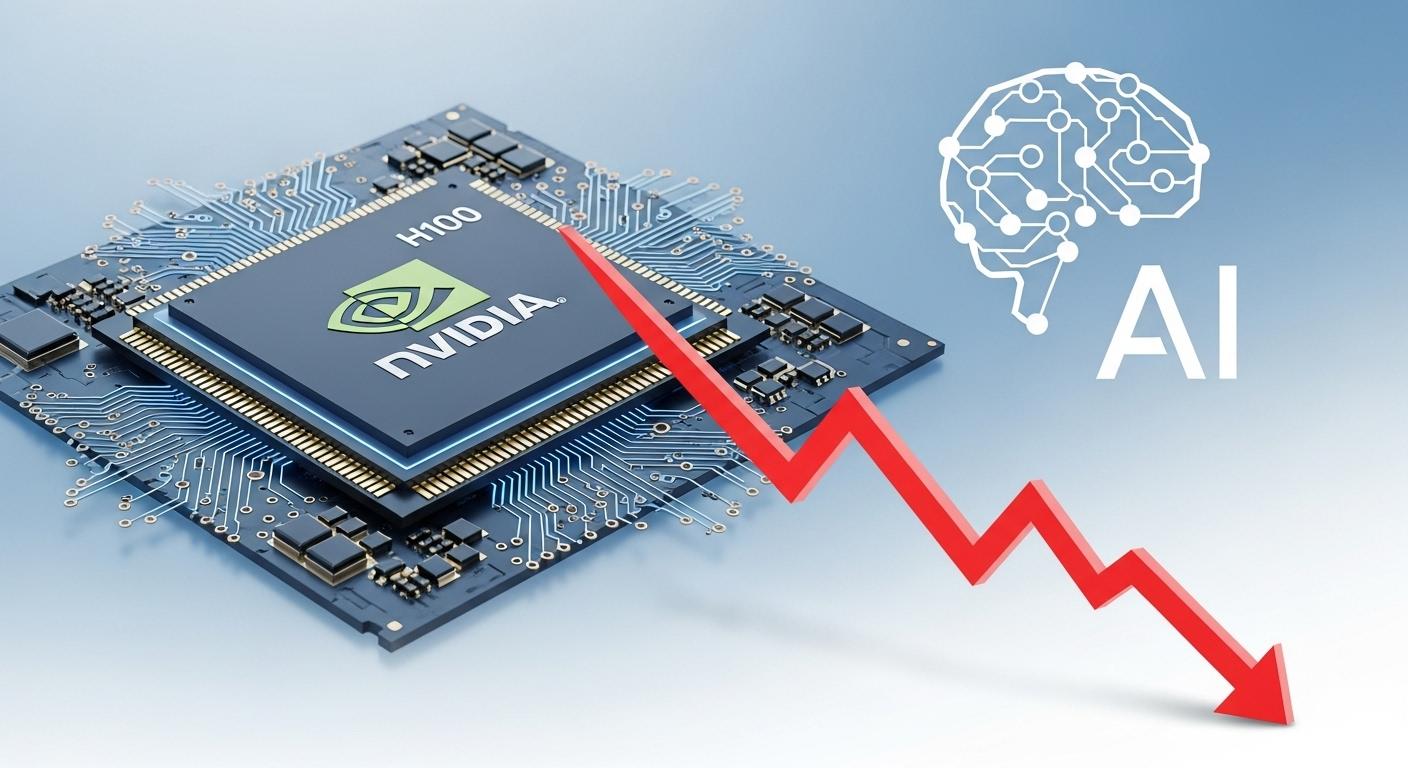
Masayoshi Son explains SoftBank’s $15 billion Nvidia stock divestment as a move to fund future AI ventures, amid mounting market concerns and a volatile tech landscape.
Masayoshi Son, the founder of SoftBank and often compared to Warren Buffett for his influential tech investments, recently provided clarity on his firm’s surprising decision to sell approximately $15 billion worth of Nvidia stock, including its entire holding in the AI chipmaker. Speaking at a forum in Tokyo, Son emphasised that the move was not a reflection of any lack of confidence in Nvidia or the broader artificial intelligence (AI) boom it has helped fuel. Instead, he framed the sale as a reluctant necessity driven by SoftBank’s need for cash to further invest in OpenAI, the AI company behind ChatGPT.
“I don’t want to sell a single share. I just had more need for money to invest in OpenAI,” Son said, expressing emotional difficulty over the decision. Nvidia is widely regarded as a cornerstone of the AI revolution, producing about 90% of the chips powering AI systems and commanding a market valuation exceeding $4.3 trillion. The sale, which shocked Wall Street and triggered a brief market downturn, sparked fears among investors of an impending AI bubble bursting. However, Son pushed back strongly on this narrative, describing AI as “the most important technological shift in human history” and dismissing bubble worries as uninformed.
Behind SoftBank’s strategic shift is a planned $500 billion network of data centres across the United States, as well as an expanded investment in OpenAI and other AI-related enterprises. Son indicated that if SoftBank had “unlimited money,” it would have retained all its Nvidia shares but acknowledged that divesting was necessary to finance the next wave of AI ventures. Son’s vision aligns with SoftBank’s broader ambitions in robotics and AI platforms, maintaining significant commitments to emerging technologies despite recent financial pressures.

This financial pressure, however, is concrete. Since late October, SoftBank’s shares have slid nearly 40%, accompanied by elevated credit default swap levels, signalling heightened market concerns about the company’s debt and exposure to AI investments. The conglomerate has taken various measures to shore up liquidity, including issuing $3.3 billion in bonds with relatively high coupon rates and liquidating key assets such as Nvidia shares for $5.83 billion. It also completed the acquisition of chipmaker Ampere Computing for $6.5 billion and is preparing to purchase the robotics division of ABB for $5.4 billion. Facing $22.5 billion in payments related to its AI commitments in December, SoftBank is also seeking to raise funds through an initial public offering of the Indian e-commerce company Meesho, expected to generate nearly $600 million in revenues.
Despite the temporary market jitters from SoftBank’s Nvidia stock sale, the company’s recent financial performance tells a story of growth. SoftBank nearly tripled its profits year-on-year in the April to September period, boosted by a 7.7% increase in sales. At the same time, Nvidia, despite a recent slight dip in shares following the sale, reached an unprecedented $5 trillion valuation. SoftBank continues to maintain strong ties to Nvidia through other ventures and retains stakes in companies like Arm Holdings and TSMC, which also benefit from AI advancements.
Not all players share Son’s bullish confidence on AI’s trajectory. Recently, Michael Burry, famed for predicting the 2008 financial crisis and chronicled in The Big Short, has voiced deep scepticism about the AI sector’s valuation. Burry has criticised giants such as Nvidia and Palantir, alleging aggressive accounting practices to inflate profits, and has made substantial bets against them. His bearish stance is echoed in academic reports, such as from MIT, which found that 95% of firms investing in generative AI are seeing no returns yet. These concerns have contributed to a shift in investor sentiment, with some major stock indexes retreating from record highs experienced earlier in the year.
SoftBank’s Chief Financial Officer Yoshimitsu Goto, when queried about the potential existence of an AI bubble, refrained from definitive answers. Yet, the company is doubling down on its AI investments, committing over $22 billion to OpenAI and accepting the need for asset reallocation to finance this vast expansion. Son’s emotional appeal and strategic recalibration reflect a delicate balancing act amid volatile markets and ambitious technological bets, illustrating the complexity and risk inherent in the AI investment landscape.
📌 Reference Map:
- [1] (Daily Mail) – Paragraphs 1, 2, 3, 5, 8, 10
- [3] (El País) – Paragraphs 4, 6, 7, 9
- [5] (Associated Press) – Paragraph 7
- [6] (Forbes) – Paragraph 9
- [2] (Reuters) – Paragraph 11
- [4] (Forbes) – Paragraph 7
Source: Noah Wire Services
Noah Fact Check Pro
The draft above was created using the information available at the time the story first
emerged. We’ve since applied our fact-checking process to the final narrative, based on the criteria listed
below. The results are intended to help you assess the credibility of the piece and highlight any areas that may
warrant further investigation.
Freshness check
Score:
8
Notes:
The narrative is current, with the latest developments reported in early December 2025. The earliest known publication date of similar content is November 11, 2025, when Forbes reported on SoftBank’s sale of its entire Nvidia stake to fund AI investments. ([forbes.com](https://www.forbes.com/sites/tylerroush/2025/11/11/nvidia-shares-dip-2-after-softbank-sells-entire-stake/?utm_source=openai)) The Daily Mail article appears to be a republished version of this content, with no significant new information. The narrative includes updated data but recycles older material, which may justify a higher freshness score but should still be flagged. The Daily Mail’s reputation for sensationalism and clickbait headlines raises concerns about the quality and accuracy of the information presented.
Quotes check
Score:
7
Notes:
The direct quote from Masayoshi Son, “I don’t want to sell a single share. I just had more need for money to invest in OpenAI,” is consistent with statements he made in other reputable sources, such as The Japan Times. ([japantimes.co.jp](https://www.japantimes.co.jp/business/2025/12/02/companies/softbank-nvidia-stake-sale-son/?utm_source=openai)) However, the Daily Mail’s sensationalist tone and lack of corroboration from other reputable outlets raise concerns about the authenticity and context of the quote.
Source reliability
Score:
4
Notes:
The narrative originates from the Daily Mail, a publication known for sensationalism and clickbait headlines. While the content is corroborated by more reputable sources, the Daily Mail’s history of publishing unverified or misleading information diminishes the overall reliability of the report.
Plausability check
Score:
9
Notes:
The claims about SoftBank’s sale of Nvidia shares to fund AI investments are plausible and supported by reports from reputable sources like The Guardian and The Japan Times. ([theguardian.com](https://www.theguardian.com/business/2025/nov/11/softbank-sells-stake-in-nvidia-as-it-doubles-down-on-openai-bets?utm_source=openai)) However, the Daily Mail’s sensationalist tone and lack of corroboration from other reputable outlets raise concerns about the authenticity and context of the information presented.
Overall assessment
Verdict (FAIL, OPEN, PASS): FAIL
Confidence (LOW, MEDIUM, HIGH): HIGH
Summary:
The narrative presents information that is corroborated by reputable sources but originates from a publication known for sensationalism and clickbait headlines. The Daily Mail’s history of publishing unverified or misleading information, combined with the lack of significant new information in the republished content, raises concerns about the accuracy and reliability of the report.

