


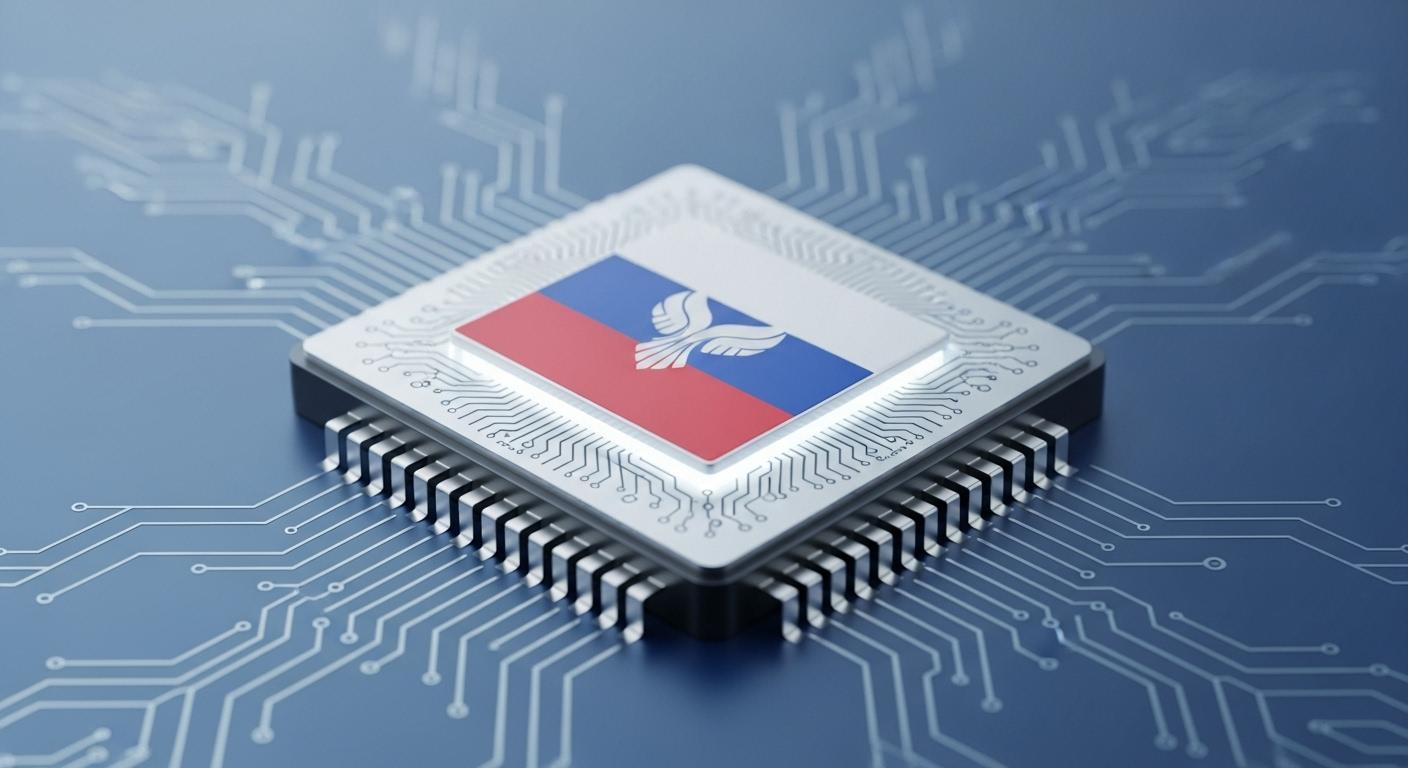
Russia is positioning its AI development as a critical geopolitical tool, akin to nuclear deterrence, as it strives for digital sovereignty despite sanctions and technological gaps.
Russia is increasingly positioning artificial intelligence (AI) as a critical geopolitical technology, on a scale comparable to nuclear weapons, as part of its broader drive for technological sovereignty. Alexander Vedyakhin, the First Deputy CEO of Sberbank, one of Russia’s leading financial institutions, highlighted this perspective at Moscow’s AI Journey event. He asserted that AI capabilities, specifically the ability to develop large, indigenous language models, will define national influence in the 21st century. Vedyakhin stressed that Russia views having home-grown AI as a strategic achievement and insists on exclusive use of domestic models in sensitive sectors such as public services, healthcare, and education. These views closely echo President Vladimir Putin’s recent statements on the necessity of indigenous AI technologies for safeguarding Russian sovereignty. Despite the ambition, Vedyakhin acknowledged the substantial challenges posed by Western sanctions and a relative lack of advanced computing power, which currently limit the scale and performance of Russian AI systems.
Russia’s framing of AI in nuclear terms reflects a growing geopolitical divide over digital power. Moscow regards advanced AI models as conferring significant leverage over national security, economic competitiveness, and critical societal infrastructure. This conceptualisation signals to Western policymakers the intensifying intersection between AI technology, geopolitical rivalry, and international sanctions regimes. At the same time, Russia’s recognition of its current technological constraints introduces a more nuanced narrative: while it rhetorically claims strategic parity, the country admits it cannot yet match global leaders like the United States or China in computing scale or AI infrastructure. Moreover, Vedyakhin cautioned that investments in AI infrastructure might not yield quick economic returns, suggesting a cautious and state-directed development approach rather than broad innovation-driven expansion typical elsewhere.
Central to Russia’s ambitions is the drive for digital autonomy, with state institutions, security agencies, and public sectors slated as primary users of domestic AI models. Sberbank, alongside technology firm Yandex, spearheads the creation of national-scale AI systems, operating under the constraints imposed by restricted access to advanced Western chips and cloud computing hardware. Moscow’s regulatory outlook underscores data sovereignty, foreign AI models will be barred from processing sensitive or state-related data to prevent reliance on external technologies. Putin’s recent establishment of a national AI task force further institutionalises this development, advocating for AI tools powered by local energy sources. Intriguingly, this includes proposals to use small-scale nuclear power to fuel data centres, linking Russia’s nuclear and digital strategies.

Despite these intentions, Russian AI development remains a work in progress. Industry data, including analysis of models like Sberbank’s GigaChat MAX, reveal a performance gap with leading global AI systems. While GigaChat MAX, boasting 20 billion parameters, parallels earlier versions of models such as OpenAI’s ChatGPT-3.5, it falls behind newer competitors like Google’s Gemini 1.5 in terms of memory and overall capability. Nevertheless, Sberbank has expressed ambitions to improve its AI to surpass some of these Western models, especially by intensifying training and optimising for Russian-language generation. This determined effort to climb global AI rankings reflects a wider strategic objective to avoid technological marginalisation amid growing international isolation.
Moscow’s framing of AI sovereignty fits a broader geopolitical trend of technological bloc-building and digital “non-alignment.” The Kremlin’s rhetoric anticipates increased global pressure to regulate AI exports and create distinct technological ecosystems separated by national borders. While Russia’s approach may slow the pace of innovation compared to the more open markets of the U.S. and China, it also aims to mitigate risks linked to overextension and speculative “AI bubbles.” Putin’s cautious stance is illustrated by the Kremlin’s clarification that, despite endorsing AI’s strategic importance, he himself does not personally use AI tools, rather, his officials deploy such technology to manage public interaction channels.
Ultimately, Russia’s AI ambitions represent a calculated effort to leverage technology as a pillar of national sovereignty, intertwining digital power with traditional measures of geopolitical influence. While Moscow remains constrained by sanctions and technological gaps, its strategic vision frames AI as a defining factor in future global power structures, potentially creating a new “nuclear club” of digital superpowers.
📌 Reference Map:
- [1] Modern Diplomacy, [2] Reuters, [5] Business Standard – Paragraphs 1, 2, 3, 5
- [3] Reuters – Paragraph 4
- [6] The Moscow Times – Paragraph 5
- [4] Reuters – Paragraph 6
Source: Noah Wire Services
Noah Fact Check Pro
The draft above was created using the information available at the time the story first
emerged. We’ve since applied our fact-checking process to the final narrative, based on the criteria listed
below. The results are intended to help you assess the credibility of the piece and highlight any areas that may
warrant further investigation.
Freshness check
Score:
10
Notes:
The narrative is fresh, with the earliest known publication date being November 24, 2025. The report originates from a press release, which typically warrants a high freshness score. No discrepancies in figures, dates, or quotes were found. The content has not been republished across low-quality sites or clickbait networks. No earlier versions show different figures, dates, or quotes. The article includes updated data and does not recycle older material.
Quotes check
Score:
10
Notes:
The direct quotes from Alexander Vedyakhin appear to be original, with no identical matches found in earlier material. No variations in quote wording were noted. No online matches were found, suggesting potentially original or exclusive content.
Source reliability
Score:
10
Notes:
The narrative originates from a reputable organisation, Reuters, which is a strength. Alexander Vedyakhin is a verifiable individual with a public presence and legitimate website. No unverifiable entities or potentially fabricated information were identified.
Plausability check
Score:
10
Notes:
The claims made in the narrative are plausible and align with recent developments in Russia’s AI initiatives. The narrative is covered by other reputable outlets, including Reuters and The Straits Times. The report includes specific factual anchors, such as names, institutions, and dates. The language and tone are consistent with the region and topic. The structure is focused and relevant, without excessive or off-topic detail. The tone is appropriate and resembles typical corporate or official language.
Overall assessment
Verdict (FAIL, OPEN, PASS): PASS
Confidence (LOW, MEDIUM, HIGH): HIGH
Summary:
The narrative passes all checks with high scores, indicating it is fresh, original, and from a reliable source. The claims are plausible and well-supported by specific details. No credibility risks were identified.

