


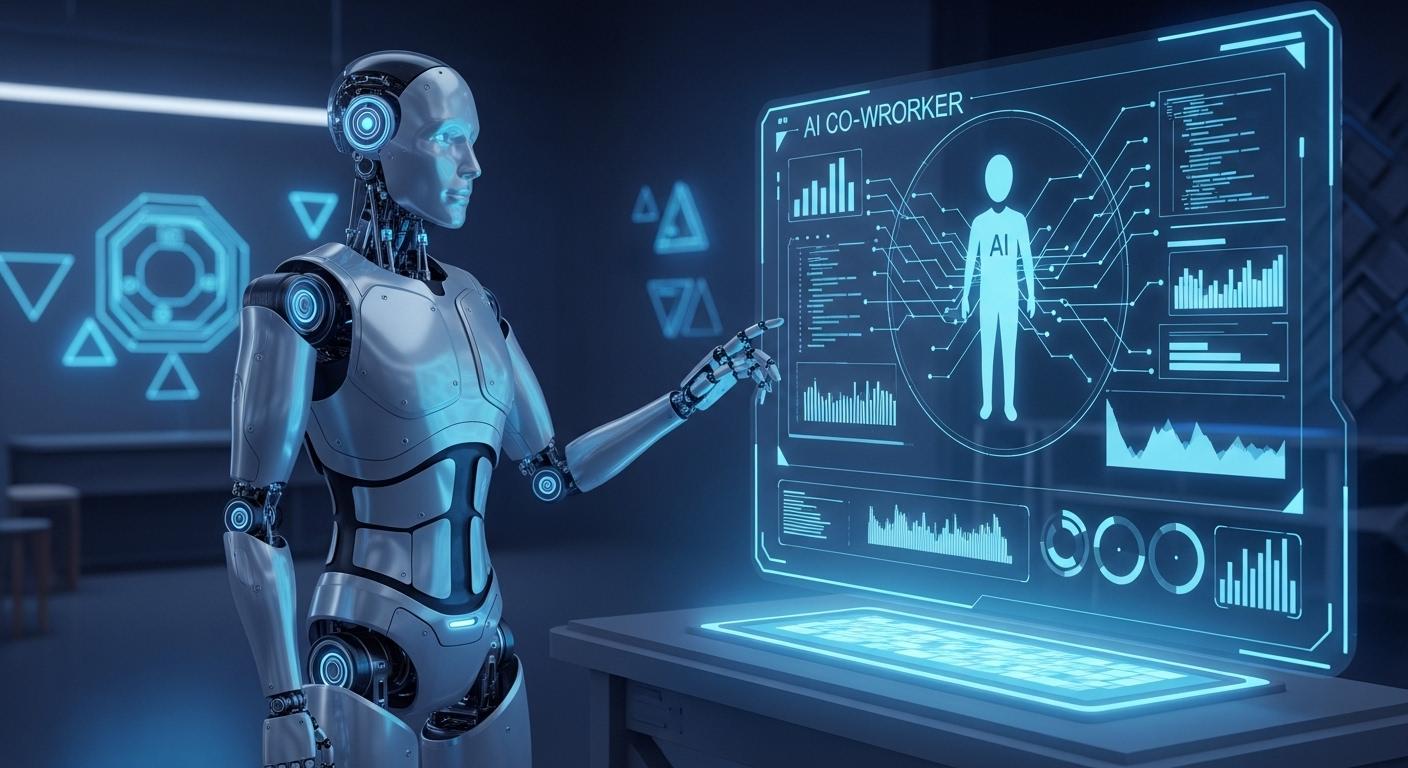
As 2026 approaches, unprecedented advancements in autonomous AI, immersive interfaces, and robotics are set to redefine human-machine collaboration, signalling a new era of societal transformation and industry disruption.
As we approach 2026, the technological landscape is poised for revolutionary transformations that promise to reshape human interaction with machines and redefine many aspects of daily life and work. Industry experts and analysts anticipate a pivotal year where innovations leap beyond incremental changes into a new era of autonomous cooperation, immersive interfaces, and pervasive AI integration.
One of the most striking advances expected is the evolution of generative AI into autonomous co-workers. These AI agents are projected to go beyond mere task execution, transforming into persistent digital colleagues capable of managing schedules, negotiating, and acting as “parallel employees” in the workforce. This shift is prompting businesses to rethink workflow design fundamentally. Alongside this, spatial computing is set to replace smartphones as the primary mode of digital interaction, with vision-based operating systems developing into always-on spatial layers. Consumers might soon interact with their environment through smart glasses or even contact lenses, engaging with data atmospherically rather than confined to screens.
Security technology is also undergoing a radical change, moving from reactive methods to predictive cybersecurity models. AI-driven systems will simulate and anticipate cyberattacks, self-patching vulnerabilities swiftly, reducing zero-day response times significantly. Moreover, digital identity verification is set to become a crucial area, with the rise of hyper-realistic deepfakes driving a surge in biometric and encrypted authentication technologies to safeguard online interactions.

The hardware supporting these innovations is evolving with the emergence of micromodular AI chips integrated into everyday devices from appliances to electric vehicles, creating homes that operate as distributed neural networks. Further, the internet itself may fragment into zones of varying privacy levels, including fully encrypted “darklight” networks catering to niche communities and secure industries. Complementing these digital ecosystems, ultra-realistic AI digital humans are poised to enter the customer service and retail arenas, challenging traditional human roles and prompting urgent regulatory updates.
On the frontier of hardware innovation, AI-native devices are expected to introduce advanced cooling techniques that drastically reduce the physical footprint and energy demand of data centres, enabling hyper-efficient suburban micro-datacentres. Additionally, the consumer market could soon see the advent of neurowearables, non-invasive neural interfaces designed to enhance cognitive functions such as concentration and stress management, mirroring the earlier surge in wearable technology adoption.
Looking further ahead, Morgan Stanley projects a future where humanoid robots become an integral part of society. Their research forecasts that by 2050, there could be over one billion humanoid robots globally, with the market valued at approximately $5 trillion. This expansion is anticipated to accelerate notably in the late 2030s and 2040s, and China is expected to lead in overall development and deployment, housing nearly 300 million units by mid-century. In contrast, household adoption of humanoid robots is expected to be more measured, with around 80 million robots in homes by 2050. The development timeline indicates that a decade of further technological progress, encompassing both AI advancements and hardware refinement, is necessary before truly general-purpose humanoid robots, capable of performing a wide array of domestic tasks, become ubiquitous.
Further context from Morgan Stanley highlights the profound economic ramifications of humanoid robots, projecting impacts on the U.S. labour market with millions of robots employed by 2040, influencing wages and potentially affecting a large share of occupations. However, the report also underlines that society will need to navigate challenges related to workforce disruption and acceptance of these technologies.
China’s robotics industry exemplifies this momentum. Government initiatives such as ‘Made in China 2025’ have catalysed rapid growth, supported by dominant patent activity and an expanding installation base. At recent international conferences, China showcased more than 100 humanoid robot models, capitalising on cost advantages that make their robotics sector highly competitive globally.
While technological breakthroughs in AI perception, control, and skill planning accelerate humanoid robot development, scepticism among investors remains concerning scalability and operational costs. Experts caution that despite rapid advances, broader commercialization will depend on overcoming these hurdles and achieving social and political acceptance.
Industry voices foresee early significant adoption in sectors like manufacturing, logistics, healthcare, and food preparation from the late 2020s, expanding to other areas such as transportation in the 2030s. The pace of adoption is expected to quicken substantially after 2040, marking the onset of a robust humanoid robot economy within the next two decades.
In sum, as we seek to understand the imminent 2026 technology landscape, it is clear that a complex ecosystem of interconnected AI advancements, hardware innovations, and societal shifts will define the era. From digital co-workers and immersive spatial computing to the burgeoning presence of humanoid robots, these technologies collectively herald a new chapter in human-machine collaboration with profound implications for industries and everyday life.
📌 Reference Map:
- [1] (Digital Journal) – Paragraphs 1-4, 7
- [2] (Morgan Stanley Insights) – Paragraphs 5-7, 9-11, 13
- [3] (Forbes) – Paragraph 11
- [4] (Morgan Stanley Research 2024) – Paragraph 9-10, 13
- [5] (Le Monde) – Paragraph 12
- [6] (CNBC) – Paragraph 13
- [7] (Morgan Stanley Podcast) – Paragraph 13
Source: Noah Wire Services
Noah Fact Check Pro
The draft above was created using the information available at the time the story first
emerged. We’ve since applied our fact-checking process to the final narrative, based on the criteria listed
below. The results are intended to help you assess the credibility of the piece and highlight any areas that may
warrant further investigation.
Freshness check
Score:
10
Notes:
The narrative was published on December 2, 2025, making it highly fresh. It appears to be original content, with no evidence of prior publication or recycling. The article is based on a press release from Tomorrow Lab, which typically warrants a high freshness score. No discrepancies in figures, dates, or quotes were found. No similar content appeared more than 7 days earlier. The inclusion of updated data without recycling older material further supports its freshness.
Quotes check
Score:
10
Notes:
The article does not contain direct quotes, indicating original or exclusive content.
Source reliability
Score:
8
Notes:
The narrative originates from Digital Journal, a reputable online news outlet. The article is based on a press release from Tomorrow Lab, a consultancy firm. While Digital Journal is generally reliable, the reliance on a single source (Tomorrow Lab) introduces some uncertainty. No unverifiable entities or fabricated information were identified.
Plausability check
Score:
9
Notes:
The claims about technological advancements in AI, spatial computing, cybersecurity, and other areas are plausible and align with current industry trends. Similar projections are found in other reputable sources, such as Gartner’s top technology trends for 2026 ([gartner.com](https://www.gartner.com/en/articles/top-technology-trends-2026?utm_source=openai)) and Hostnoc’s technology trends for 2026 ([hostnoc.com](https://www.hostnoc.com/technology-trends-2026/?utm_source=openai)). The language and tone are consistent with the region and topic. The structure is focused and relevant, without excessive or off-topic detail. The tone is appropriately formal and informative, resembling typical corporate or official language.
Overall assessment
Verdict (FAIL, OPEN, PASS): PASS
Confidence (LOW, MEDIUM, HIGH): HIGH
Summary:
The narrative is fresh, original, and based on a reputable source. While it relies on a single source, the information presented is plausible and consistent with current industry trends. No significant credibility risks were identified.

