


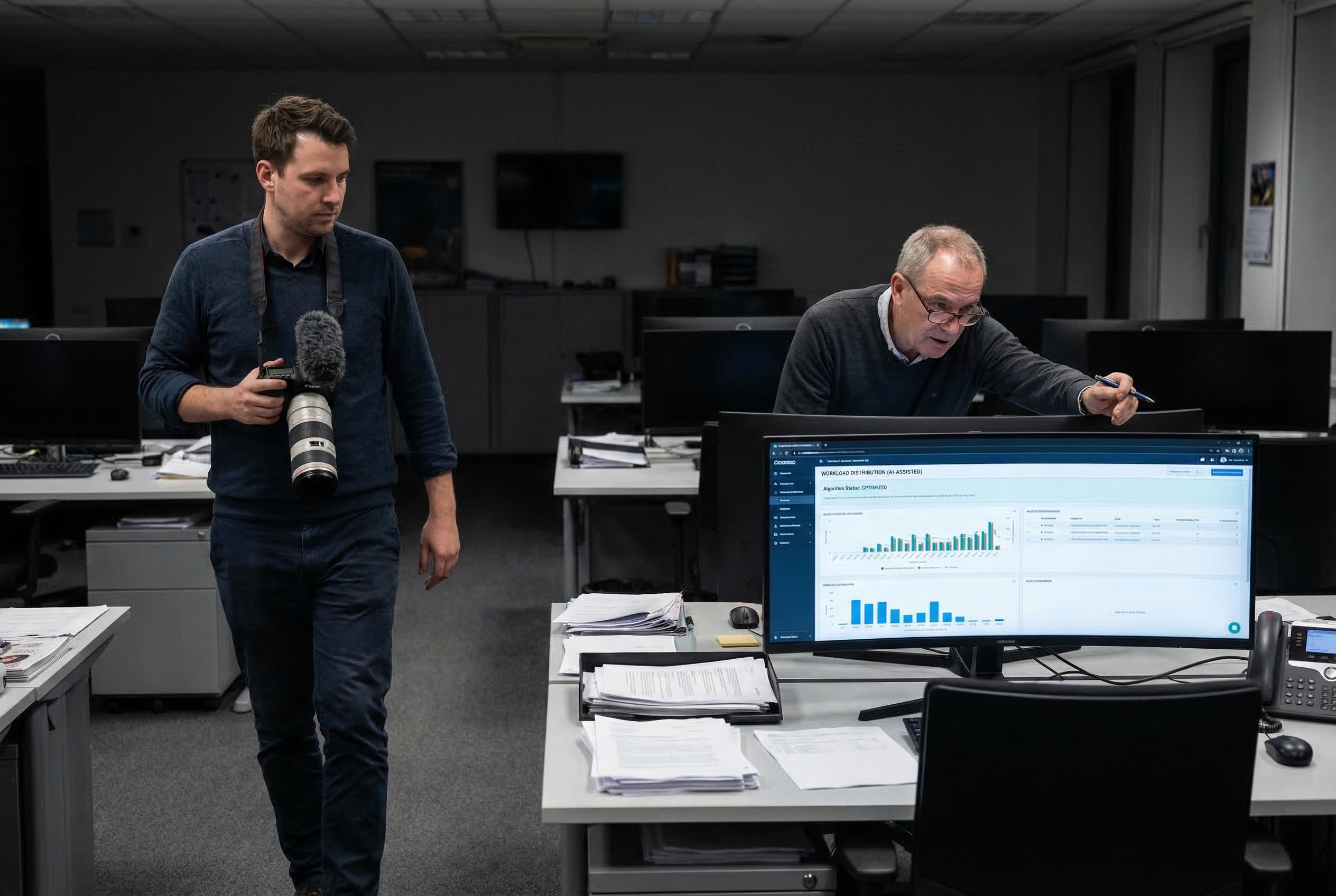
News organisations worldwide are increasing their use of AI tools to manage workloads and uncover leads, prompting a debate about ethical standards, trust, and the future role of human journalists amidst rapidly evolving technology.
Newsrooms around the world are increasingly turning to artificial intelligence to manage mounting workloads and surface leads that might otherwise be missed, reshaping everyday newsgathering even as debate over risks intensifies.
In the United States, The Philadelphia Inquirer has deployed AI tools to scan agendas and transcripts from local community meetings, flagging potential story leads and helping to launch four local newsletters that have attracted more than 50,000 subscribers over the past year, a project supported in part by Microsoft and OpenAI and backed by the Lenfest Institute.
Elsewhere, some outlets use generative systems to produce full drafts from press releases and prompts, with publishers in the UK and the US reporting substantial volumes of AI-written copy that are then edited by humans before publication. Industry surveys show a majority of journalism professionals have experimented with such technologies, even as newsroom approaches to ethics and usage vary widely.

Proponents say the technology frees reporters from routine tasks so they can concentrate on verification, analysis and investigations. Yet concern remains over accuracy and trust: “ThinkNewsBrands latest research, our News Nation report, shows 74 per cent of Australians are worried about misinformation, and 78 per cent say they trust national news publishers.” “Australian journalists have to abide by strict editorial standards. They take pride in verifying facts and having their work professionally and legally vetted.”
Some publishers stress the role of AI as a practical assistant rather than an editorial substitute. A News Corp Australia spokesperson said: “AI reinforces a simple truth for the news media: our greatest asset is the professional journalism we produce. In our newsrooms, we use AI in practical, innovative ways to streamline routine work and free journalists to focus on the stories and investigations that matter. To support this, we’ve trained more than 1,000 newsroom staff through specialised editorial AI boot camps, with a strong emphasis on effective and ethical integration.” At the same time, the Associated Press has moved to prohibit publishing AI-generated text and images while urging staff to learn the tools and apply strict human oversight.
Industry figures argue the correct use of AI is as an augmenting force: “The key distinction is that AI handles the ingestion and triage, the grunt work of reading everything, while journalists make the editorial decisions about what matters, how to frame it, and what to investigate further. It’s augmentation, not replacement.”
For smaller independent publishers, the technology can be a competitive equaliser, enabling a handful of staff to perform the functions that once required larger teams, though critics warn about the risk of eroding editorial judgement and introducing algorithmic bias if safeguards are not put in place.
The industry’s response remains fragmented: some organisations have pursued licensing deals with technology firms, others have launched legal challenges over the use of journalistic material to train models, and lawmakers and experts have raised alarms about copyright, misinformation and rapid dissemination of false content. That mix of lawsuits, partnerships and calls for regulation underscores the unsettled nature of the field.
As the tools become more commonplace, the debate has narrowed to how to combine technological capacity with editorial standards: embed clear rules, ensure transparency about AI use, preserve robust human verification and develop industry-wide practices that protect both journalism’s integrity and the livelihoods of reporters. According to experts and sector studies, without those measures the promise of AI as a “research assistant that never sleeps” risks being outweighed by the harms of misinformation and broken public trust.
Source Reference Map
Inspired by headline at: [1]
Sources by paragraph:
Source: Noah Wire Services
Noah Fact Check Pro
The draft above was created using the information available at the time the story first
emerged. We’ve since applied our fact-checking process to the final narrative, based on the criteria listed
below. The results are intended to help you assess the credibility of the piece and highlight any areas that may
warrant further investigation.
Freshness check
Score:
8
Notes:
The article was published on 10th March 2026, which is recent. However, the content references events and reports from 2024 and 2025, indicating that some information may be recycled. ([ap.org](https://www.ap.org/solutions/artificial-intelligence/?utm_source=openai))
Quotes check
Score:
7
Notes:
The article includes direct quotes from various sources. However, without access to the original sources, it’s challenging to verify the accuracy and context of these quotes. ([ap.org](https://www.ap.org/solutions/artificial-intelligence/?utm_source=openai))
Source reliability
Score:
6
Notes:
The article cites reputable sources such as the Associated Press and the Association for Data-Driven Marketers. However, the primary source, B&T, is a niche publication, which may limit the breadth of its coverage and fact-checking processes. ([ap.org](https://www.ap.org/solutions/artificial-intelligence/?utm_source=openai))
Plausibility check
Score:
7
Notes:
The claims about AI’s impact on news reporting align with industry trends. However, without independent verification, it’s difficult to assess the accuracy of these claims. ([ap.org](https://www.ap.org/solutions/artificial-intelligence/?utm_source=openai))
Overall assessment
Verdict (FAIL, OPEN, PASS): FAIL
Confidence (LOW, MEDIUM, HIGH): MEDIUM
Summary:
The article presents information on AI’s impact on news reporting, citing reputable sources. However, the reliance on a niche publication as the primary source, potential recycling of older content, and challenges in verifying quotes and source independence raise significant concerns. These issues prevent the article from meeting our verification standards.

