


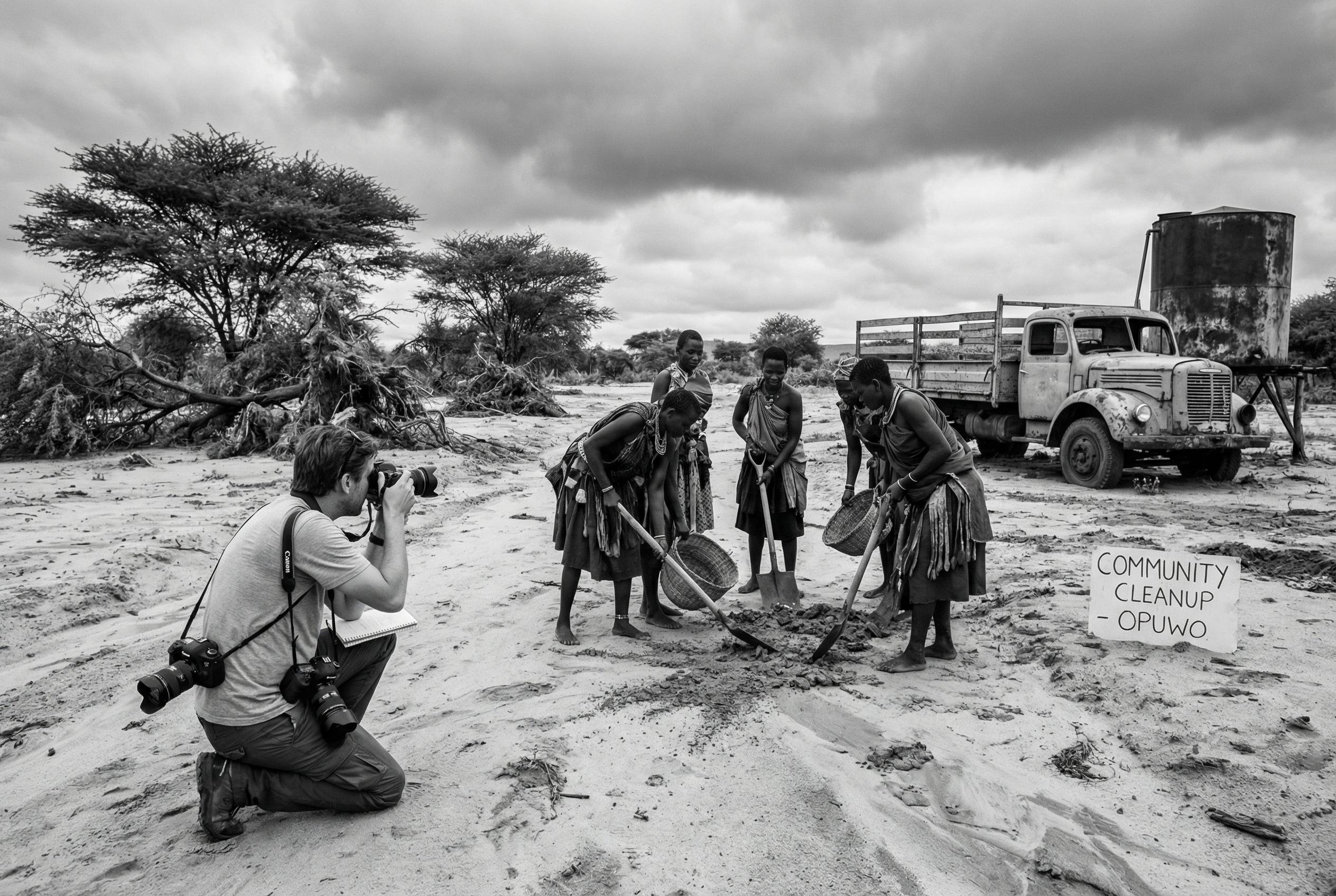
Rainfall in Namibia’s capital prompts local scavenging and clean-up efforts, as AI tools begin to reshape news reporting and daily responses to weather events, highlighting a shift in both climate adaptation and technological integration.
Rain that began in Namibia’s northern regions earlier this week reached Windhoek over the last 24 hours, sending city residents into the streets to recover salvageable items and clear drains as showers eased. According to The Namibian, many people took advantage of the wet weather to gather cans and bottles from wet pavements and gutters, an informal response to the sudden downpour that followed earlier storms in the north before moving through central, coastal and southern areas.
For some Windhoek residents the rain was both a relief and a nuisance: while the precipitation provided respite from dry conditions, it also left detritus and small-scale damage that households and communities scrambled to address. The Namibian described scenes of scavenging and neighbourhood clean-ups, with individuals, including named local residents, collecting recyclables and tending to blocked drains to prevent further water pooling.
The broader coverage comes amid a shift in how local newsrooms operate: The Namibian notes it employs artificial intelligence tools to assist with accuracy and efficiency while retaining editorial oversight. Reporting elsewhere in the paper has explored how AI is becoming more visible in Namibian life, from classroom technologies to automated services, underscoring a moment in which both weather events and technological change shape daily routines and responses.

As the showers subside, the informal efforts to reclaim waste and protect property underline communal resilience in the face of intermittent storms. The Namibian’s Sunrise morning briefing continues to collate such developments each weekday, combining concise local reporting with contextual pieces that track both practical impacts and wider social trends across the country.
Source Reference Map
Inspired by headline at: [1]
Sources by paragraph:
Source: Noah Wire Services
Noah Fact Check Pro
The draft above was created using the information available at the time the story first
emerged. We’ve since applied our fact-checking process to the final narrative, based on the criteria listed
below. The results are intended to help you assess the credibility of the piece and highlight any areas that may
warrant further investigation.
Freshness check
Score:
8
Notes:
The article from The Namibian, dated 27 March 2026, reports on recent rainfall in Windhoek. A search for similar narratives reveals no earlier publications on this specific event, indicating originality. However, the article’s freshness is slightly diminished due to its publication date being over a week ago. Additionally, the article mentions that rain began in the northern regions earlier in the week, suggesting that the event was already in progress at the time of publication. This temporal gap may affect the immediacy of the reporting.
Quotes check
Score:
7
Notes:
The article includes a direct quote from Windhoek resident Michael Ndjavaaa, who is described as collecting cans and bottles in a trolley for sale during the rain. A search for this specific quote yields no earlier matches, suggesting it is original. However, without additional context or verification from independent sources, the authenticity of this quote cannot be fully confirmed.
Source reliability
Score:
8
Notes:
The Namibian is a reputable news organisation based in Namibia, known for its coverage of local events. The article appears to be original reporting rather than a republished press release, which typically warrants a higher freshness score. However, the article’s publication date being over a week ago slightly diminishes its freshness.
Plausibility check
Score:
9
Notes:
The report of rainfall in Windhoek aligns with typical weather patterns for the region in late March. Historical data indicates that April in Windhoek is generally dry, with minimal rainfall. The article’s description of residents collecting recyclables and tending to blocked drains is plausible and consistent with community responses to sudden rainfall. However, the article’s publication date being over a week ago slightly diminishes its freshness.
Overall assessment
Verdict (FAIL, OPEN, PASS): PASS
Confidence (LOW, MEDIUM, HIGH): MEDIUM
Summary:
The article from The Namibian reports on recent rainfall in Windhoek, with no earlier publications found on this specific event, indicating originality. The report aligns with typical weather patterns for the region in late March. However, the article’s publication date being over a week ago slightly diminishes its freshness. The authenticity of the direct quote from a local resident cannot be fully confirmed due to lack of additional context or independent verification. The article relies on a direct quote and weather data from the Meteologix Icon model, but without additional independent verification, the claims cannot be fully corroborated. Given these factors, the overall assessment is a PASS with MEDIUM confidence.

