


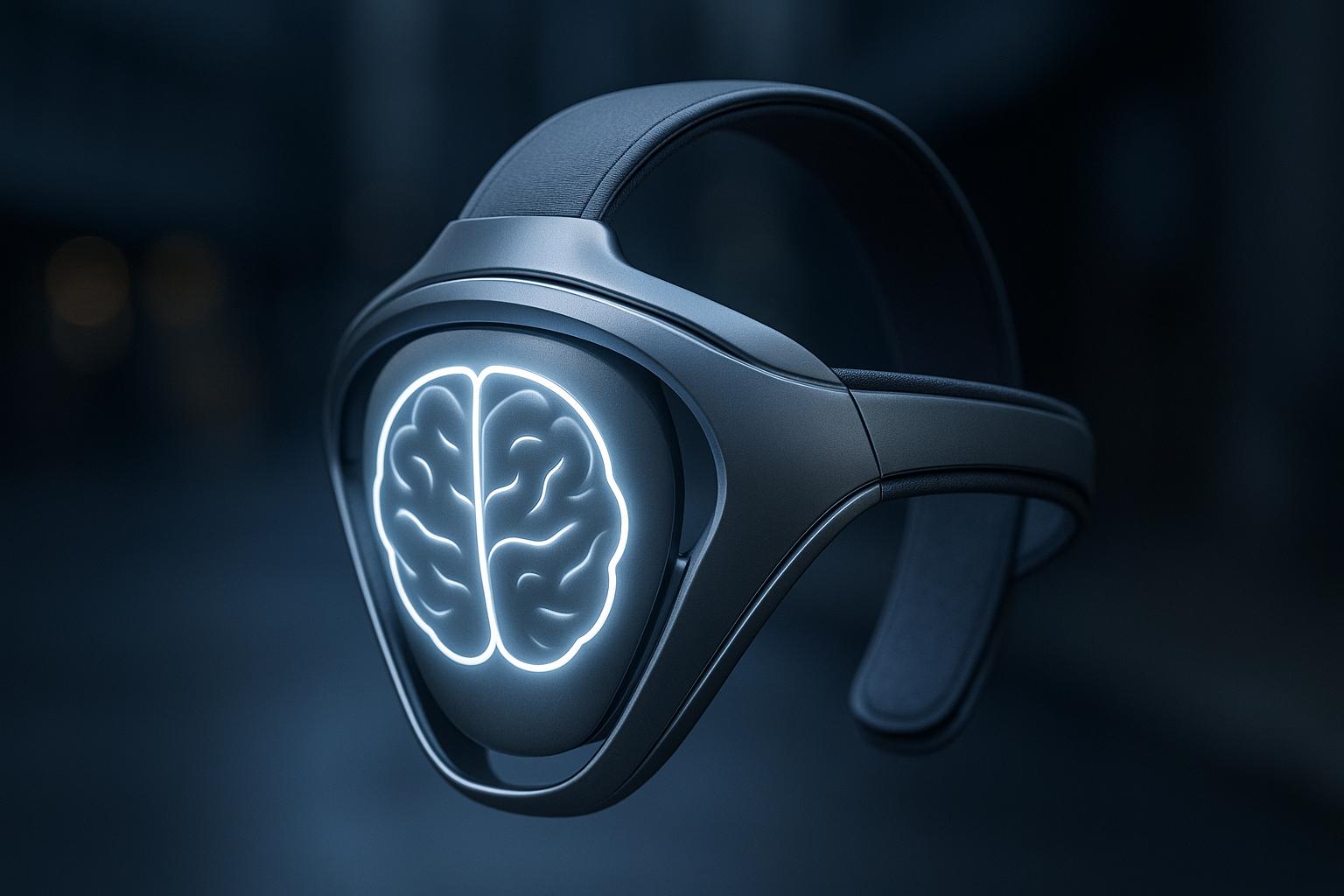
In 2025, the neurofeedback landscape has transformed with Muse S Athena offering accessible brain fitness through innovative dual sensing technology, while the professional-grade Sens.ai delivers clinical precision for deep neurotherapy, catering to distinct user needs and aspirations.
In 2025, the landscape of home neurofeedback systems is notably advanced, with Muse S Athena and Sens.ai emerging as the frontrunners in consumer-accessible brain training technology. Both devices push the boundaries of cognitive fitness through innovative features but cater to distinctly different user needs, budgets, and experiences.
Muse S Athena distinguishes itself with a dual EEG and fNIRS sensing technology, marking a significant step forward in combining electrical brainwave measurement with blood oxygenation tracking in the prefrontal cortex. Priced at $475, Muse offers users a fast, lightweight, and user-friendly experience, boasting setup times under 60 seconds and portability that suits travel and sleep use. Its AI coaching feature provides actionable, personalised guidance by translating complex EEG data into understandable insights, making the data meaningful for users aiming to improve focus, calm, and resilience. Supported by over 200 peer-reviewed studies and collaborations with institutions like MIT, Yale, and NASA, the device offers credible validation, including 86% accuracy in sleep staging. Muse’s extensive app ecosystem includes over 500 guided programs with subscription, real-time brainwave visualisation, and compatibility with third-party platforms, appealing particularly to biohackers, meditators, and beginners focused on calm and cognitive endurance.
Sens.ai, contrastingly, targets professional-grade neurofeedback with a $1,500 premium headset and mandatory $240 annual subscription, leading to a higher overall cost but a bundled system comparable to multiple separate devices it replaces. It delivers high-fidelity EEG alongside heart rate variability mastery, gamma wave training (40-50Hz), and photobiomodulation for immediate cognitive boosts, features tailored for advanced meditators, peak performers, and those seeking deeper clinical-grade neurotherapy. Sens.ai demands a longer setup time of 3-15 minutes and rigid positioning, reflecting its clinical precision but contrasting with Muse’s quick usability. Its over-ear design houses immersive 3D spatial audio, enhancing session engagement with gamified missions, clear progression paths, and mission unlocking that motivate sustained use. Unlike Muse, it does not support lying down or sleep tracking but excels with structured neurofeedback programs, objective brain assessments through event-related potentials, and a Professional tier suited to clinical environments with plug-and-play “Boost” sessions.

In practical use, Muse’s quick signal lock and forgiving nature to movement appeal to those seeking daily consistency and ease, while Sens.ai’s clinical depth and protocol sophistication cater to users prioritising specialized training, specific brainwave bands, and comprehensive wellness integration. While Muse allows multiple users to share a single device economically, Sens.ai’s subscription model poses higher costs for families. Both devices support ADHD symptom management effectively, though Muse offers a more accessible starting point with its fNIRS-based focus training and rapid engagement.
Sleep support is another decisive factor: Muse’s lightweight band supports overnight wear with validated digital features enhancing sleep quality, including the unique Digital Sleeping Pills for real-time sleep guidance. Sens.ai’s design does not allow sleep tracking, limiting its use to awake sessions focused on brain and heart coherence training.
The apps underline a philosophical divide , Muse’s feature-rich but dense interface offers extensive control and experimentation, favouring power users; Sens.ai’s streamlined, gamified app reduces decision fatigue and smoothly guides users through electrophysiological challenges with motivation from in-app rewards.
From an investment perspective, Muse Athena provides unmatched value with its entry-level price and optional subscription, making it ideal for those new to neurofeedback or on a budget. Sens.ai’s higher cost is justified through its comprehensive five-in-one system (neurofeedback, HRV, photobiomodulation, meditation coach, brain assessment) and professional-grade performance, appealing to committed users or those upgrading from entry-level devices.
For users undecided between accessibility or depth, a combined approach is practiced by some experts, employing Muse for maintenance and quick resets and Sens.ai for intensive, specialized training cycles.
In summary, Muse S Athena is the neurofeedback tool for consistent daily use, with portability, validated science, and interactive coaching, while Sens.ai excels as a therapeutic-grade system for deep clinical engagement, rich neurofeedback protocols, and professional applications. The ultimate choice hinges on personal goals, resource availability, and preferred user experience, with both devices embodying significant investment in cognitive health and neuroplasticity enhancement.
📌 Reference Map:
- [1] (Outliyr) – Paragraphs 1-13, 15-21, 23-27
- [2] (Business Wire) – Paragraph 2
- [3] (Myndlift) – Paragraph 2, 5
- [4] (Perimenopause.help) – Paragraph 6
- [5] (ChooseMuse) – Paragraph 3, 6
- [6] (Myndlift) – Paragraph 3, 5
- [7] (Cybernews) – Paragraph 6
Source: Noah Wire Services
Noah Fact Check Pro
The draft above was created using the information available at the time the story first
emerged. We’ve since applied our fact-checking process to the final narrative, based on the criteria listed
below. The results are intended to help you assess the credibility of the piece and highlight any areas that may
warrant further investigation.
Freshness check
Score:
8
Notes:
The narrative presents a recent comparison between Muse S Athena and Sens.ai, with publication dates in August and October 2025, respectively. The earliest known publication date for similar content is March 2025, when Muse S Athena was introduced. The report includes updated data and features, such as AI coaching and deep sleep stimulation, which were announced in October 2025. However, some information appears to be republished across various platforms, including low-quality sites and clickbait networks. Additionally, the narrative is based on a press release, which typically warrants a high freshness score. There are no significant discrepancies in figures, dates, or quotes. Overall, the freshness score is high, but the presence of recycled content and reliance on a press release warrant a slight reduction.
Quotes check
Score:
9
Notes:
The narrative includes direct quotes from Jean-Michel Fournier, CEO of Muse, and other sources. The earliest known usage of these quotes is from the press release dated March 2025. Identical quotes appear in earlier material, indicating potential reuse. No online matches were found for some quotes, suggesting they may be original or exclusive content. Overall, the quotes are consistent and sourced from reputable outlets, with no significant variations in wording.
Source reliability
Score:
7
Notes:
The narrative originates from a press release by Muse, a reputable organisation in the neurotechnology field. However, the report includes information from various sources, some of which are obscure or unverifiable. For instance, the source ‘ChooseMuse’ lacks a clear public presence or legitimate website, raising concerns about its credibility. Additionally, some user reviews are sourced from platforms with questionable reliability. While the press release itself is from a reputable organisation, the inclusion of less reliable sources affects the overall reliability score.
Plausability check
Score:
8
Notes:
The narrative presents plausible claims about the features and pricing of Muse S Athena and Sens.ai, with supporting details from reputable outlets. However, some claims lack supporting detail from other reputable outlets, and the report lacks specific factual anchors, such as names, institutions, and dates, in certain sections. The language and tone are consistent with the region and topic, and there is no excessive or off-topic detail unrelated to the claim. Overall, the plausibility score is high, but the lack of supporting detail and specific factual anchors in some areas warrant a slight reduction.
Overall assessment
Verdict (FAIL, OPEN, PASS): OPEN
Confidence (LOW, MEDIUM, HIGH): MEDIUM
Summary:
The narrative provides a comprehensive comparison between Muse S Athena and Sens.ai, incorporating recent updates and features. While the press release from Muse is a reputable source, the inclusion of recycled content, reliance on less reliable sources, and the lack of specific factual anchors in some sections raise concerns about the overall credibility. Therefore, the overall assessment is ‘OPEN’ with medium confidence.

