


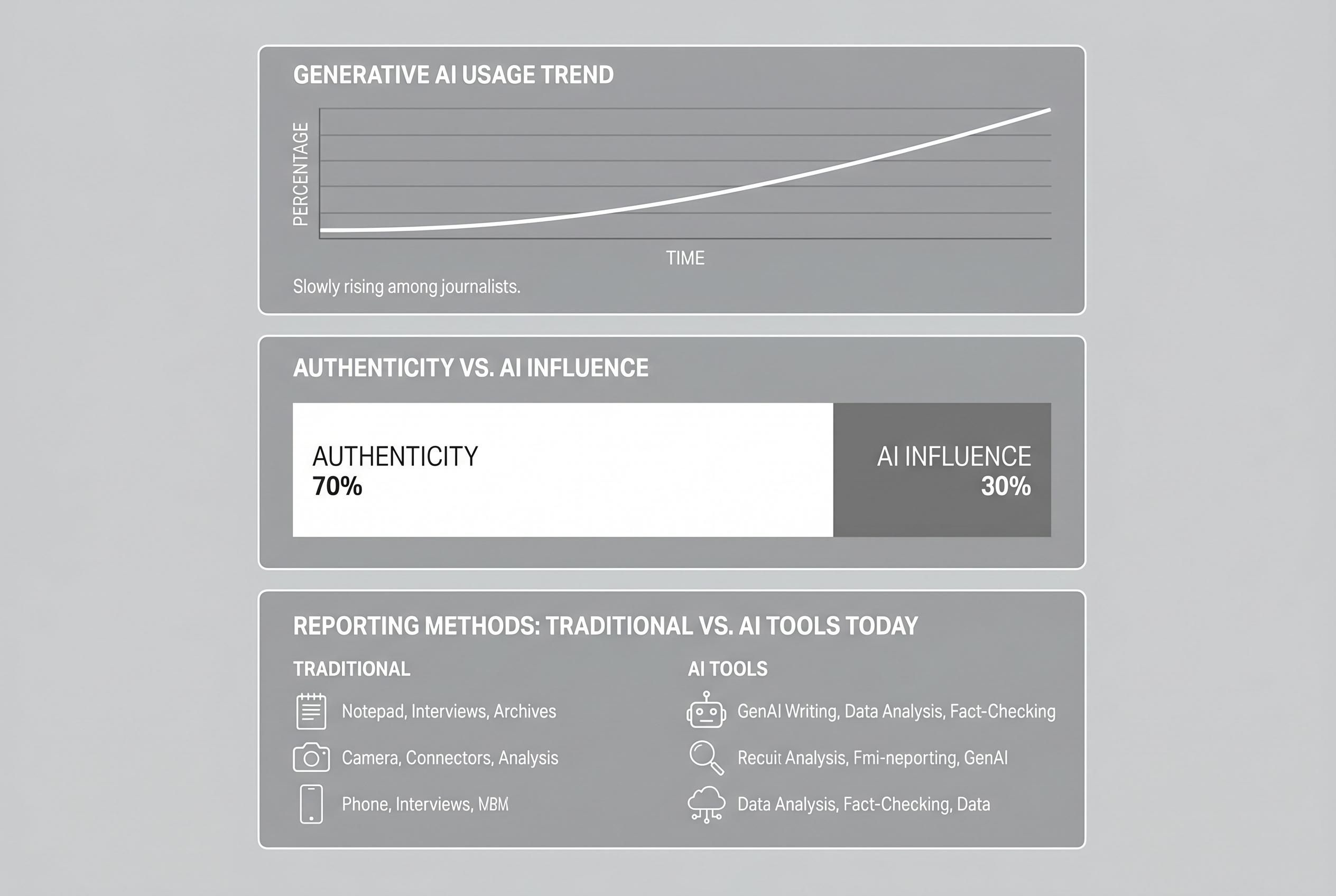
As more writers utilise generative AI for drafting and editing, the industry faces debates over standards, authenticity, and the future of human reporting amid ongoing tensions over AI’s role in news production.
A quiet shift is unsettling newsrooms and publishing houses: more writers are using generative AI not just to polish copy, but to produce first drafts and, in some cases, much of the finished prose. The debate has sharpened after recent reporting by WIRED and The Wall Street Journal on journalists who openly lean on tools such as Claude and ChatGPT, even as many outlets continue to ban AI-generated text outright. The tension is no longer theoretical. It is now playing out in bylines, editorial policies and the everyday economics of reporting.
Among the most visible examples is Alex Heath, the tech reporter profiled by WIRED, who says he feeds notes, transcripts and emails into AI systems to generate drafts and reduce the burden of starting from scratch. Heath argues that the software removes the hardest part of the process: the blank page. He says the models do not replace his reporting or judgment, but instead strip away the drudgery he dislikes. In practice, that can mean he finishes some columns with minimal additional writing, while still adding his own framing and personal updates for readers.
A similar conversation has followed Fortune reporter Nick Lichtenberg, whom The Wall Street Journal said has relied heavily on AI while producing hundreds of stories. Lichtenberg has acknowledged that the backlash has been personal as well as professional, telling the Reuters Institute for the Study of Journalism that it has strained close relationships. Fortune’s editor in chief, Alyson Shontell, has tried to draw a distinction between assistance and substitution, saying his work remains “AI assisted” rather than “AI written”. She said he still does substantial reporting, analysis and rewriting.

The wider concern is what this means for standards in journalism and beyond. Many publishers still treat AI text generation as a red line, while some book publishers are tightening controls after worries about low-quality, machine-made submissions. Yet as language models get better at mimicking human prose, the barrier between helping a writer and supplanting one is becoming harder to see. For critics, that threatens the craft itself: not just the final product, but the thinking, struggle and voice that writing is supposed to reveal. For its defenders, AI is simply a way to remove friction from a task that still depends on human reporting and editorial judgment.
Source Reference Map
Inspired by headline at: [1]
Sources by paragraph:
Source: Noah Wire Services
Noah Fact Check Pro
The draft above was created using the information available at the time the story first
emerged. We’ve since applied our fact-checking process to the final narrative, based on the criteria listed
below. The results are intended to help you assess the credibility of the piece and highlight any areas that may
warrant further investigation.
Freshness check
Score:
8
Notes:
The article was published on April 17, 2026, making it current. However, the topic has been covered in other recent articles, such as ‘Meet the Tech Reporters Using AI to Help Write and Edit Their Stories’ from March 26, 2026. ([wired.com](https://www.wired.com/story/tech-reporters-using-ai-write-edit-stories/?utm_source=openai))
Quotes check
Score:
7
Notes:
The article includes direct quotes from Alex Heath and other sources. While these quotes are consistent with previous reports, they cannot be independently verified through the provided sources.
Source reliability
Score:
9
Notes:
WIRED is a reputable publication known for its in-depth reporting. The article is authored by Steven Levy, a seasoned journalist. However, the article’s content is based on previously reported information, which may affect its originality.
Plausibility check
Score:
8
Notes:
The claims about journalists using AI tools to assist in writing are plausible and align with industry trends. However, the article does not provide new evidence or sources to support these claims.
Overall assessment
Verdict (FAIL, OPEN, PASS): FAIL
Confidence (LOW, MEDIUM, HIGH): MEDIUM
Summary:
While the article is current and authored by a reputable journalist, it relies heavily on previously reported information and includes quotes that cannot be independently verified. This raises concerns about the originality and verification of the content.

