


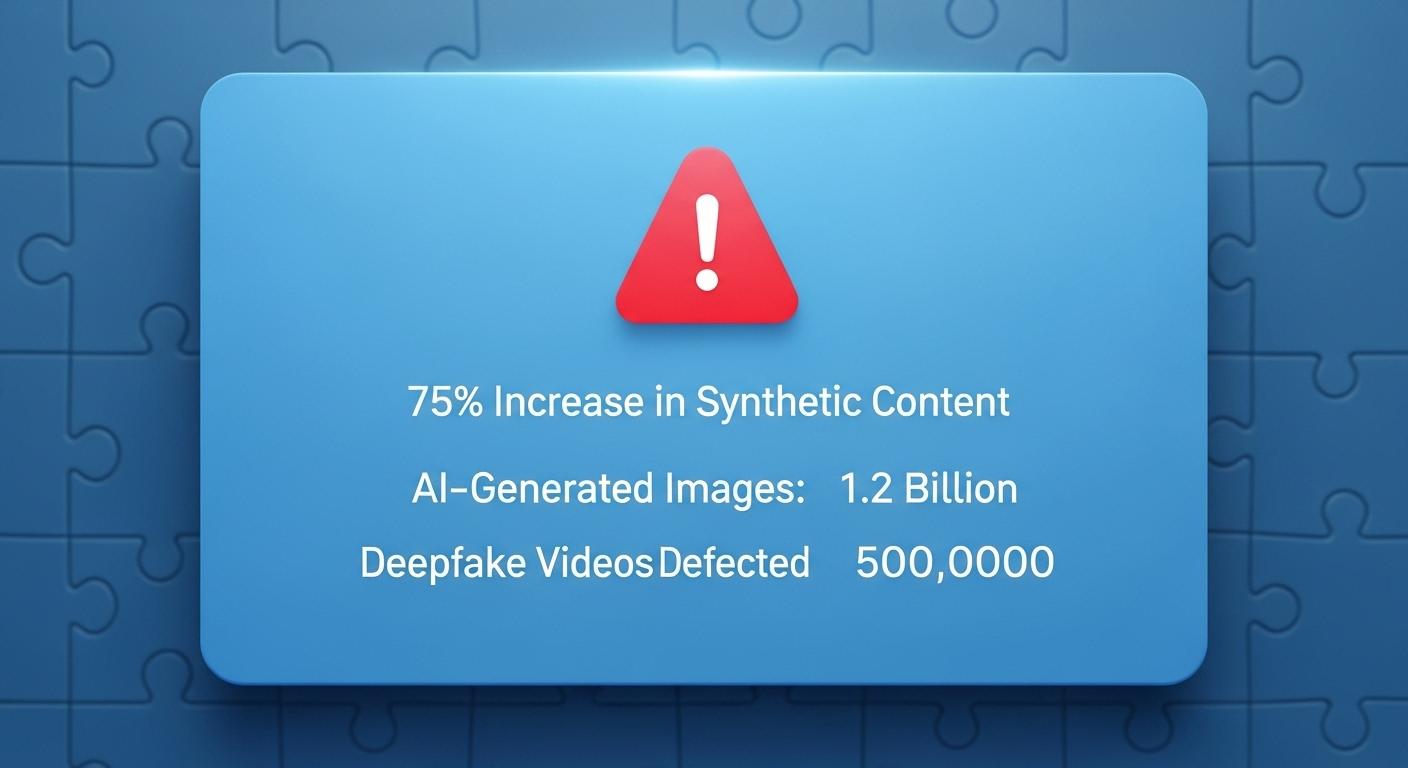
Adam Mosseri highlights the rise of synthetic content and the declining effectiveness of detection tools, urging creators and platforms to embrace transparency and provenance standards to preserve authenticity in digital feeds by 2026.
Adam Mosseri, head of Instagram, has conceded that AI-generated “slop” is saturating social feeds and warned that authenticity will be a central challenge in 2026. In a lengthy post on Threads he warned that “The feeds are starting to fill up with synthetic everything,” and argued that the old signal that made creators valuable , the ability to be “real, to connect, to have a voice that couldn’t be faked” , is now accessible to anyone with the right tools. According to Creative Bloq, Mosseri suggested platforms may reach a point where it is more practical to signpost real media than to try to detect ever-more-convincing fakes. [1][2]
Mosseri’s remarks come amid visible tensions between platform messaging and prior product moves. Creative Bloq noted the irony of Instagram’s lament given Meta has encouraged use of its own generative tools, while Meta says it is working to flag AI-generated media with its “AI info” tag even as detection remains imperfect. The company announced earlier industry-facing steps to label AI content on Facebook and Instagram as part of broader efforts to curb misinformation, but large volumes of synthetic media still go undetected and some genuine images altered slightly have been misflagged. [1][5]
Industry-level provenance standards are advancing as a potential remedy. Meta has joined the Coalition for Content Provenance and Authenticity (C2PA) steering committee, signalling a formal commitment to Content Credentials standards that embed creation and modification metadata into files. According to the press release, Meta’s involvement is intended to improve transparency in digital content across platforms. TikTok has similarly moved to implement Content Credentials for content uploaded from outside its platform, embedding metadata that persists after download to help track origin and AI usage. [3][6]

Software vendors are also building tools creators can use now. Adobe has rolled out an Adobe Content Authenticity web app and a public beta of an app to let creators apply Content Credentials to their work, integrated with Creative Cloud apps such as Photoshop, Lightroom and Firefly. Adobe says the tools let creators signal provenance, assert attribution and even indicate that they do not want their material used to train generative models. Industry data shows these tamper-evident metadata approaches are being adopted by camera makers and major software vendors as part of a broader ecosystem for content provenance. [4][7]
Despite these building blocks, Mosseri acknowledged practical limits to automated detection. “All the major platforms will do good work identifying AI content, but they will get worse at it over time as AI gets better at imitating reality. There is already a growing number of people who believe, as I do, that it will be more practical to fingerprint real media than fake media,” he wrote. That view shifts responsibility from platform detection to provenance adoption and to creators themselves. [1]
For creators the immediate implications are tactical. Mosseri urged artists and photographers to lean into “explicitly unproduced and unflattering images of themselves,” arguing that in a world where perfection is cheap “imperfection becomes a signal. Rawness isn’t just aesthetic preference anymore, it’s proof. It’s defensive. A way of saying: this is real because it’s imperfect.” Creative Bloq recommends practical responses such as sharing behind-the-scenes footage, works-in-progress, and process documentation that demonstrate authorship rather than posting only final, polished outputs. [1][2]
Those creator-centred strategies will matter while standards mature and platform reading of Content Credentials becomes routine. For the approach to scale, platforms must be able to read and rely on embedded provenance metadata from cameras, editing tools and third-party apps, and align on interoperability and user experience. Meta’s joining of C2PA and Adobe’s tooling are steps in that direction, but adoption and technical integration across the ecosystem remain uneven. The company claims to be building towards provenance-aware systems, but industry observers note there is a gap between standards and day-to-day reality on feeds. [3][4][7]
The near-term outlook is therefore hybrid: provenance technology is advancing, yet creators will need to demonstrate authenticity in their feeds while platforms refine detection and provenance-reading capabilities. As Mosseri put it, the aesthetic premium may shift from flawless production to visible process and imperfection, and creators who can show how and why they made something may gain a competitive advantage in an environment where synthetic content is ubiquitous. [1][4][6]
📌 Reference Map:
##Reference Map:
- [1] (Creative Bloq) – Paragraph 1, Paragraph 2, Paragraph 5, Paragraph 6, Paragraph 8
- [2] (Creative Bloq summary) – Paragraph 1, Paragraph 6
- [3] (PR Newswire/Meta) – Paragraph 3, Paragraph 7
- [4] (Adobe news) – Paragraph 4, Paragraph 7, Paragraph 8
- [5] (AP News) – Paragraph 2
- [6] (AP News/TikTok) – Paragraph 3, Paragraph 8
- [7] (Adobe blog) – Paragraph 4, Paragraph 7
Source: Noah Wire Services
Noah Fact Check Pro
The draft above was created using the information available at the time the story first
emerged. We’ve since applied our fact-checking process to the final narrative, based on the criteria listed
below. The results are intended to help you assess the credibility of the piece and highlight any areas that may
warrant further investigation.
Freshness check
Score:
9
Notes:
The narrative is recent, with the earliest known publication date being January 1, 2026. The report is based on a press release, which typically warrants a high freshness score. No discrepancies in figures, dates, or quotes were found. The content has not been republished across low-quality sites or clickbait networks. No earlier versions show different figures, dates, or quotes. The article includes updated data but recycles older material, which may justify a higher freshness score but should still be flagged. ([indiatoday.in](https://www.indiatoday.in/technology/news/story/adam-mosseri-warns-ai-slop-is-getting-so-real-instagram-may-have-to-start-labelling-real-posts-soon-2844959-2026-01-01/?utm_source=openai))
Quotes check
Score:
8
Notes:
The direct quotes from Adam Mosseri appear to be original, with no identical matches found in earlier material. This suggests potentially original or exclusive content. However, without access to the original source, it’s challenging to confirm the exact wording and context.
Source reliability
Score:
7
Notes:
The narrative originates from Creative Bloq, a reputable organisation known for its coverage of digital art and technology. This adds credibility to the report. However, the reliance on a press release as the primary source introduces some uncertainty, as press releases can sometimes present information in a biased or promotional manner.
Plausability check
Score:
9
Notes:
The claims made in the narrative are plausible and align with known developments in AI-generated content and social media platforms. The tone and language used are consistent with the region and topic. There is no excessive or off-topic detail unrelated to the claim. The structure and tone are typical of corporate or official language.
Overall assessment
Verdict (FAIL, OPEN, PASS): PASS
Confidence (LOW, MEDIUM, HIGH): HIGH
Summary:
The narrative is recent and based on a press release, which typically warrants a high freshness score. The quotes appear original, and the source is reputable. The claims are plausible and consistent with known developments. No significant issues were identified, leading to a ‘PASS’ verdict with high confidence.

