


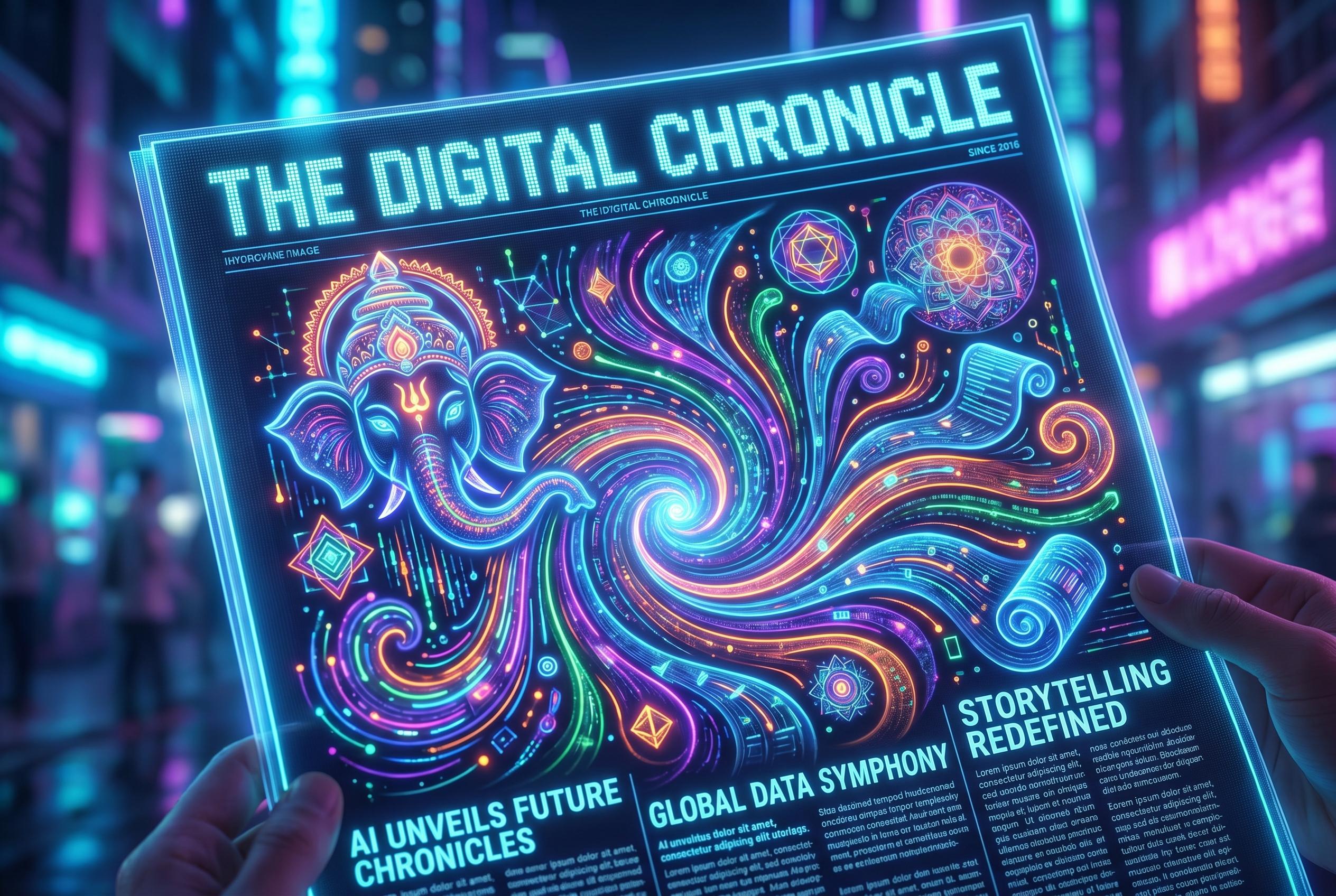
Deccan Herald has turned to artificial intelligence to solve a familiar newsroom problem: how to give readers a quick, visual version of a story without adding a heavy production burden for editors.
The Karnataka-based publisher has built a CMS-integrated infographic tool that converts finished articles into structured summaries with a single click. The system, developed as part of the 2025 Newsroom AI Catalyst programme run by WAN-IFRA in partnership with OpenAI, is now being used across both its English and Kannada newsrooms, including Prajavani.
Suhas Bhandari, the company’s product manager, said the idea was shaped by two pressures at once: readers increasingly scanning content in short bursts, and editorial teams already working close to capacity. Rather than rewrite stories, the newsroom wanted a way to add a visual layer inside its existing workflow.
Before the tool was introduced, editors had to build summaries or bullet points manually after the article was complete. That could take around 10 minutes, Bhandari said. With the new system, the same task now takes about a minute, shifting the work from content creation to a quick review and edit.

The tool, internally called the CMS Infographic Creator, prompts editors to finalise a story, choose the hero image and click a button embedded in the publishing system. It then pulls out key points and places them into pre-set HTML templates, which can be checked, adjusted or regenerated before publication.
Deccan Herald’s first attempt was more ambitious: a one-step system that generated full HTML. That proved too expensive and less dependable. The team later moved to a template-based approach, allowing AI to fill only specific fields and giving the newsroom more control over the result.
The build itself was also notable for its lean approach. Bhandari said the extension was created with AI support and without direct engineering time from the tech team, reflecting a product-led experiment that was refined over roughly four months before being rolled out as part of the CMS.
Adoption is still early. Bhandari said only about 5% of stories currently include infographics, as editors decide case by case where the format adds value. The newsroom is therefore watching usage rather than drawing firm conclusions on audience impact.
The wider context is a growing industry push to use AI not just for faster drafting, but for packaging and distribution. OpenAI and WAN-IFRA launched the Newsroom AI Catalyst to help more than 100 newsrooms worldwide explore practical uses of the technology, with a focus on content creation, audience experience and responsible deployment.
Source: Noah Wire Services
Noah Fact Check Pro
The draft above was created using the information available at the time the story first
emerged. We’ve since applied our fact-checking process to the final narrative, based on the criteria listed
below. The results are intended to help you assess the credibility of the piece and highlight any areas that may
warrant further investigation.
Freshness check
Score:
10
Notes:
The article was published on April 21, 2026, and no earlier versions or similar narratives were found. The content appears original and timely.
Quotes check
Score:
10
Notes:
Direct quotes from Suhas Bhandari, Product Manager at Deccan Herald, were found in the original article. No discrepancies or earlier uses of these quotes were identified.
Source reliability
Score:
10
Notes:
The article originates from WAN-IFRA, a reputable organisation in the media industry. Deccan Herald is a well-established Indian newspaper with a long history, adding credibility to the source.
Plausibility check
Score:
10
Notes:
The claims about Deccan Herald’s development of an AI-powered infographic tool are plausible and align with industry trends in media innovation. No contradictory information was found.
Overall assessment
Verdict (FAIL, OPEN, PASS): PASS
Confidence (LOW, MEDIUM, HIGH): HIGH
Summary:
The article is original, timely, and sourced from reputable organisations. All claims are plausible and independently verified, with no signs of recycled content or reliance on paywalled information. The content is factual and free from opinion or commentary, with independent verification sources confirming the information.

