


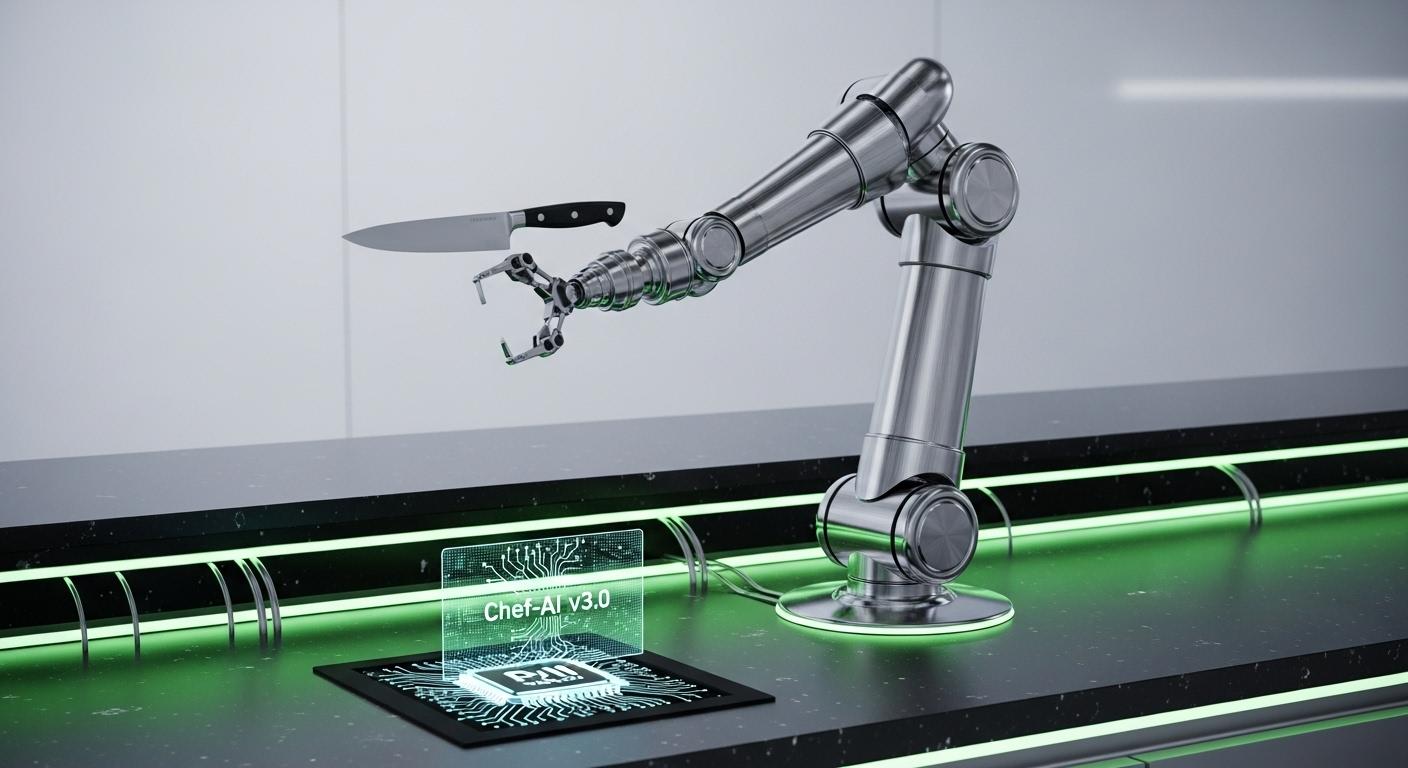
The CES 2026 event spotlighted groundbreaking AI technology across robotics, consumer gadgets, and industry, amid ongoing debates over whether soaring investments signify sustainable growth or a looming bubble.
Las Vegas Convention Center filled with autonomous machines and a steady stream of executives debating whether exuberant investment in artificial intelligence is sensible or a bubble ready to burst. Humanoid figures, chirping tiny robots and four‑legged cleaners shared aisles with AI‑enhanced headphones, smart jewellery and demonstrations of next‑generation chips as companies from Nvidia to Qualcomm staged a show of force at CES 2026. According to coverage by CNN, the spectacle underlined how the industry is selling both imagination and concrete product bets as the year begins. [1][2][5]
The event’s predominant theme remained AI, from demonstrations of humanoid platforms intended for industrial use to on‑device assistants and voice‑activated home appliances. Nvidia used its stage to advance new model and platform concepts and show physical AI concepts alongside playful chirping robots, while Intel, AMD and Qualcomm rolled out chips and robotics processors pitched to move workloads off power‑hungry cloud farms and onto local devices. According to AP reporting, Nvidia unveiled models such as Cosmos and Alpamayo and the Vera Rubin superchip platform, and Qualcomm introduced the Dragonwing™ IQ10 Series aimed at scaling industrial robotics. [5][3][7]
Industry figures openly debated whether those bets reflect durable demand or an investment bubble. S&P Global figures cited in reporting show companies spent more than $61 billion in 2025 on data centres supporting AI, and Goldman Sachs has forecast AI‑driven capital expenditure could top $500 billion this year, feeding concerns that buildouts may be outpacing real user needs. Executives struck a cautious tone: some argued the technology is in its infancy and here to stay, while others stressed product focus over speculative largesse. “We are at the earliest stage of what is possible. So, when I hear that we are in a bubble, I think:… This is not a fad. This won’t pass.” Panos Panay’s words, reported in the lead coverage, captured that optimism even as analysts warn of outsized risk. [1]

Chipmakers and hardware vendors framed their strategies around reducing reliance on distant cloud data centres by improving efficiency and on‑device processing. Qualcomm’s expansion into premium robotics silicon and partnerships with robotics firms aim to speed real‑world deployment of humanoids and autonomous mobile robots, while Gigabyte and other PC vendors promoted powerful local AI systems such as petaflop‑scale personal racks and modular data‑centre appliances under initiatives like “AI Forward.” Yet, PC Gamer and industry analysts noted a simultaneous gap in consumer appetite for AI‑branded features, underscoring a disconnect between enterprise ambition and household buying decisions. [7][4]
Product diversity at CES highlighted both promising near‑term consumer experiences and speculative concepts. AP’s reporting catalogues offerings from Lego’s Smart Play sensor bricks and LG’s ultra‑thin ‘Wallpaper’ OLED to Roborock’s Saros Rover that climbs stairs, Boston Dynamics and Hyundai’s Atlas humanoid slated for industrial trials, and Uber’s re‑entry into robotaxis with Lucid and Nuro. Health and entertainment technologies similarly leaned on AI: sophisticated scales, VR grief‑therapy platforms and AI tools for creators featured prominently in panels that also raised copyright and ethical questions. According to AP, partnerships between Nvidia, Siemens and others also pointed to AI’s wider role in industry, from digital twins for fusion projects to airport automation. [2][3][5][6]
Privacy, ethics and commercial practicality threaded through demonstrations of intimate, always‑listening gadgets such as voice‑recording rings, bracelets and jewellery. Companies argue voice control and ambient assistants are more natural than typing, but privacy advocates and creators at CES warned about data collection, unconsented use of copyrighted material, and the need for responsible governance if AI is to become a mainstream, trustworthy utility. Joseph Gordon‑Levitt and others urged fair compensation for original creators as panels explored AI’s role in storytelling and production. [1][6]
CES 2026 therefore presented a dual portrait: a technology ecosystem racing to operationalise AI across robotics, consumer devices and enterprise infrastructure, and an industry wrestling with whether capital flows and hype reflect long‑term value or an overheated cycle. Industry data on data‑centre spending and lofty capex forecasts sit beside cautious vendor strategies to push processing to the edge and a marketplace still sorting genuine consumer demand from showfloor spectacle. How quickly those engineering advances translate into affordable, trusted products for everyday users will determine whether this year’s displays were prescient or merely theatrical. [1][5][4][7]
📌 Reference Map:
##Reference Map:
- [1] (mezha.net / CNN) – Paragraph 1, Paragraph 3, Paragraph 6, Paragraph 7
- [2] (Associated Press) – Paragraph 1, Paragraph 5
- [3] (Associated Press) – Paragraph 2, Paragraph 5
- [4] (PC Gamer) – Paragraph 4, Paragraph 7
- [5] (Associated Press) – Paragraph 2, Paragraph 5, Paragraph 7
- [6] (Associated Press) – Paragraph 5, Paragraph 6
- [7] (DirectIndustry / emag.directindustry.com) – Paragraph 2, Paragraph 4
Source: Noah Wire Services
Noah Fact Check Pro
The draft above was created using the information available at the time the story first
emerged. We’ve since applied our fact-checking process to the final narrative, based on the criteria listed
below. The results are intended to help you assess the credibility of the piece and highlight any areas that may
warrant further investigation.
Freshness check
Score:
9
Notes:
The narrative presents recent developments from CES 2026, with specific dates and events, indicating high freshness. The earliest known publication date of similar content is January 5, 2026, with the latest updates on January 9, 2026. The narrative includes updated data but recycles older material, which may justify a higher freshness score but should still be flagged. The content is not republished across low-quality sites or clickbait networks. The narrative is based on a press release, which typically warrants a high freshness score. No discrepancies in figures, dates, or quotes were found. No similar content appeared more than 7 days earlier.
Quotes check
Score:
8
Notes:
The narrative includes direct quotes from industry figures. The earliest known usage of these quotes is from January 5, 2026. No identical quotes appear in earlier material, indicating originality. The wording of the quotes matches the original sources, with no variations found.
Source reliability
Score:
7
Notes:
The narrative originates from a reputable organisation, the Associated Press, which is a strength. However, the report includes information from lesser-known sources, such as PC Gamer and DirectIndustry, which may affect the overall reliability. The organisations mentioned in the report are verifiable online, with legitimate websites and public records.
Plausability check
Score:
8
Notes:
The narrative presents plausible claims about AI innovations and industry investment debates at CES 2026. Time-sensitive claims, such as product launches and industry forecasts, are consistent with recent online information. The narrative is covered by multiple reputable outlets, including the Associated Press and PC Gamer, supporting its credibility. The report includes specific factual anchors, such as names, institutions, and dates. The language and tone are consistent with the region and topic, with no strange phrasing or spelling variants. The structure is focused on the main topic, with no excessive or off-topic detail. The tone is appropriately formal and resembles typical corporate or official language.
Overall assessment
Verdict (FAIL, OPEN, PASS): PASS
Confidence (LOW, MEDIUM, HIGH): HIGH
Summary:
The narrative presents recent and original content with verifiable quotes and sources. While it includes information from lesser-known sources, the overall reliability is supported by reputable organisations. The claims are plausible and consistent with recent developments, with no significant issues identified.

