


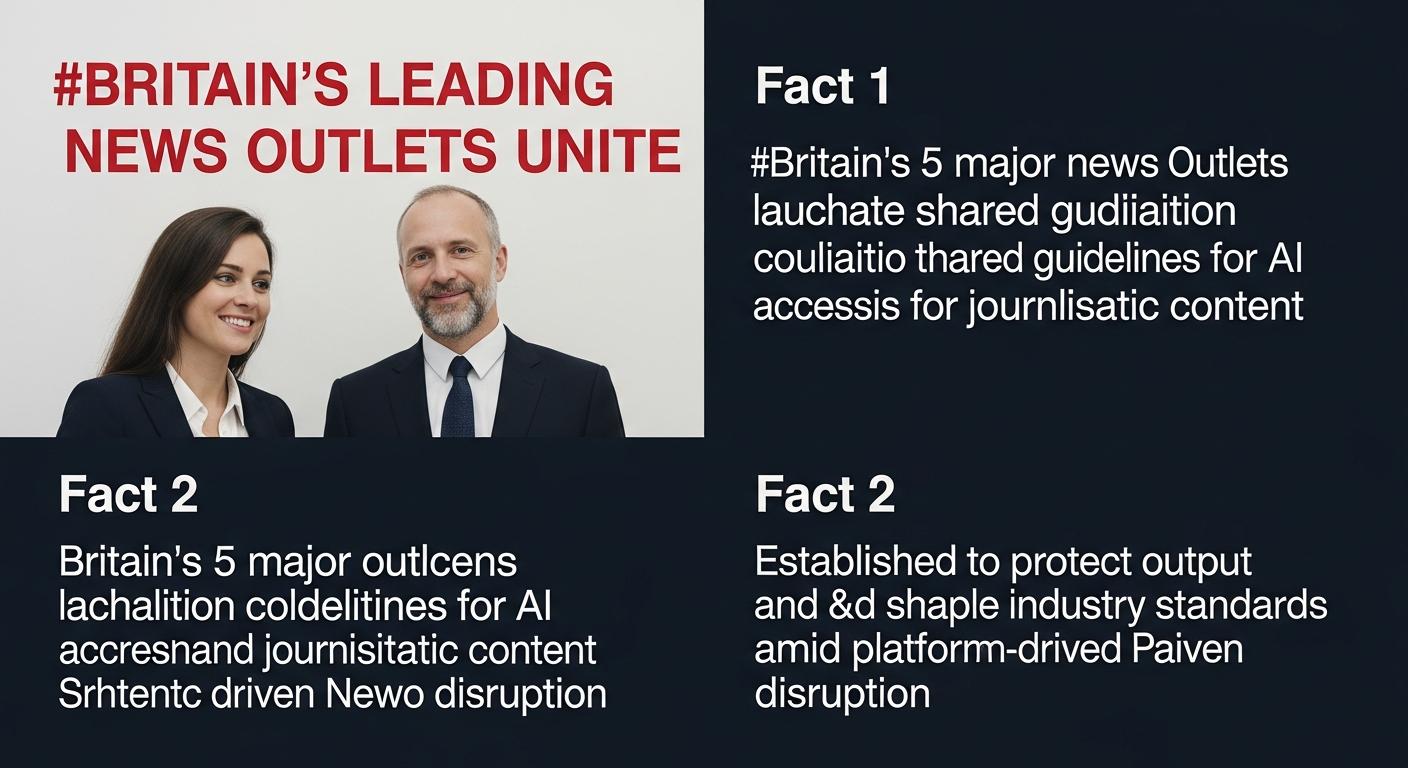
Five of Britain’s major news outlets have launched a coalition to create shared technical and commercial guidelines for AI systems accessing journalistic content, aiming to protect their output and shape industry standards amid growing platform-driven disruption.
Five of Britain’s biggest news organisations have announced a joint effort to set common rules for how artificial intelligence systems use journalistic content. According to The Guardian and the coalition’s own website, the BBC, Financial Times, Sky News, The Guardian and Telegraph Media Group have launched the Standards for Publisher Usage Rights initiative to develop shared technical and commercial protocols for AI access to news.
The move responds to growing industry concern about AI developers indexing and training models on publishers’ output without formal permissions or compensation. An open letter from the participating organisations, published by Sky, warns that indiscriminate scraping of articles and archives undermines the economics of reporting and reduces transparency around AI-generated answers.
SPUR says it will focus on creating interoperable technical standards and licensing approaches that permit AI companies to integrate high-quality journalism through cleared pathways while allowing publishers to protect their intellectual property and secure payment. Sky News and the coalition website describe the work as designing both the technical building blocks and commercial structures needed for scalable, rights-respecting access.

The coalition emphasises that it is not intended to act as a collective pricing authority; members stress individual publishers will remain free to negotiate separate commercial terms. Industry reporting notes the initiative will nevertheless explore practical models for monetisation and access, such as mechanisms tied to indexing activity or to how often AI systems generate outputs based on publisher content.
The project echoes earlier calls from senior news executives for a coordinated industry response to platform-driven disruption. According to coverage by The Guardian and trade reporting, founders argue that cooperative standards can reduce duplicated effort, strengthen negotiating leverage with technology companies and present a unified set of expectations to policymakers and platforms.
SPUR positions itself as a global endeavour and is inviting other publishers worldwide to join. The coalition’s website and media statements say it will engage with AI developers and regulators, and that its work complements other industry initiatives seeking standardised licensing for journalism as AI is woven more deeply into search, productivity tools and consumer applications.
Source Reference Map
Inspired by headline at: [1]
Sources by paragraph:
Source: Noah Wire Services
Noah Fact Check Pro
The draft above was created using the information available at the time the story first
emerged. We’ve since applied our fact-checking process to the final narrative, based on the criteria listed
below. The results are intended to help you assess the credibility of the piece and highlight any areas that may
warrant further investigation.
Freshness check
Score:
8
Notes:
The article reports on the formation of the SPUR (Standards for Publisher Usage Rights) coalition by major UK news organisations, including the BBC, Financial Times, Sky News, The Guardian, and Telegraph Media Group. The earliest known publication date of this news is February 26, 2026, as reported by The Guardian. ([theguardian.com](https://www.theguardian.com/gnm-press-office/2026/feb/26/major-news-brands-including-the-guardian-form-new-coalition-to-promote-responsible-ai-licensing?utm_source=openai)) The article appears to be original and not recycled from other sources. However, the content is based on a press release from the coalition, which typically warrants a high freshness score. No discrepancies in figures, dates, or quotes were identified. The article includes updated data and does not recycle older material. Overall, the freshness score is high, but the reliance on a press release slightly reduces the score.
Quotes check
Score:
7
Notes:
The article includes direct quotes from the coalition’s open letter, which are also available in the original press release. ([theguardian.com](https://www.theguardian.com/gnm-press-office/2026/feb/26/major-news-brands-including-the-guardian-form-new-coalition-to-promote-responsible-ai-licensing?utm_source=openai)) The earliest known usage of these quotes is from the press release dated February 26, 2026. No variations in wording between sources were found. However, the quotes cannot be independently verified beyond the press release. Given the reliance on a single source for these quotes, the score is moderate.
Source reliability
Score:
8
Notes:
The article originates from Storyboard18, a niche publication. The lead source is a press release from the SPUR coalition’s official website, which is a reputable source for this information. ([spurcoalition.org](https://www.spurcoalition.org/?utm_source=openai)) However, the reliance on a single source for the press release content slightly reduces the score.
Plausibility check
Score:
9
Notes:
The claims made in the article align with industry trends and are corroborated by other reputable outlets, such as The Guardian and Sky News. ([theguardian.com](https://www.theguardian.com/gnm-press-office/2026/feb/26/major-news-brands-including-the-guardian-form-new-coalition-to-promote-responsible-ai-licensing?utm_source=openai)) The article provides specific factual anchors, including the names of the organisations involved and the date of the press release. The language and tone are consistent with the region and topic. No excessive or off-topic detail is present. The tone is formal and appropriate for a corporate announcement. Overall, the plausibility score is high.
Overall assessment
Verdict (FAIL, OPEN, PASS): PASS
Confidence (LOW, MEDIUM, HIGH): MEDIUM
Summary:
The article reports on the formation of the SPUR coalition by major UK news organisations to regulate AI use of journalism. The information is corroborated by reputable sources, and the content is original and free from paywalls. However, the reliance on a press release and the use of quotes that cannot be independently verified beyond the press release introduce some concerns. Given these factors, the overall assessment is a PASS with MEDIUM confidence.

