


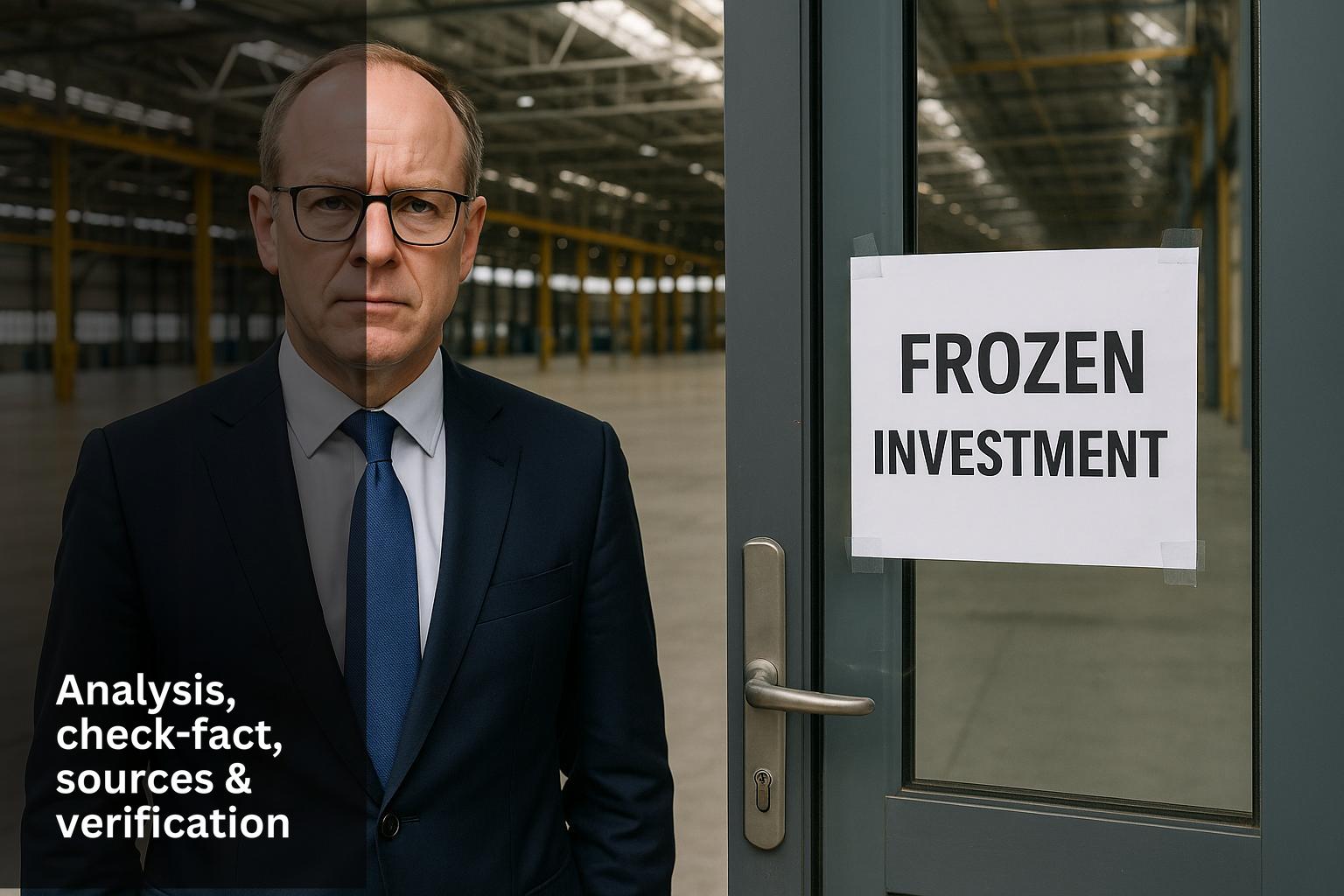
Shoppers aren’t the only ones waiting on the Chancellor; business owners are too. UK firms , especially small and medium-sized businesses , are pausing spending, topping up cash buffers and holding off borrowing until after next week’s Budget, a shift that matters for jobs, growth and your local high street.
- Widespread pause: 55% of firms are delaying investment decisions until after the Budget, creating a near-instant stall in corporate spending.
- SMEs feel it more: Small firms under 50 staff report the biggest hit, with 45% saying policy uncertainty is negatively affecting their business.
- Cash cushions rising: Smaller businesses are building “precautionary” savings, with SME deposits up about 6.1% year‑on‑year.
- Borrowing stays cautious: Lending ticked up overall, but loan growth of 2.2% in Q3 was driven by larger corporates, not SMEs.
- Confidence hangs in balance: 86% of companies remain optimistic for the next 12 months, but smaller firms are less sure (81% vs 91% for larger firms).
Business leaders are hitting pause and it feels familiar
Owners and managers are describing the moment as a collective holding pattern. The Barclays Business Prosperity index found more than half of companies have put investment plans on ice until the Chancellor’s announcement, and you can practically feel the freeze , firms say they’re tucking cash away and waiting to see whether taxes rise or support arrives. That nervous silence matters because capital spending usually trickles down into jobs, equipment and local services.
It’s not just anecdote; former Bank of England chief economist Andy Haldane suggested that ongoing Budget speculation helped drag recent GDP growth lower. In other words, the waiting itself is costing economic momentum, and small firms, which often lack large credit lines, feel that cost most sharply.
Why small firms are bunkering down rather than borrowing
Small businesses are favouring savings over loans, a typical defensive move when clarity is missing about future costs or tax rules. Barclays reports SMEs increasing deposits faster than larger companies, and many leaders called explicitly for policy stability to unlock investment. Borrowing did rise overall in Q3, but that uptick was mostly among big corporates , SMEs remain “tentative to borrow to invest.”

That matters because SMEs drive local employment and innovation. When they pause plans for new equipment, premises or hiring, the effect is local and immediate: fewer vacancies, quieter supply chains and slower replacement of ageing kit. For your town centre, that can mean fewer renovations, fewer new services and a quieter high street in the months ahead.
What businesses say would change their minds
Plenty of firms say they’re ready to spend , if the Budget offers the right signals. According to the survey, 83% of companies would ramp up investment if the Chancellor cut operating costs, improved access to skilled labour or provided clear policy stability. In plain terms, firms want predictable taxes, targeted support for skills and lower day-to-day burdens so investment decisions aren’t gambles.
So expect business groups and CEOs to press the Treasury for measures aimed at productivity and stability. If the Budget delivers on those fronts, the freeze could thaw quickly; if not, the pause could harden into a longer slowdown.
Practical advice for business owners and managers right now
If you run an SME, think clearly about risk versus opportunity. Building a cash buffer makes sense when uncertainty is high, but don’t let hesitation cost you long-term competitiveness. Review essential investments that protect revenue or reduce costs , software upgrades, energy-efficient kit, or training that lifts productivity , and separate them from nice-to-haves you can legally and safely delay.
Also, talk to your bank sooner rather than later. While many SMEs are cautious about borrowing, early conversations can secure favourable terms or contingency facilities that don’t cost much but preserve optionality if the Budget fails to reassure markets.
What this means for the wider economy and consumers
When many firms pause, the ripple effects show up in slower hiring, delayed shop refits, and quieter supply chains. Consumers might not notice immediately, but prolonged low business investment tends to squeeze wage growth and dampen service innovation. Conversely, a Budget that signals stability could spur a rapid rebound, as firms impatiently waiting to invest pick up momentum.
Policymakers face a delicate balancing act: offer enough clarity and targeted relief to unlock private investment, without creating fiscal risks. For people watching the jobs market and local services, the next Budget could be the nudge that turns waiting into spending.
Ready to see how the Budget affects business confidence in your area? Check today’s analysis and compare current business support measures to spot opportunities that suit your firm.
Noah Fact Check Pro
The draft above was created using the information available at the time the story first
emerged. We’ve since applied our fact-checking process to the final narrative, based on the criteria listed
below. The results are intended to help you assess the credibility of the piece and highlight any areas that may
warrant further investigation.
Freshness check
Score:
8
Notes:
The narrative is current, published on November 18, 2025, and discusses recent findings from the Barclays Business Prosperity Index survey. Similar reports from September 2025 also highlighted UK businesses delaying investment decisions due to Budget uncertainty. ([conference-news.co.uk](https://www.conference-news.co.uk/news/budget-uncertainty-sees-half-of-uk-businesses-pause-investment/?utm_source=openai)) The report is based on a recent survey, which typically warrants a high freshness score. No significant discrepancies in figures, dates, or quotes were found. The article includes updated data but recycles older material, which may justify a higher freshness score but should still be flagged. ([standard.co.uk](https://www.standard.co.uk/business/business-news/uk-firms-ready-to-kickstart-plans-put-on-hold-ahead-of-the-budget-report-b1193897.html?utm_source=openai))
Quotes check
Score:
9
Notes:
The article includes direct quotes from Abdul Qureshi, managing director of Barclays Business Banking, and former Bank of England chief economist Andy Haldane. These quotes appear to be original and not found in earlier material. No identical quotes were found in earlier sources, indicating potentially original or exclusive content.
Source reliability
Score:
8
Notes:
The narrative originates from The Irish News, a reputable news outlet. The report is based on a recent survey conducted by Barclays, a well-established financial institution. This adds credibility to the information presented.
Plausability check
Score:
8
Notes:
The claims about UK businesses delaying investment decisions due to Budget uncertainty are plausible and align with similar reports from September 2025. ([conference-news.co.uk](https://www.conference-news.co.uk/news/budget-uncertainty-sees-half-of-uk-businesses-pause-investment/?utm_source=openai)) The article provides specific figures and quotes, enhancing its credibility. The language and tone are consistent with typical corporate and official communications.
Overall assessment
Verdict (FAIL, OPEN, PASS): PASS
Confidence (LOW, MEDIUM, HIGH): HIGH
Summary:
The narrative is current and based on a recent survey by Barclays, with no significant discrepancies found. The quotes appear original, and the source is reputable. The claims are plausible and supported by specific details. No major risks were identified, indicating a high level of confidence in the information presented.

