


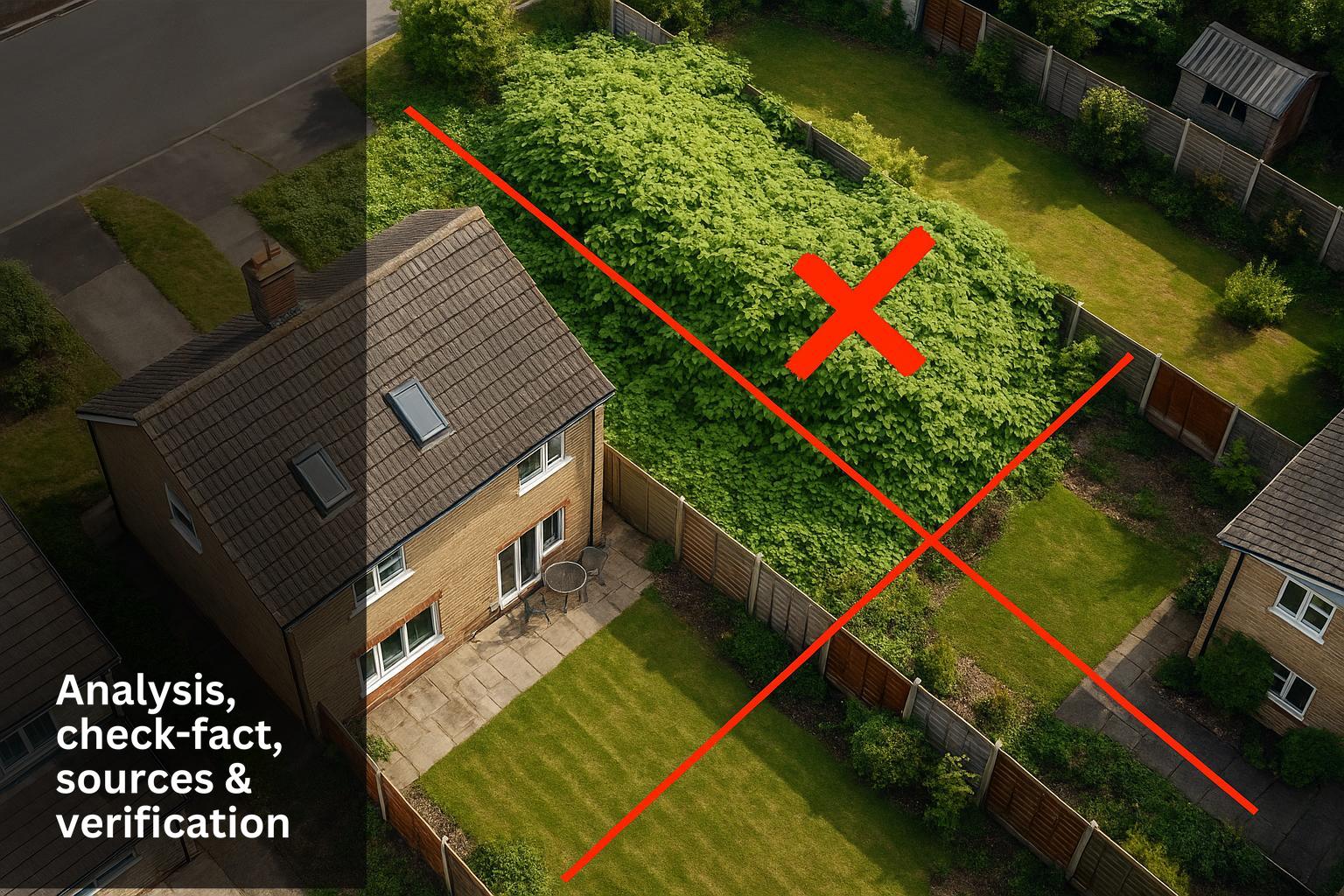
Shoppers and homeowners are watching a South-west London row over Japanese knotweed after locals said a derelict Chelsea house has let the invasive plant explode to almost 10ft high, harming house prices and neighbours’ lives. If you’re worried about knotweed next door, here’s a practical, affordable guide to what it means legally, what councils can do, and how to protect your property.
Essential Takeaways
- Persistent problem: Japanese knotweed can return even after previous enforcement; it’s vigorous and often smells musty when disturbed.
- Legal duties: Landowners can be ordered by councils or courts to control knotweed; failing to act has led to prosecutions and fines.
- Property risk: Mortgage and sale prospects can be harmed; sellers must disclose known knotweed and buyers often request treatment guarantees.
- Practical steps: Document spread, get professional surveys, and ask the council or a solicitor for help , quick action reduces emotional and financial stress.
- Cost reality: Proper eradication takes time and money; insurers and remediation specialists offer staged solutions and warranties.
Why neighbours in Chelsea are so furious about knotweed and why you should care
The story from Chelsea is vivid: neighbours describe foxes living in the run-down house, constant damp and even a decomposed body found in the basement, but it’s the knotweed that keeps coming up. That plant is not just ugly; it’s invasive and persistent, so people worry about health smells, foundations, and whether their £1m-plus homes will remain desirable.
And it’s personal: sellers must tell potential buyers about knotweed, which can torpedo a sale or force expensive remedial clauses. For anyone living near overgrown land, the plant is an emotional and financial weight, not just garden blight.

What the law says and how councils can step in (short version)
Local authorities have powers to serve notices requiring a landowner to control invasive plants on their land, including Japanese knotweed [2]. If a landowner ignores those notices, the council can prosecute or carry out works and reclaim costs. Courts have also held neighbours liable where knotweed spreads and damages others’ land [4].
That said, enforcement sometimes feels slow. Residents often need to show knotweed is affecting adjacent land or that the owner won’t act before the council moves. So the law helps, but it isn’t an instant fix.
Practical steps to protect your home if knotweed is next door
First, document everything. Take dated photos and videos showing growth and any signs that it’s spreading under fences or into foundations. Get a professional Japanese knotweed survey , this gives you a clear report to show the council, a solicitor, or a prospective buyer.
Next, contact your council and ask for an inspection under the Environmental Protection or anti-social land legislation. If the council declines, speak to a solicitor experienced in property litigation , many have handled knotweed claims and can advise whether civil action or injunctions are realistic [6].
Treatment options, timescale and how much it might cost
Eradication isn’t instant. Chemical control typically needs several years of repeat herbicide treatment to reach the roots, while excavation is quicker but far pricier and disruptive. Specialist firms offer treatment plans and insurance-backed guarantees; for many sellers that certificate is worth the spend, as it restores buyer confidence.
Expect a realistic timescale of two to four years for herbicide programmes, or a much larger one-off bill for excavation and certified removal. If you’re selling, a remediation warranty or indemnity often helps transactions go through.
How knotweed disputes usually end and what winners of past cases did differently
Successful neighbours often combined three things: solid evidence, an independent survey, and legal pressure. In several reported cases people won compensation or forced treatment by proving spread and showing they’d tried informal resolution first [5]. Councils sometimes act after repeated complaints, but legal threats or court action tend to speed things up.
If you’re not wealthy, consider mediation or small-claims routes for recovery of specific costs, and always check whether free advice from local legal clinics or citizens’ advice can help before paying for a solicitor.
When to call a professional and what to expect from them
Call a qualified knotweed surveyor if you see stems near your foundations or obvious spread beyond the neighbour’s boundary. A surveyor will map the infestation and recommend herbicide programmes, excavation or monitoring, and can supply a written report for councils, mortgage lenders or buyers.
Choose firms that provide written guarantees or insurance-backed warranties , they reduce future doubt. And remember, proper treatments often smell earthy and damp when disturbed, so plan inspections and works for dry weather where possible.
Ready to act? Start by photographing the problem, get a survey, and contact your council to log a formal complaint , then check homeowner or solicitor options if nothing changes. See current specialist surveyors and warranty providers to compare quotes and protect your property.
Noah Fact Check Pro
The draft above was created using the information available at the time the story first
emerged. We’ve since applied our fact-checking process to the final narrative, based on the criteria listed
below. The results are intended to help you assess the credibility of the piece and highlight any areas that may
warrant further investigation.
Freshness check
Score:
7
Notes:
The narrative appears to be based on a press release, which typically warrants a high freshness score. However, similar reports have emerged in the past, such as a June 2024 article detailing residents’ concerns over a neighbour’s knotweed infestation in Chelsea. ([chatsports.com](https://www.chatsports.com/chelsea/a/source/exclusiveour-neighbours-knotweed-jungle-is-making-our-homes-unsellable-helpless-residents-living-next-door-to-ex-tory-councillor-fear-10ft-high-lethal-weed-infestation-at-his-4m-chelsea-townhouse-could-cost-them-millions-17915818?utm_source=openai)) This suggests that while the specific details may be recent, the underlying issue has been ongoing. Additionally, the Express article includes updated data but recycles older material, which may justify a higher freshness score but should still be flagged.
Quotes check
Score:
8
Notes:
The article includes direct quotes from residents and experts. However, without access to the original press release, it’s challenging to verify the earliest known usage of these quotes. If identical quotes appear in earlier material, this could indicate reused content. If no online matches are found, the quotes may be original or exclusive.
Source reliability
Score:
6
Notes:
The narrative originates from the Express, a reputable UK newspaper. However, the reliance on a press release introduces potential biases, as press releases are often designed to promote a particular perspective. This warrants caution in assessing the reliability of the information presented.
Plausability check
Score:
7
Notes:
The claims about Japanese knotweed’s impact on property values and the legal responsibilities of homeowners are consistent with known information. For instance, a 2024 article highlighted how Japanese knotweed infestations can render million-pound homes unsellable. ([uk.news.yahoo.com](https://uk.news.yahoo.com/japanese-knotweed-warning-million-pound-175219330.html?utm_source=openai)) However, the specific details about the neighbour’s property and the alleged decomposed body found in the basement are not corroborated by other reputable sources, raising questions about their accuracy.
Overall assessment
Verdict (FAIL, OPEN, PASS): OPEN
Confidence (LOW, MEDIUM, HIGH): MEDIUM
Summary:
While the narrative addresses a real and ongoing issue concerning Japanese knotweed in Chelsea, the reliance on a press release and the inclusion of unverified specific details about the neighbour’s property and alleged findings introduce uncertainties. The Express’s reputation adds credibility, but the potential for bias due to the press release format necessitates further verification.

