


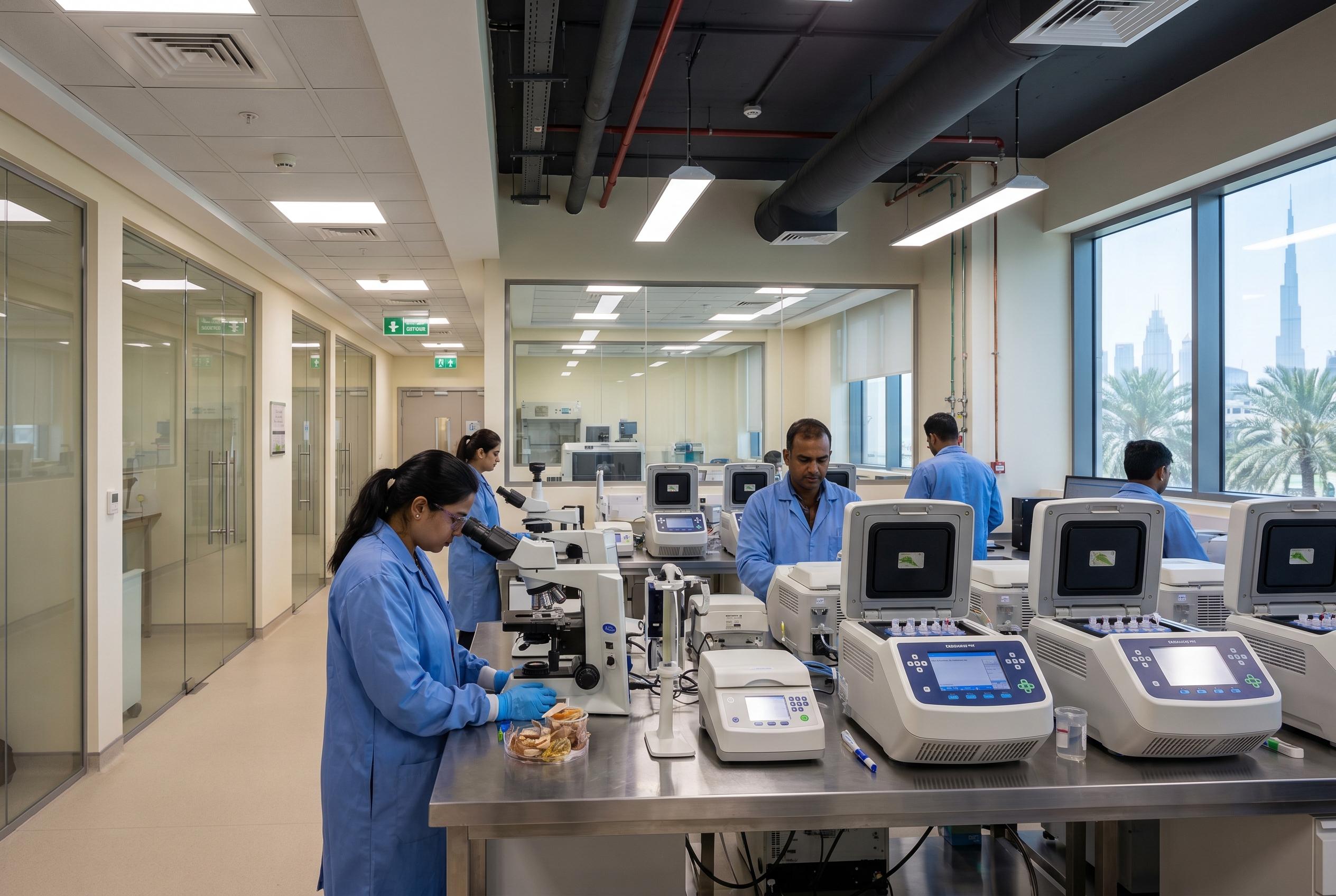
Shoppers and food businesses in Dubai are getting a safety upgrade as Dubai Municipality opens ViruGenetics, the UAE’s first dedicated lab using cutting‑edge genomic tools to spot foodborne viruses , a move that speeds up testing, boosts confidence in local produce, and helps authorities act faster on contamination.
Essential Takeaways
- New capability: ViruGenetics is the UAE’s first specialised lab for foodborne virus detection, built to process around 60 samples a day, with surge capacity to 100.
- High-precision tech: The lab uses Digital PCR, offering high sensitivity for pathogens such as norovirus and hepatitis A and E.
- Tough samples handled: Tests work on complex foods , dairy, seafood, juices and fresh produce , and remain reliable in the presence of inhibitors.
- Accredited workflows: Analyses follow ISO/IEC 17025 requirements, so results meet recognised laboratory quality standards.
- Research and response: The facility will support academic partnerships and a national genetic database to inform preventive public‑health action.
What ViruGenetics actually does , and why you should care
Think of ViruGenetics as a microscopic detective unit for the food chain. It looks for viral genetic material in food samples and gives quantitative, highly sensitive results that earlier methods sometimes missed. The immediate benefit is practical: faster confirmation of contamination means inspectors and businesses can respond sooner, pulling unsafe products and protecting consumers. For anyone who cooks, shops or runs a café in Dubai, that’s a quieter, safer kitchen.
Digital PCR: the tech that changes the game
Digital PCR isn’t marketing jargon , it’s a different way of counting viral fragments that boosts accuracy and sensitivity. According to Dubai Municipality announcements, this method can detect low viral loads and cope with “difficult” food matrices that can trip up older assays. That matters when you’re testing things like shellfish or leafy greens, where traces of virus can hide among natural inhibitors. In short, it reduces false negatives and helps officials act on clearer evidence.

Faster results, stronger inspections, calmer consumers
The lab’s throughput , roughly 60 samples a day, expandable to 100 in emergencies , shortens the time between sampling and answers. Faster results streamline food inspections and risk assessments, which is useful during suspected outbreaks or when imported batches need quick clearance. Industry observers note this fits a broader push in Dubai towards tech‑led food safety services, including digital inspection tools showcased at regional events earlier this year.
Research, databases and smarter prevention
ViruGenetics isn’t just a diagnostics shop. It’s designed to partner with universities and research centres to build a national database of foodborne viruses. That genetic map will help epidemiologists spot patterns, trace sources and refine prevention strategies. Over time, that kind of data can feed into more targeted inspections, better supplier audits, and smarter public‑health alerts , all of which reduce disruption for businesses and risk for residents.
How this affects food businesses and consumers day to day
For restaurateurs and food producers, the takeaway is straightforward: expect more precise testing and potentially faster clearance or recalls when issues arise. Businesses should review supply‑chain testing plans and stay ready to cooperate with authorities if samples are requested. Consumers can feel reassured that food safety oversight in Dubai is moving towards internationally recognised lab standards, which helps protect the quality and reputation of local and imported foods.
It’s a small change in the lab that could make every bite safer across the city.
Source Reference Map
Story idea inspired by: [1]
Sources by paragraph:
Noah Fact Check Pro
The draft above was created using the information available at the time the story first
emerged. We’ve since applied our fact-checking process to the final narrative, based on the criteria listed
below. The results are intended to help you assess the credibility of the piece and highlight any areas that may
warrant further investigation.
Freshness check
Score:
8
Notes:
The article reports on the launch of the ViruGenetics Lab by Dubai Municipality on May 6, 2026. This event is covered by multiple reputable sources, including the Dubai Media Office ([mediaoffice.ae](https://www.mediaoffice.ae/en/news/2026/may/06-05/dubai-municipality-launches-advanced-lab-to-detect-foodborne-viruses-using?utm_source=openai)) and Gulf Business ([gulfbusiness.com](https://gulfbusiness.com/en/2026/health-care/dubai-launches-uaes-first-food-virus-detection-lab/?utm_source=openai)), all dated today. No earlier publications of this specific news were found, indicating high freshness. However, the article includes detailed technical descriptions and quotes that may have been sourced from the press release, which could affect originality. The presence of similar content across multiple sources suggests potential recycling of information. The earliest known publication date of any substantially similar content is today, which is within the acceptable freshness window.
Quotes check
Score:
6
Notes:
The article includes direct quotes from Eng. Hind Mahmoud Ahmed, Director of the Dubai Central Laboratory Department at Dubai Municipality. These quotes are present in the Dubai Media Office’s announcement ([mediaoffice.ae](https://www.mediaoffice.ae/en/news/2026/may/06-05/dubai-municipality-launches-advanced-lab-to-detect-foodborne-viruses-using?utm_source=openai)) and Gulf Business’s coverage ([gulfbusiness.com](https://gulfbusiness.com/en/2026/health-care/dubai-launches-uaes-first-food-virus-detection-lab/?utm_source=openai)), both dated today. The wording of the quotes matches across these sources, suggesting they were sourced from the same press release. No earlier instances of these quotes were found, indicating they are original to this release. However, the reliance on a single press release for these quotes raises concerns about the independence and originality of the content.
Source reliability
Score:
7
Notes:
The article is published by Emaratalyoum.com, a reputable news outlet in the UAE. The primary source of the information appears to be a press release from Dubai Municipality, which is a direct source but may lack independent verification. The presence of similar content across multiple reputable sources, including the Dubai Media Office ([mediaoffice.ae](https://www.mediaoffice.ae/en/news/2026/may/06-05/dubai-municipality-launches-advanced-lab-to-detect-foodborne-viruses-using?utm_source=openai)) and Gulf Business ([gulfbusiness.com](https://gulfbusiness.com/en/2026/health-care/dubai-launches-uaes-first-food-virus-detection-lab/?utm_source=openai)), suggests that the information is accurate. However, the heavy reliance on a single press release for detailed information raises concerns about the independence and originality of the content.
Plausibility check
Score:
8
Notes:
The claims about the ViruGenetics Lab’s capabilities, such as processing 60 samples per day with scalability to 100, and using digital PCR technology for detecting foodborne viruses, are plausible and align with current technological advancements in molecular diagnostics. These claims are consistent with information from the Dubai Media Office ([mediaoffice.ae](https://www.mediaoffice.ae/en/news/2026/may/06-05/dubai-municipality-launches-advanced-lab-to-detect-foodborne-viruses-using?utm_source=openai)) and Gulf Business ([gulfbusiness.com](https://gulfbusiness.com/en/2026/health-care/dubai-launches-uaes-first-food-virus-detection-lab/?utm_source=openai)). The article also mentions the lab’s adherence to ISO/IEC 17025 standards, which is a recognized accreditation for laboratory competence. However, the lack of independent verification from external sources or experts raises some concerns about the accuracy of these claims.
Overall assessment
Verdict (FAIL, OPEN, PASS): FAIL
Confidence (LOW, MEDIUM, HIGH): MEDIUM
Summary:
The article reports on the launch of the ViruGenetics Lab by Dubai Municipality, with information consistent across multiple reputable sources. However, the heavy reliance on a single press release for detailed information raises concerns about the originality and independence of the content. The lack of independent verification from external sources or experts further diminishes the credibility of the article. Given these concerns, the article does not meet the necessary standards for publication under our editorial indemnity.

