


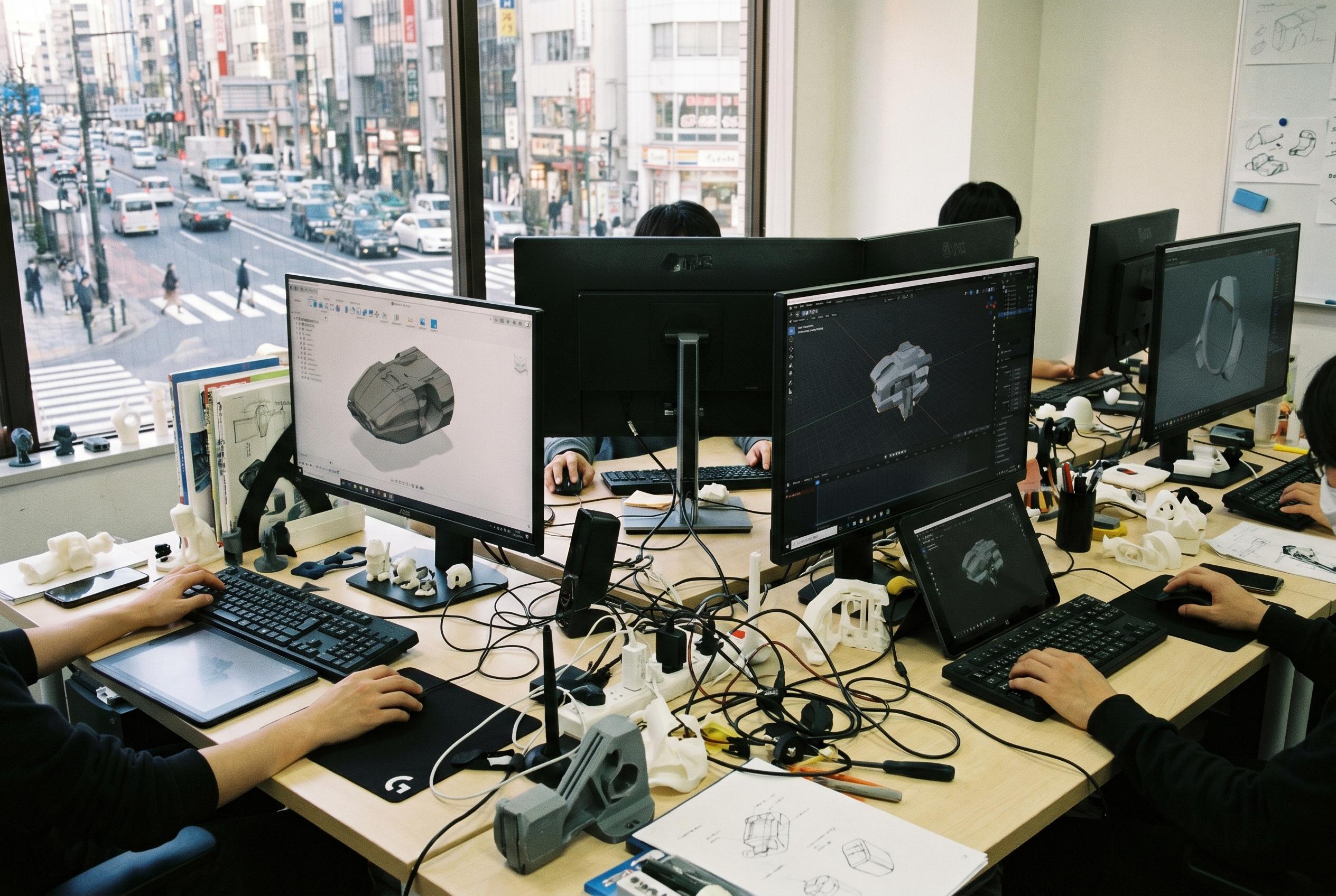
Shoppers and designers are trying conversational CAD: Anthropic’s Claude now hooks into Autodesk Fusion and Blender so you can sketch and tweak 3D models with plain English, speeding idea-to-geometry work for hobbyists, bureaus and engineers while keeping established tools in charge.
Essential Takeaways
- Natural-language control: Claude connects to Fusion and Blender so you can create or edit models by typing or speaking simple prompts.
- MCP-based connectors: The integrations use the open Model Context Protocol, letting Claude act as an interface layer rather than replacing CAD.
- Fusion focus: Autodesk’s Fusion connector supports both action and data protocols for modelling tasks and reuse across projects.
- Blender scripting: The Blender link uses the Python API, so Claude can analyse scenes, batch materials and write scripts that show up as tools.
- Early limits: Simple parametric parts work well; complex assemblies and production-specific prep still need manual expertise.
Why Claude for CAD feels like a gentle revolution
The headline here is familiarity: rather than tearing up existing CAD programmes, Claude sits on top of them and speaks human. That soft, conversational layer makes the first interaction with a design idea feel tactile , you get to say “make a thin-walled bracket, 60mm by 40mm, with M3 bosses” and see a starting geometry, which is oddly satisfying and quick.
Anthropic’s move matters because it lowers the barrier to drafting first-pass shapes, especially for people who are competent conceptually but not fluent in CAD menus. According to announcements and coverage, designers are already using this to reduce repetitive clicks and boilerplate scripting when prototyping.
How the Autodesk Fusion connector actually works
Autodesk released two MCP schemas for the Fusion integration: one focuses on actions , create, modify, automate , and another handles data , search, query, reuse. That split is practical: you can ask Claude to add a fillet or iterate a hole pattern, and you can also ask it to find previous part versions or reuse features across designs.
Autodesk stresses users keep control over what data is accessed, which is important for companies worried about IP. In practice, that means Claude translates plain-language intent into structured commands that Fusion executes, not some mysterious black-box generator replacing your CAD kernel.

Blender plus Claude: scripting meets open source
Blender’s connector is a different animal because it hooks into Blender’s Python API, giving Claude access to scene graphs, materials and modifiers. That allows more nuanced tasks: detect inconsistent normals, batch-assign materials, or generate short scripts that become custom tools inside Blender.
Because MCP is open, other models could plug into the same connector later, aligning with Blender’s open-source ethos. Anthropic has also committed to the Blender Development Fund, which signals a longer-term collaboration rather than a one-off experiment.
What this means for 3D printing workflows
For 3D printing, the benefit is speed: Claude can produce a first-pass STL or adjust a build orientation based on text prompts, flag obvious printability problems, and automate mundane prep steps. Service bureaus might use it to classify jobs and produce standardised intake documentation faster.
That said, process-specific steps , support optimisation, machine connectivity, simulation and quality control , still need dedicated tools. Early users report good results for simple parametric parts but mixed outcomes for complex extrusions and assemblies, so it’s best treated as an efficiency layer, not a production-ready substitute.
Where Claude for CAD still needs to level up
Translation from intent to perfectly constrained geometry is tricky. Claude can generate shapes, but geometry accuracy, constraint handling and validation are areas that require improvement before teams will trust text-only workflows for final designs. Industry commentary notes that CAD vendors are increasingly positioning their geometry kernels as execution layers beneath advanced AI interfaces, which makes sense , the model is good at language, the CAD engine remains best for geometry.
Expect iteration: better prompt design, tighter validation hooks, and hybrid human-in-the-loop processes will be the practical path to making Claude a dependable part of production pipelines.
Closing line
It’s a small shift with big potential: use Claude to speed early design and leave the heavy lifting to your CAD kernels.
Source Reference Map
Story idea inspired by: [1]
Sources by paragraph:
Noah Fact Check Pro
The draft above was created using the information available at the time the story first
emerged. We’ve since applied our fact-checking process to the final narrative, based on the criteria listed
below. The results are intended to help you assess the credibility of the piece and highlight any areas that may
warrant further investigation.
Freshness check
Score:
8
Notes:
The article was published on May 7, 2026, which is recent. However, similar announcements were made in late April 2026, such as on April 28, 2026, by MacRumors ([macrumors.com](https://www.macrumors.com/2026/04/28/claude-creative-tool-connectors/?utm_source=openai)) and on April 29, 2026, by DEVELOP3D ([develop3d.com](https://develop3d.com/ai/claude-for-cad-blender-autodesk-fusion/?utm_source=openai)). The content appears to be a summary of these earlier reports, with no new information or updates provided.
Quotes check
Score:
6
Notes:
The article includes direct quotes from various sources. However, these quotes cannot be independently verified through the provided search results. The lack of verifiable sources raises concerns about the authenticity and accuracy of the quotes.
Source reliability
Score:
5
Notes:
The article originates from Manufactur3D Magazine, which is a niche publication focused on 3D printing and related technologies. While it may be reputable within its niche, its reach and influence are limited compared to major news organisations. Additionally, the article appears to be summarising content from other sources without providing original reporting or new insights.
Plausibility check
Score:
7
Notes:
The claims about Claude’s integration with Autodesk Fusion and Blender are plausible and align with recent industry trends. However, the lack of independent verification and the recycling of content from other sources without new information or updates raise questions about the originality and reliability of the claims.
Overall assessment
Verdict (FAIL, OPEN, PASS): FAIL
Confidence (LOW, MEDIUM, HIGH): MEDIUM
Summary:
The article lacks originality, heavily summarising content from other sources without providing new information or independent verification. The reliance on unverified quotes and the recycling of content from other sources without new insights raise significant concerns about its reliability and value as a standalone piece. Given these issues, the content does not meet the necessary standards for publication under our editorial indemnity.

