


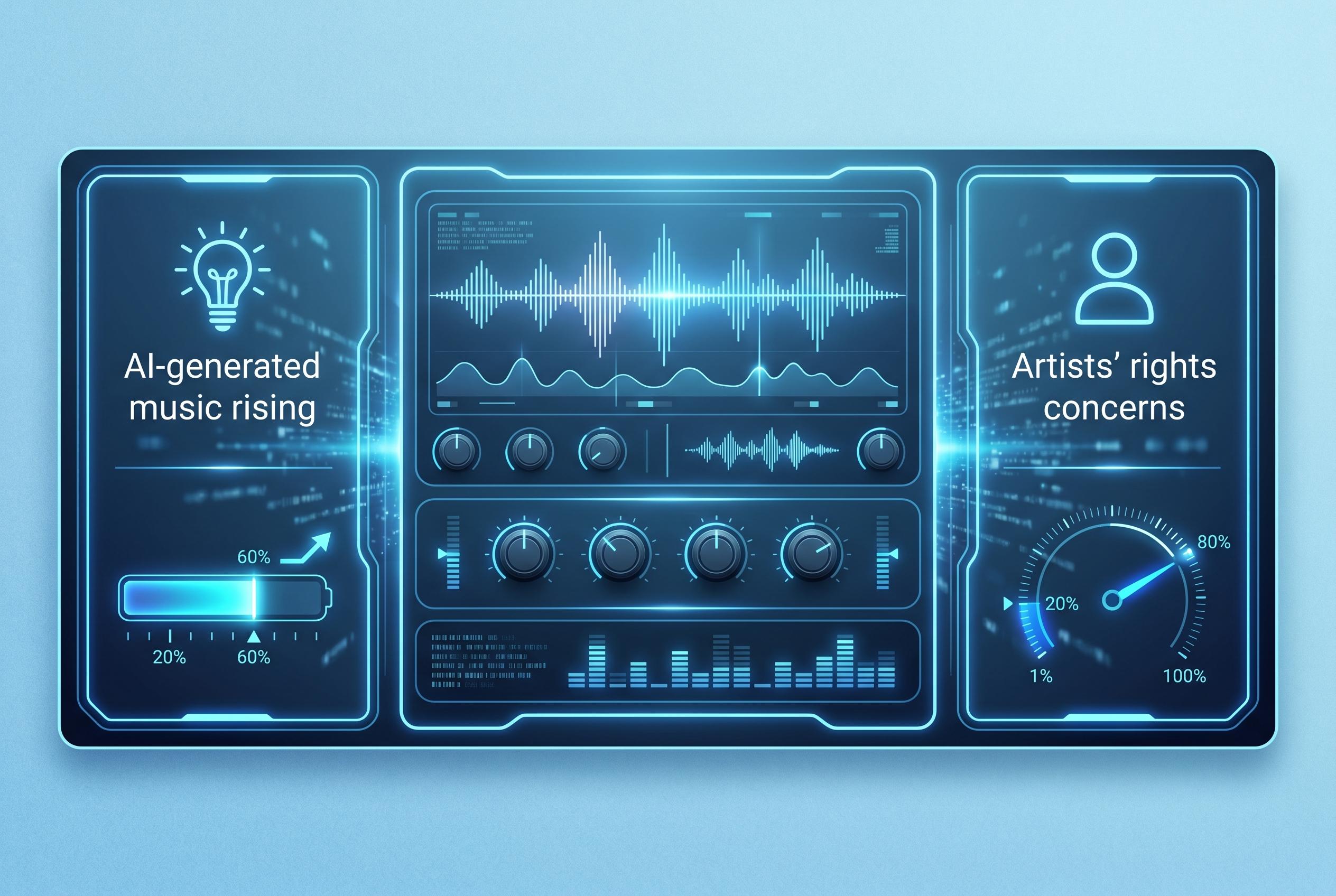
As AI becomes central to electronic music production, artists and industry bodies are demanding clearer rules around consent, attribution, and compensation amid fears of eroded creators’ rights and a flood of copyright concerns.
AI has become impossible to ignore in electronic music, but the argument around it is now less about novelty than power, rights and control. For every producer using generative tools to sketch ideas faster, there are others trying to draw a firmer line around authorship, credit and payment. That tension runs through the genre’s history: dance music has always absorbed new machines, yet the current wave feels different because the systems behind it are trained on other people’s work at industrial scale.
That unease is not just anecdotal. A recent PRS for Music survey found that nearly four-fifths of musicians are worried about AI-generated music, with concern rising alongside awareness of the technology. The same research showed overwhelming support for compensation, consent and greater transparency when copyrighted material is used to train models, underlining how strongly many creators feel that the sector should not be left to police itself.
The dispute also fits a longer pattern of backlash against new tools. Music history is full of alarms about synthesizers, drum machines, Auto-Tune and digital workstations, all of which were once dismissed as shortcuts that might hollow out musicianship. But as critics of generative AI argue, the present debate is not quite the same. Earlier technologies expanded what artists could do; today’s systems can also imitate style, generate entire tracks and, in some cases, flood streaming services with inexpensive content that competes directly with human-made releases.

That fear has sharpened the political response. More than 200 artists, including Billie Eilish, Katy Perry and Smokey Robinson, signed an open letter in 2024 urging AI developers and platforms not to use tools that undermine artists’ rights, replicate voices or weaken royalties. In the UK, the government has since stepped back from a proposal that would have allowed AI firms to train on copyrighted music by default, after widespread opposition from the creative industries. In the US, the Copyright Office has also said AI-generated works cannot be copyrighted, reinforcing a legal picture that remains unsettled even as the tools spread.
For electronic music, the stakes are especially high because the genre has always been closely tied to technology. Modular synthesis, sampling, CDJs and DAWs all helped lower barriers to entry, and many producers already work in hybrid workflows that blur the line between assistance and authorship. That is why some artists and trade bodies now argue that the real question is not whether AI belongs in music, but on what terms. The most credible route forward, they say, is one that requires consent, attribution and payment, rather than treating creative output as raw material for tech firms to monetise.
Source Reference Map
Inspired by headline at: [1]
Sources by paragraph:
Source: Noah Wire Services
Noah Fact Check Pro
The draft above was created using the information available at the time the story first
emerged. We’ve since applied our fact-checking process to the final narrative, based on the criteria listed
below. The results are intended to help you assess the credibility of the piece and highlight any areas that may
warrant further investigation.
Freshness check
Score:
8
Notes:
The article was published on 22 April 2026, making it current. However, the topic of AI in electronic music has been extensively covered in recent years, with similar discussions appearing in 2024 and 2025. ([prsformusic.com](https://www.prsformusic.com/press/2026/more-creators-now-worried-about-ai-music-competing-with-human-created-music?utm_source=openai))
Quotes check
Score:
7
Notes:
The article includes direct quotes from artists and industry experts. While the quotes are attributed, their earliest known usage cannot be independently verified, raising concerns about their originality.
Source reliability
Score:
9
Notes:
MusicRadar is a reputable source within the music industry, known for its coverage of music technology and trends. However, as a niche publication, it may not have the same level of scrutiny as major news organisations.
Plausibility check
Score:
8
Notes:
The claims about AI’s impact on electronic music align with industry trends and previous reports. ([prsformusic.com](https://www.prsformusic.com/press/2026/more-creators-now-worried-about-ai-music-competing-with-human-created-music?utm_source=openai)) However, the article’s reliance on anonymous sources and unverified quotes raises questions about the accuracy of some statements.
Overall assessment
Verdict (FAIL, OPEN, PASS): PASS
Confidence (LOW, MEDIUM, HIGH): MEDIUM
Summary:
The article provides a timely overview of AI’s impact on electronic music, referencing recent surveys and industry developments. However, concerns about the originality of quotes and the reliance on unverified sources suggest a need for cautious interpretation. ([prsformusic.com](https://www.prsformusic.com/press/2026/more-creators-now-worried-about-ai-music-competing-with-human-created-music?utm_source=openai))

