


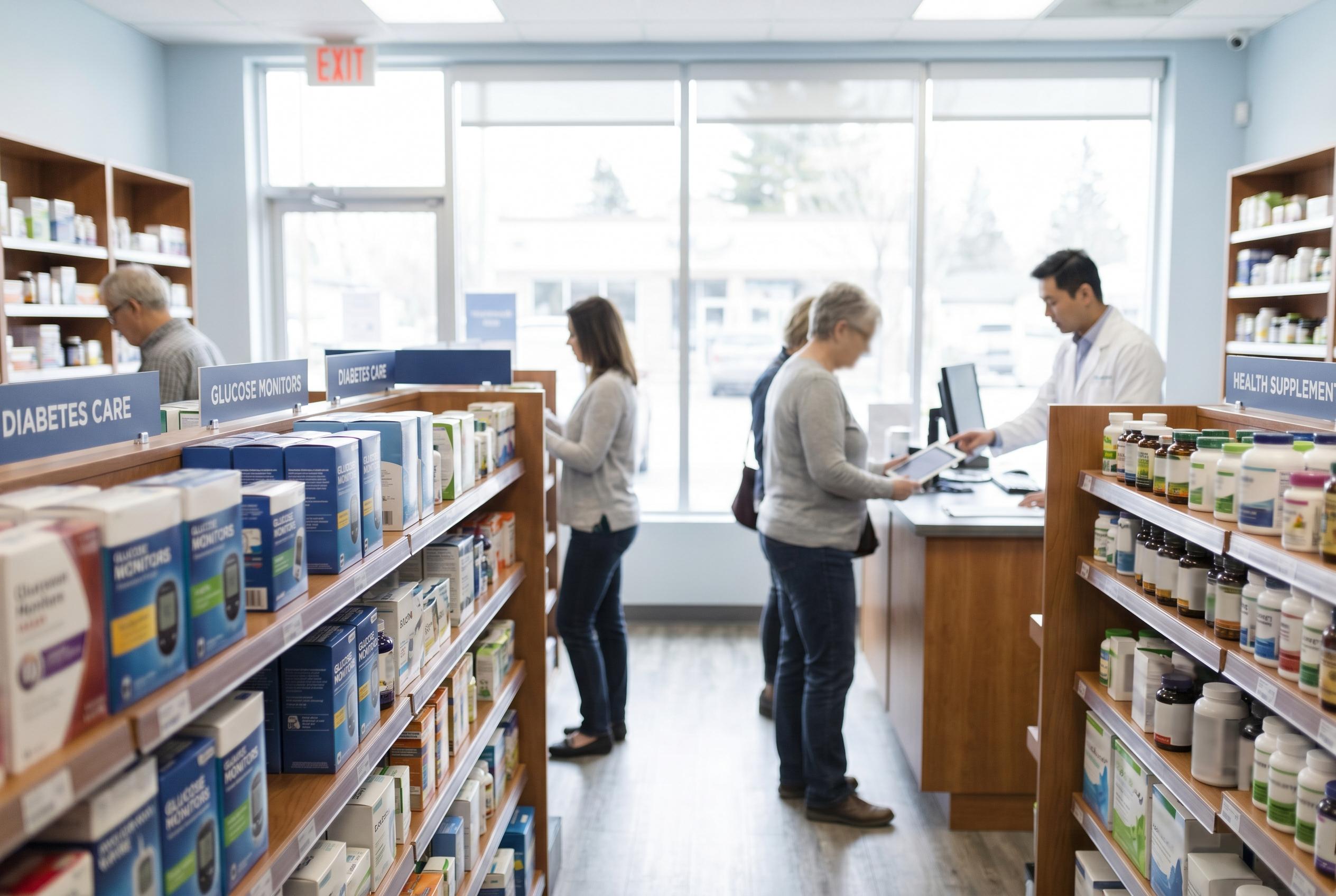
Shoppers and investors are watching the anti-hyperglycemic agents market as diabetes care shifts from simple glucose control to cardiorenal protection and weight management; rising type 2 diabetes, new oral GLP-1s, biosimilars and AI-driven tools are reshaping demand and value across North America, Europe and Asia Pacific.
Essential Takeaways
- Market size: The sector is forecast to grow from roughly US$53.2bn in 2026 to about US$76.4bn by 2033, at a CAGR near 5.3%.
- Leading drug classes: GLP‑1 receptor agonists are the fastest-growing and largest class, driven by dual glucose and weight benefits and newer oral options.
- Regional picture: North America holds the biggest slice thanks to high uptake and reimbursement; Asia Pacific is the fastest-growing market on population and access trends.
- Drivers: Rising type 2 diabetes and obesity, better delivery systems (weekly injectables, oral formulations), and integration with digital health and AI.
- Headwinds: Patent cliffs, generic competition and pricing pressure are compressing margins and forcing innovation in formulations and combinations.
Why GLP‑1s and SGLT2s are stealing the spotlight
GLP‑1 receptor agonists and SGLT2 inhibitors have moved beyond mere glucose lowering to offer visible weight loss and cardiorenal benefits, so they feel like more than a pill , they deliver outcomes patients notice. Industry reports show prescribers increasingly favour these classes, especially where obesity and cardiovascular risk are concerns. That has translated into larger market shares for GLP‑1s and strong growth forecasts across developed markets. For purchasers and clinicians that means formularies are evolving quickly; payers are balancing cost-effectiveness against clear real‑world benefits.
Delivery and tech innovations are changing patient behaviour
Once-daily injections and complex regimens are being replaced by once-weekly injectables, oral GLP‑1 candidates and connected devices. These changes help adherence , a quiet but powerful factor in real outcomes , and open access to patients reluctant to start injections. Meanwhile, AI-driven dosing platforms and integration with continuous glucose monitors are helping personalise therapy and reduce adverse events. For clinicians and health systems, investing in these digital tools can improve long‑term control and reduce hospital admissions.

Regional dynamics: big markets, different drivers
North America dominates in spend and early adoption due to advanced care pathways and generous reimbursement, particularly in the U.S. Europe emphasises cost-effectiveness and biosimilar uptake under HTA frameworks, which tempers but does not halt access to novel therapies. Asia Pacific is the growth engine: urbanisation, rising middle classes and large diabetic populations in China and India push volume demand, and local manufacturing of biosimilars helps affordability. If you’re an investor or supplier, that means tailoring go‑to‑market plans regionally , premium positioning in North America, value and scale in Asia.
Pricing pressure and the patent cliff: what manufacturers will do next
Patent expiries are prompting a wave of generics and biosimilars that will erode prices for originators. Companies are responding with formulation tweaks, fixed‑dose combinations, and long‑acting or oral variants to preserve differentiation. Expect consolidation, more emphasis on lifecycle management and tighter supply‑chain strategies. For health buyers, this creates opportunity: negotiating biosimilars into formularies can cut costs, while targeted use of premium agents can be reserved for patients who gain the most clinical benefit.
Practical advice for healthcare buyers and clinicians
Choose therapies with an eye on patient lifestyle, comorbidity benefits and adherence. For example, consider GLP‑1s for patients with obesity and cardiorenal risk, and SGLT2s where renal protection is key. Evaluate total cost of care , higher drug spend can be offset by fewer complications and hospitalisations. Also assess digital integrations: connected pens and monitoring tools can lift adherence and justify slightly higher therapy costs. Finally, keep an eye on biosimilar launches and local reimbursement shifts; they’ll change procurement dynamics fast.
It’s a small change in approach that can make every treatment plan work a lot better for patients and budgets alike.
Source Reference Map
Story idea inspired by: [1]
Sources by paragraph:
Noah Fact Check Pro
The draft above was created using the information available at the time the story first
emerged. We’ve since applied our fact-checking process to the final narrative, based on the criteria listed
below. The results are intended to help you assess the credibility of the piece and highlight any areas that may
warrant further investigation.
Freshness check
Score:
3
Notes:
The article references a press release from Persistence Market Research dated May 7, 2026, indicating recent information. However, the content appears to be a summary of existing market research reports, with no new data or insights provided. This suggests a lack of originality and freshness in the reporting.
Quotes check
Score:
2
Notes:
The article does not include any direct quotes. The absence of verifiable quotes raises concerns about the depth and credibility of the reporting.
Source reliability
Score:
4
Notes:
The article cites a press release from Persistence Market Research, a market research firm. While such sources can provide valuable insights, they may also have inherent biases or promotional intentions. The lack of independent verification from reputable news outlets diminishes the overall reliability of the information presented.
Plausibility check
Score:
5
Notes:
The claims about the anti-hyperglycemic agents market’s growth align with existing market research reports. However, the article does not provide new data or insights, making it difficult to assess the accuracy of the specific figures presented.
Overall assessment
Verdict (FAIL, OPEN, PASS): FAIL
Confidence (LOW, MEDIUM, HIGH): HIGH
Summary:
The article fails to meet the required standards for freshness, originality, and source independence. It relies solely on a press release from a market research firm without providing new data or independent verification. The absence of direct quotes and reliance on a single source further diminish its credibility. Given these issues, the content cannot be considered reliable for publication.

