


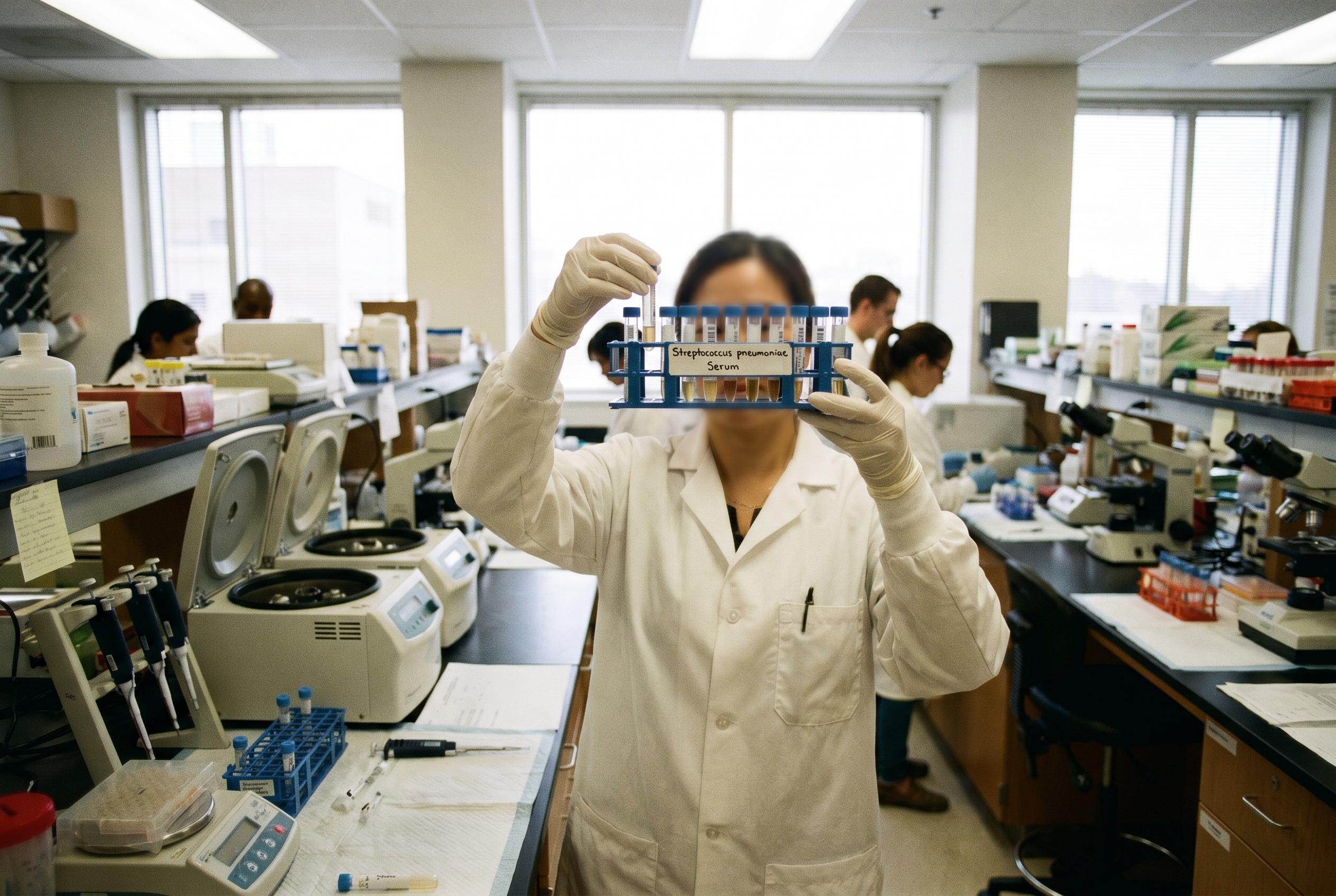
Shoppers in the diagnostics and biotech worlds are watching a fast-growing Streptococcus pneumoniae antibodies market, as demand for rapid, specific tests and novel therapeutics rises worldwide; this piece explains who’s buying, what’s driving growth, and what labs and clinics should consider when choosing antibody solutions.
Essential Takeaways
- Market scale: The market was valued at around $6.28bn in 2026 and is forecast to roughly double to about $12.57bn by 2035, reflecting strong demand in diagnostics and therapeutics.
- Main drivers: Rising pneumococcal disease burden, ageing populations, vaccine programmes and technological upgrades, like multiplex assays and biosensors, are fuelling growth.
- Dominant products: Monoclonal antibodies lead because of high specificity and reproducibility; recombinant formats and multiplex-friendly reagents are gaining ground.
- End users: Hospitals and clinical laboratories account for most use, with research institutes and pharma investing in antibody R&D; Asia‑Pacific shows the fastest regional expansion.
- Practical note: Cost, regulatory hurdles and cross-reactivity remain real constraints; look for validated kits and CE/FDA markings when buying.
Why the Streptococcus pneumoniae antibodies market feels so lively right now
The clearest signal is a growing need for fast, reliable pneumococcal diagnostics that help clinicians treat pneumonia, meningitis and bacteremia more quickly. Industry analysts point to a mix of public‑health pressure, especially among children and older adults, and steady investment in lab infrastructure. That means suppliers are racing to offer assays that feel modern: shorter turnaround times, cleaner readouts and a more clinical, reassuring interface. For buyers, the takeaway is simple, prioritise products with clear clinical validation and easy workflows.
What’s actually selling: monoclonals, recombinants and test formats
Monoclonal antibodies still dominate thanks to their specificity, but recombinant antibodies and engineered formats are increasingly popular for research and multiplex testing. Lateral flow devices, ELISAs and biosensor‑based point‑of‑care platforms are all part of the mix. Clinical labs should match format to need: high‑throughput ELISAs for routine screening, rapid lateral flow for urgent triage, and biosensors where point‑of‑care sensitivity matters. Expect suppliers to bundle validation data and compatibility notes, always ask for those.

Regions to watch: North America, Europe and a surging Asia‑Pacific
North America and Europe remain heavyweight markets because of existing diagnostic infrastructure and R&D spend, but Asia‑Pacific is the area with the steepest growth curve. Increasing healthcare budgets, wider access to testing and urbanisation are pushing demand there. For companies, that means tailoring pricing and distribution; for purchasers in emerging markets, it means growing choice but also the need to verify local regulatory compliance.
Risks and restraints that could slow momentum
High development and manufacturing costs, regulatory complexity and the perennial problem of cross‑reactivity can limit adoption, especially where budgets are tight. Molecular tests and nucleic acid amplification technologies also compete with antibody approaches, often promising higher specificity. Procurement teams should balance cost versus clinical performance and check for independent performance studies rather than marketing claims. Supply chain resilience is another practical concern; ask suppliers about lead times and contingency plans.
Innovation and the near future: multiplexing, biosensors and therapy angles
The next few years will likely see more multiplex assays capable of detecting multiple respiratory pathogens simultaneously, and more integration of nanotech and biosensor platforms for point‑of‑care use. There’s also a growing interest in therapeutic antibody applications and passive immunisation strategies, which could open new revenue streams for manufacturers. Clinicians and lab managers should keep an eye on validated clinical trials and regulatory approvals rather than early‑stage claims.
It’s a small change in lab practice that can make diagnosis faster and treatment more targeted.
Source Reference Map
Story idea inspired by: [1]
Sources by paragraph:
Noah Fact Check Pro
The draft above was created using the information available at the time the story first
emerged. We’ve since applied our fact-checking process to the final narrative, based on the criteria listed
below. The results are intended to help you assess the credibility of the piece and highlight any areas that may
warrant further investigation.
Freshness check
Score:
3
Notes:
The article was published on 5 May 2026, but the data it presents is based on a press release from Market Research Intellect, dated 5 May 2026. This suggests the content may be recycled from the original press release, raising concerns about originality and freshness. Additionally, the article includes references to other sources, such as The Insight Partners and IMARC Group, which may indicate the use of aggregated or derivative content.
Quotes check
Score:
2
Notes:
The article includes direct quotes from the press release by Market Research Intellect. However, these quotes cannot be independently verified, as the original press release is not accessible. This lack of verifiable sources raises concerns about the authenticity and reliability of the quoted information.
Source reliability
Score:
4
Notes:
The primary source, Market Research Intellect, is a market research firm that provides industry reports. While such firms can offer valuable insights, their reports are often based on proprietary data and methodologies, which may not be independently verifiable. The reliance on a single source without independent corroboration diminishes the overall reliability of the information presented.
Plausibility check
Score:
5
Notes:
The article presents plausible claims about the growth of the Streptococcus pneumoniae antibodies market, citing factors such as increasing demand in diagnostics and therapeutics. However, without access to the original press release or independent verification, it’s challenging to assess the accuracy of these claims. The use of specific figures and forecasts without clear sourcing raises questions about their validity.
Overall assessment
Verdict (FAIL, OPEN, PASS): FAIL
Confidence (LOW, MEDIUM, HIGH): HIGH
Summary:
The article’s reliance on a single, unverified press release without independent corroboration, the use of unverifiable quotes, and the lack of original reporting or analysis lead to significant concerns about its credibility and reliability. These issues collectively result in a FAIL assessment with high confidence.

