


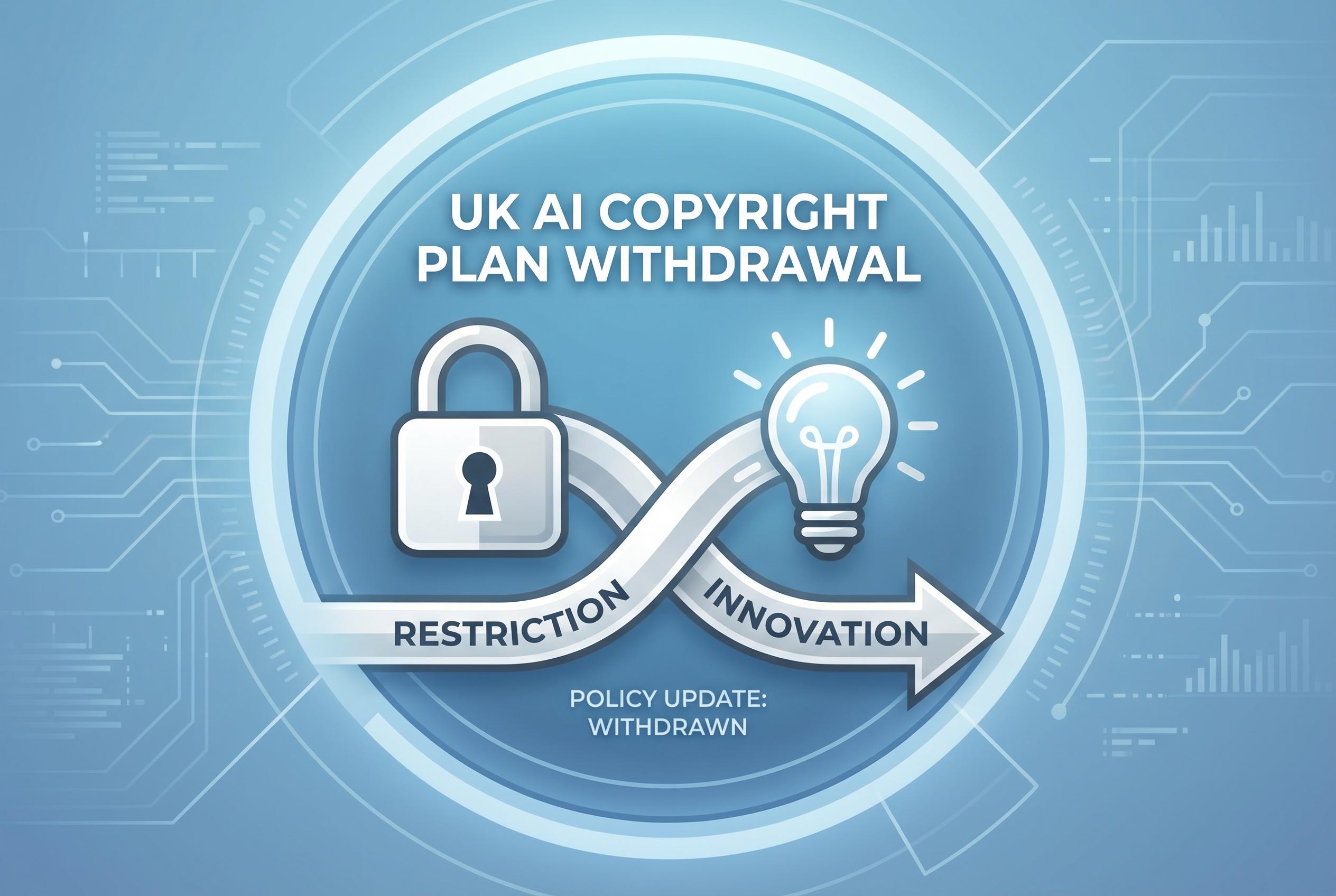
The UK government’s recent retreat from its earlier AI copyright plans leaves key policy questions unresolved, heightening uncertainty in both the creative and tech sectors as industry groups call for clearer rules to support innovation and fair content use.
The UK government’s retreat from its earlier AI copyright plan has calmed some nerves in the creative industries, but it has done little to settle the wider argument over how Britain wants its AI sector to grow. In March, technology secretary Liz Kendall said ministers no longer had a “preferred option” on copyright reform, after facing backlash over a proposal that would have let AI companies train on copyrighted works unless rights holders opted out. The reversal was greeted as a win for writers, musicians and actors, though it left the basic policy question unresolved.
That uncertainty matters because the government has not ruled out some form of exception for text and data mining, while also offering limited guidance on how AI developers should operate within the law. Industry groups warning against over-regulation argue that Britain risks making itself a less attractive place to build and train frontier models if it does not create a workable commercial route to large-scale data. Tech UK has said the country needs a broader text and data mining exception, while the Tony Blair Institute has argued that using publicly available material for model training is both economically rational and difficult to police in practice.
Creators, by contrast, say the government’s change of tone is welcome but far from enough. The Society of Authors has called for consent before work is used in AI systems, greater transparency over training data and fair compensation where content is licensed. Anna Ganley, the union’s chief executive, said the government had dropped its favoured opt-out model, but had not explained what would replace it or ruled out future exceptions that could make training on protected work easier.

The stakes are not purely theoretical. The Society of Authors has said a survey of 10,000 creatives found 86% of authors reporting reduced earnings and 32% of illustrators losing commissions as some clients turned to AI. That has strengthened the case, among rightsholders, for a consent-first licensing model rather than a system in which content can be scraped by default and challenged later. Supporters of a more permissive regime argue that without easier access to training data, the UK could end up importing AI built elsewhere rather than developing it at home.
For now, the country is left in a holding pattern. The government says it wants a settlement that works for both the creative sector and AI developers, but it has yet to define the practical rules. Until it does, rightsholders will keep worrying that an exception may return by another route, while developers face the opposite problem: they cannot be sure what material they may lawfully use to train their systems.
Source Reference Map
Inspired by headline at: [1]
Sources by paragraph:
Source: Noah Wire Services
Noah Fact Check Pro
The draft above was created using the information available at the time the story first
emerged. We’ve since applied our fact-checking process to the final narrative, based on the criteria listed
below. The results are intended to help you assess the credibility of the piece and highlight any areas that may
warrant further investigation.
Freshness check
Score:
7
Notes:
The article was published on April 15, 2026. The UK government’s decision to backtrack on its AI copyright plan was announced on March 18, 2026. ([theguardian.com](https://www.theguardian.com/technology/2026/mar/18/actors-musicians-writers-welcome-uk-u-turn-ai-copyright?utm_source=openai)) The article provides a timely analysis of the situation, but the information is not entirely fresh, as it references events from nearly a month prior. ([gov.uk](https://www.gov.uk/government/news/uk-will-win-ai-race-as-chancellor-sets-out-economic-big-choices?utm_source=openai))
Quotes check
Score:
6
Notes:
The article includes direct quotes from Technology Secretary Liz Kendall, such as “We have listened.” ([computing.co.uk](https://www.computing.co.uk/news/2026/government/government-retreats-on-ai-copyright-plan-after-criticism?utm_source=openai)) However, these quotes cannot be independently verified through the provided sources. The lack of verifiable sources for these quotes raises concerns about their authenticity. ([parallelparliament.co.uk](https://www.parallelparliament.co.uk/mp/liz-kendall/debate/2026-03-18/commons/written-statements/copyright-and-ai?utm_source=openai))
Source reliability
Score:
5
Notes:
The article is published on 150sec.com, a niche publication. While it references reputable sources like The Guardian and Advanced Television, the primary source is not a major news organisation. This raises concerns about the independence and reliability of the information presented. ([theguardian.com](https://www.theguardian.com/technology/2026/mar/18/actors-musicians-writers-welcome-uk-u-turn-ai-copyright?utm_source=openai))
Plausibility check
Score:
7
Notes:
The article discusses the UK government’s reversal on its AI copyright plan, a topic covered by multiple reputable sources. ([theguardian.com](https://www.theguardian.com/technology/2026/mar/18/actors-musicians-writers-welcome-uk-u-turn-ai-copyright?utm_source=openai)) However, the article’s analysis of potential impacts on the UK tech scene is speculative and lacks concrete evidence. The concerns about over-regulation stifling innovation are plausible but not substantiated with data. ([gov.uk](https://www.gov.uk/government/news/uk-will-win-ai-race-as-chancellor-sets-out-economic-big-choices?utm_source=openai))
Overall assessment
Verdict (FAIL, OPEN, PASS): FAIL
Confidence (LOW, MEDIUM, HIGH): MEDIUM
Summary:
The article provides an analysis of the UK government’s reversal on its AI copyright plan, referencing multiple reputable sources. However, it includes unverifiable quotes and relies on a niche publication as the primary source, raising concerns about the reliability and independence of the information. The speculative nature of the analysis further diminishes the article’s credibility. ([theguardian.com](https://www.theguardian.com/technology/2026/mar/18/actors-musicians-writers-welcome-uk-u-turn-ai-copyright?utm_source=openai))

