


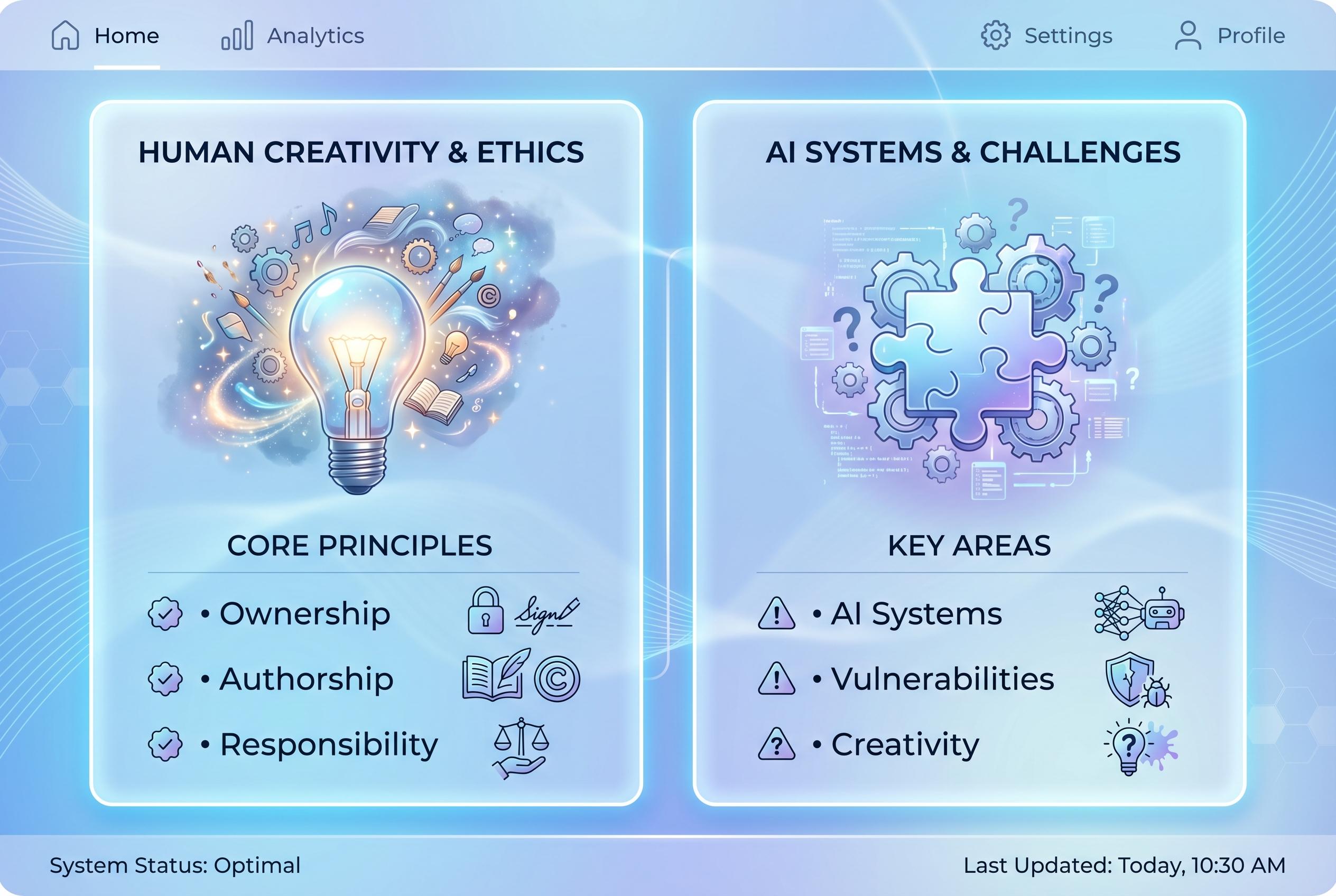
As AI systems like Anthropic’s Mythos reveal new capabilities to uncover vulnerabilities and generate creative works, legal frameworks struggle to keep pace with issues of ownership, authorship, and responsibility in high-stakes sectors.
The latest wave of concern around artificial intelligence is being driven not only by what these systems can create, but by what they can now discover. According to recent reporting, Anthropic’s Mythos model has been held back from public release after testing suggested it could autonomously surface thousands of serious software flaws, including vulnerabilities in major operating systems and browsers that had gone unpatched for years. The company has instead been sharing the model with a limited group of technology and cybersecurity partners while it works on safeguards. That makes the legal question around AI-generated output feel less abstract: as these systems become more capable, the issue of who owns what they produce is moving quickly from theory to commercial reality.
For now, however, US law still draws a clear line around human authorship. In Thaler v. Perlmutter, the D.C. Circuit upheld the Copyright Office’s refusal to register a work created entirely by AI, reinforcing the view that copyright requires a human author. A similar principle underpinned Thaler v. Vidal, where the courts rejected the idea that an AI alone could be named as the inventor on a patent application. The practical effect is that a machine cannot be the sole source of legal ownership, even if the machine did the creative or inventive heavy lifting.
That does not mean AI-assisted work is unprotectable. It means the human contribution has to be real and meaningful. Editing, selecting, arranging or materially shaping AI-generated material can bring a work back inside the scope of copyright law, because the protected element is then the person’s own contribution rather than the machine’s output. The same logic applies in patent law. If a drug company uses AI to sift through enormous numbers of possible compounds, narrow the field and accelerate research, the eventual invention can still be patented so long as human scientists remain central to the design, testing and development process. In other words, AI may be the engine, but it is not yet the legal owner of the vehicle.

That distinction will matter even more as AI moves deeper into security, medicine and other high-value fields. The recent Mythos reporting underlines how quickly advanced models are becoming capable of finding weaknesses that humans missed for decades, which is precisely why lawmakers and courts are being forced to define the boundary between assistance and authorship. The bigger unresolved question is not whether AI can contribute to invention or expression; it clearly can. It is how far the law will go in recognising human work that is increasingly produced with, and sometimes guided by, systems that are becoming more autonomous by the month.
Source Reference Map
Inspired by headline at: [1]
Sources by paragraph:
Source: Noah Wire Services
Noah Fact Check Pro
The draft above was created using the information available at the time the story first
emerged. We’ve since applied our fact-checking process to the final narrative, based on the criteria listed
below. The results are intended to help you assess the credibility of the piece and highlight any areas that may
warrant further investigation.
Freshness check
Score:
7
Notes:
The article references recent developments regarding Anthropic’s Mythos model and legal cases like Thaler v. Perlmutter. The earliest known publication date for the Mythos-related content is April 7, 2026, and for Thaler v. Perlmutter, it’s March 18, 2025. The article appears to be based on a press release, which typically warrants a high freshness score. However, the inclusion of older legal cases may indicate recycled content. The narrative does not provide specific dates for the Mythos-related events, which raises concerns about the freshness of the information. Without confirmation of the publication date, the freshness score is reduced.
Quotes check
Score:
5
Notes:
The article includes direct quotes, but without specific attribution or publication dates, it’s challenging to verify their originality. The lack of clear sourcing raises concerns about the authenticity of the quotes. Without independent verification, the score is reduced.
Source reliability
Score:
6
Notes:
The article appears to be based on a press release, which is typically considered a primary source. However, the lack of independent verification and the absence of specific publication dates for the Mythos-related events raise concerns about the reliability of the information. The inclusion of older legal cases may indicate recycled content, further questioning the source’s reliability.
Plausibility check
Score:
7
Notes:
The claims about Anthropic’s Mythos model and the Thaler v. Perlmutter case are plausible and align with known developments. However, the lack of specific dates and the absence of independent verification for some claims reduce the overall plausibility score.
Overall assessment
Verdict (FAIL, OPEN, PASS): FAIL
Confidence (LOW, MEDIUM, HIGH): MEDIUM
Summary:
The article presents plausible claims but lacks specific dates and independent verification, raising concerns about its freshness, reliability, and independence. The inclusion of older legal cases may indicate recycled content, further questioning the originality and freshness of the information. Given these issues, the overall assessment is a FAIL.

