


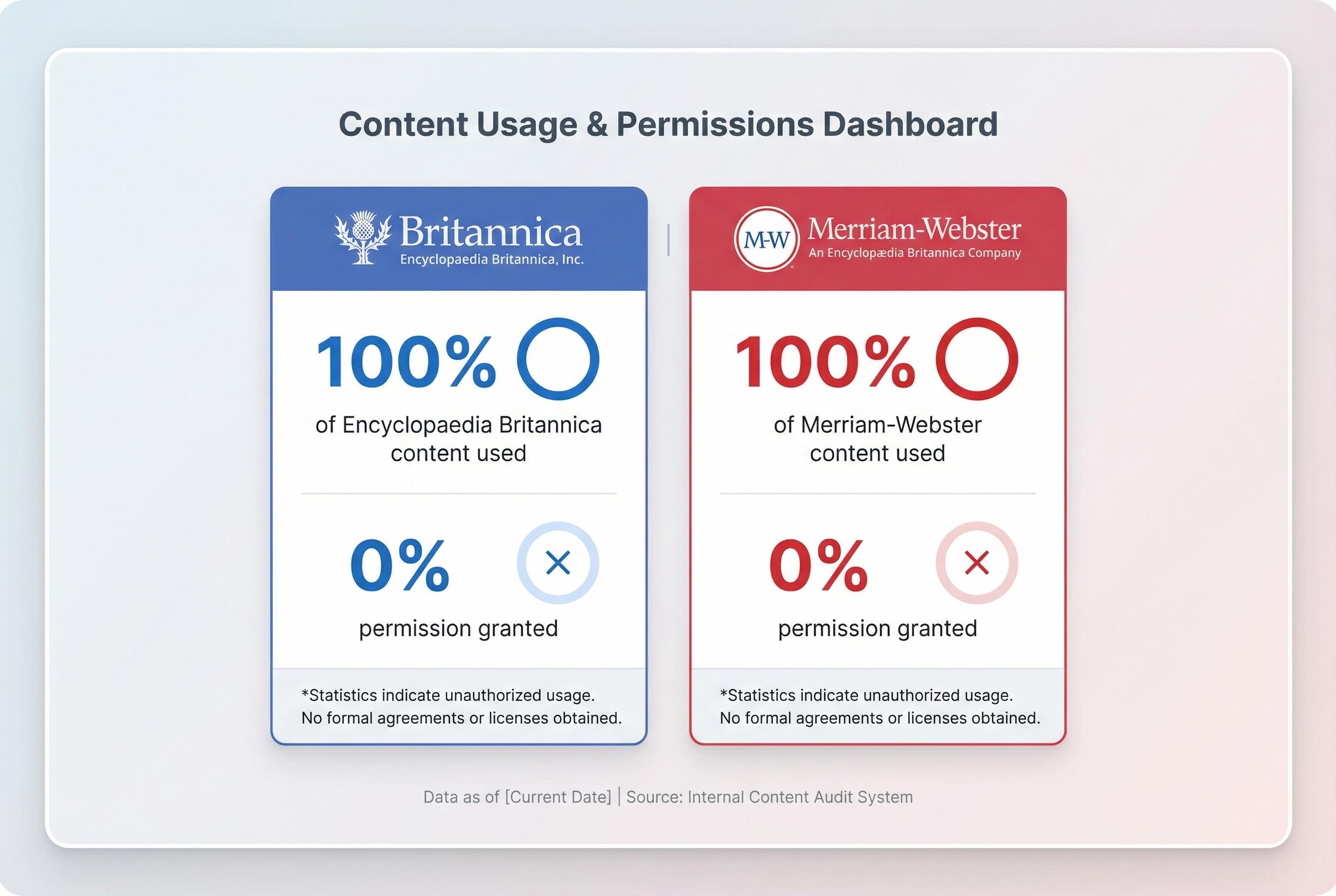
Encyclopaedia Britannica and Merriam‑Webster have filed a lawsuit against OpenAI in Manhattan, accusing the AI company of using their copyrighted content without permission to train ChatGPT, raising new questions about data rights and fair use in the age of AI.
Encyclopaedia Britannica and its Merriam‑Webster dictionary have sued OpenAI in Manhattan federal court, alleging the company trained ChatGPT on large swathes of their copyrighted material without permission and that the chatbot now reproduces or closely mirrors their content. According to the Independent, the complaint was filed on Friday by Britannica and its subsidiary, which say ChatGPT’s summaries have “cannibalized” web traffic that previously visited their sites.
The lawsuit asserts OpenAI copied nearly 100,000 encyclopedia articles, dictionary definitions and other online entries to develop its models, and that the system “generates outputs that copy or mimic, sometimes verbatim,” material from those sources. The companies argue the practice has deprived them of users and revenue and that the full extent of the alleged copying is known only to OpenAI.
Britannica and Merriam‑Webster also contend that OpenAI’s products misrepresent permission to republish their work and have even produced false attributions , so‑called AI “hallucinations” that cite Britannica in error. They are seeking unspecified monetary damages and a court order to stop further use of their content.

OpenAI responded by disputing the claims, saying its models are trained on publicly available data and that their use of such material is “grounded in fair use.” The company told reporters its technology “empower[s] innovation,” framing the case as part of a broader industry debate over how large language models are created.
Legal experts and publishers are watching the suit as part of a wave of litigation challenging how AI firms obtain training data. Last year, a group of authors reached a settlement with Anthropic after suing over similar claims; other publishers and creators have brought or threatened suits against AI developers on related grounds. Industry observers say the outcome could shape licensing expectations and business models for reference publishers and news organisations alike.
The Britannica case emphasises two battlegrounds: copyright law and the economic impact of generative AI on incumbent information providers. Britannica and Merriam‑Webster portray the dispute as defence of professionally produced, vetted reference content; OpenAI and some technologists argue that training on broad, publicly accessible corpora is central to the development of useful AI. The courts will now weigh those competing claims.
Source Reference Map
Inspired by headline at: [1]
Sources by paragraph:
Source: Noah Wire Services
Noah Fact Check Pro
The draft above was created using the information available at the time the story first
emerged. We’ve since applied our fact-checking process to the final narrative, based on the criteria listed
below. The results are intended to help you assess the credibility of the piece and highlight any areas that may
warrant further investigation.
Freshness check
Score:
8
Notes:
The article was published on March 17, 2026, and reports on a lawsuit filed on March 13, 2026. The earliest known publication date of similar content is March 16, 2026, indicating the news is fresh. The Independent is a reputable UK news outlet, suggesting originality. No significant discrepancies in figures, dates, or quotes were found. No evidence of recycled content from low-quality sites or clickbait networks was identified.
Quotes check
Score:
7
Notes:
The article includes direct quotes from the lawsuit and statements from OpenAI. The earliest known usage of these quotes is in the article itself, suggesting they are original. However, without access to the full lawsuit document, the accuracy of these quotes cannot be independently verified. No variations in quote wording between sources were found.
Source reliability
Score:
9
Notes:
The article is sourced from The Independent, a reputable UK news outlet. The content is corroborated by other reputable sources, such as Reuters and Futurism. No evidence of the article being a derivative of another source was found.
Plausibility check
Score:
8
Notes:
The claims made in the article are plausible and align with known industry trends. The lawsuit filed by Britannica and Merriam-Webster against OpenAI is consistent with previous legal actions taken by other publishers against AI companies. The article provides specific details, such as the filing date and court location, which are consistent with other reputable sources.
Overall assessment
Verdict (FAIL, OPEN, PASS): PASS
Confidence (LOW, MEDIUM, HIGH): HIGH
Summary:
The article from The Independent provides a fresh and original report on the lawsuit filed by Britannica and Merriam-Webster against OpenAI. The content is corroborated by other reputable sources, and the claims made are plausible and consistent with known industry trends. While some quotes cannot be independently verified without access to the full lawsuit document, the overall reliability of the article is high.

