


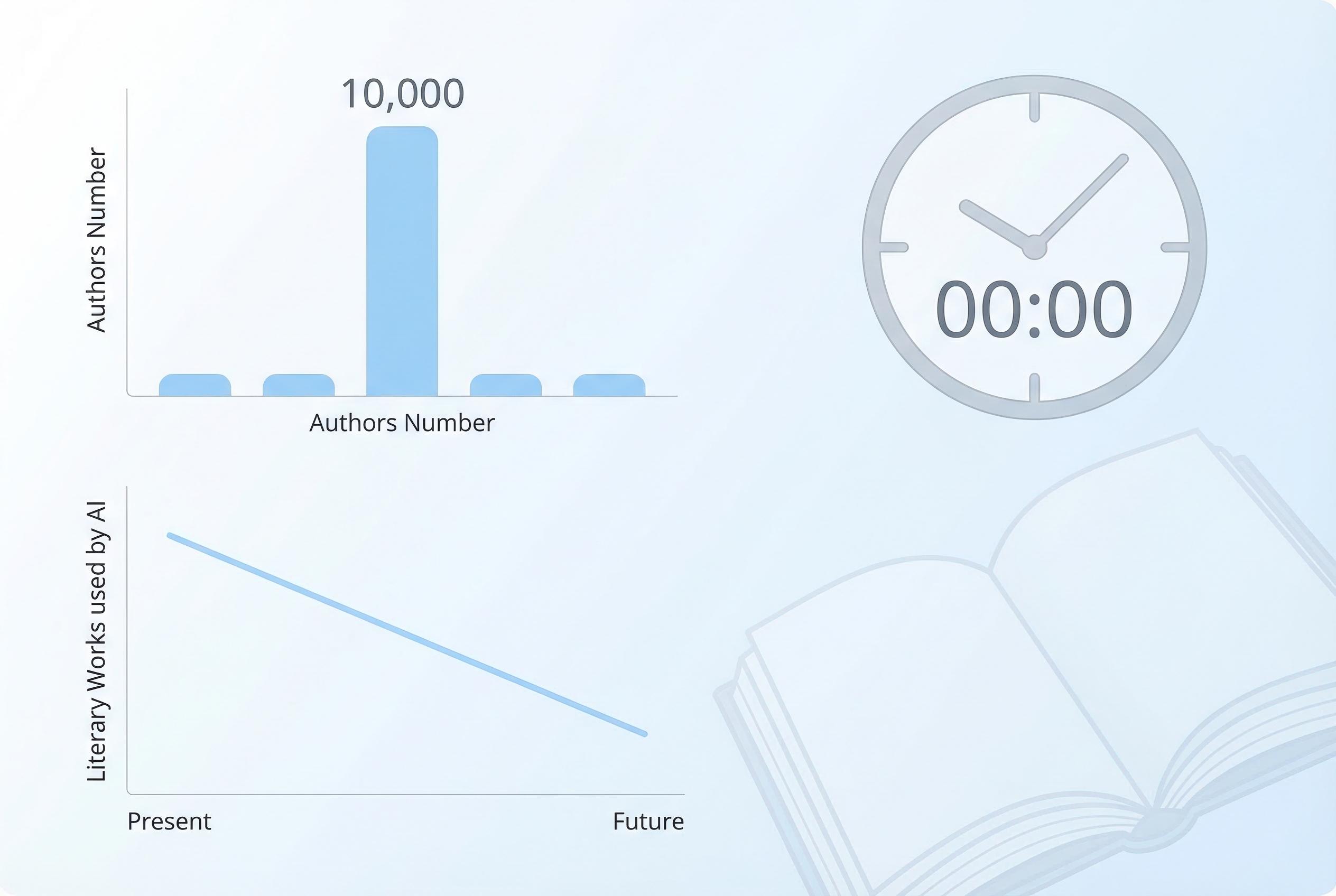
Ten thousand writers, including Richard Osman and Jeanette Winterson, deliver an empty volume to protest against unlicensed use of literary works for AI training, amid ongoing government copyright reforms.
Some 10,000 writers have united to produce an intentionally blank volume titled Don’t Steal This Book, handing copies out at the London Book Fair to dramatise their objection to the unauthorised harvesting of books for artificial intelligence training. Prominent names involved include Richard Osman, Jeanette Winterson and Kazuo Ishiguro, and the project organisers say the empty pages are meant to draw attention to the strain that unlicensed use of copyrighted material places on authors and the publishing sector.
The protest comes as ministers prepare an economic impact assessment and an update on copyright reform, a process the government has said will seek to balance protection for creators with support for innovation in AI. Critics of the consultation process have warned it appears tilted toward options that would make it easier for AI developers to rely on copyrighted works unless creators explicitly opt out.
One of the most contentious proposals discussed during the consultation would allow training of AI models on copyrighted books without prior permission unless rights‑holders signalled that they wished to opt out; that approach has been widely criticised by authors and some ministers have since indicated it is no longer the leading option. The consultation itself produced strong pushback from the creative community, which overwhelmingly favoured maintaining or strengthening existing copyright protections rather than broadening exceptions for AI developers.

On the back cover of the book the campaign states: “The UK government must not legalise book theft to benefit AI companies”. Composer and campaigner Ed Newton‑Rex, who organised Don’t Steal This Book, said “The AI industry was ‘built on stolen work [….] taken without permission or payment’” and added that the technology “robs” creators of income. In a statement the novelist Jeanette Winterson told big tech: “If you can’t actively support us (and you aren’t doing that) then stop stealing our stuff. Your bots can’t do what we do. Accept it and move on.” Bestselling author Adam Kay added: “It’s bad enough that AI has reduced customer service to incompetent chatbots and turned social media into low‑quality slop, let’s not kill the publishing industry while we’re at it. We all pay to read books, and the robots can do the same.”
The authors’ campaign echoes wider artistic opposition to unlicensed data‑mining by AI firms, which has fuelled multiple legal actions globally. Publishers and writers have pursued claims alleging that companies used pirated copies of books to train chatbots; recent settlements and negotiations in related cases have underscored how costly and consequential those disputes can be for the industry and for technology firms.
The government has signalled it will continue to consult with creators as it finalises its position, and ministers have committed to updating parliament by 18 March 2026 on the planned economic assessment and next steps. Officials say they want a copyright framework that protects human creativity while enabling trusted innovation, but the campaign by thousands of writers is likely to increase pressure on ministers to ensure any changes do not normalise uncompensated use of creative work.
Source Reference Map
Inspired by headline at: [1]
Sources by paragraph:
Source: Noah Wire Services
Noah Fact Check Pro
The draft above was created using the information available at the time the story first
emerged. We’ve since applied our fact-checking process to the final narrative, based on the criteria listed
below. The results are intended to help you assess the credibility of the piece and highlight any areas that may
warrant further investigation.
Freshness check
Score:
10
Notes:
The article is current, published on 10 March 2026, and reports on a recent event at the London Book Fair, ensuring high freshness.
Quotes check
Score:
8
Notes:
Direct quotes from authors like Ed Newton-Rex, Jeanette Winterson, and Adam Kay are included. While these quotes are consistent across multiple reputable sources, their exact origins are not specified, making independent verification challenging. The lack of direct sourcing for these quotes reduces the score.
Source reliability
Score:
9
Notes:
The article is from The Independent, a reputable UK news outlet. However, the lack of direct sourcing for some quotes slightly diminishes its reliability.
Plausibility check
Score:
9
Notes:
The claims about authors publishing an ’empty’ book in protest over AI use are plausible and align with reports from other reputable sources. The event’s timing, coinciding with the London Book Fair and upcoming government assessments on copyright law, adds credibility.
Overall assessment
Verdict (FAIL, OPEN, PASS): PASS
Confidence (LOW, MEDIUM, HIGH): MEDIUM
Summary:
The article provides a timely and plausible account of authors protesting AI use at the London Book Fair. However, the lack of direct sourcing for some quotes and the absence of direct links to original statements or press releases raise concerns about the independence of verification. These issues slightly diminish the overall confidence in the article’s accuracy.

