


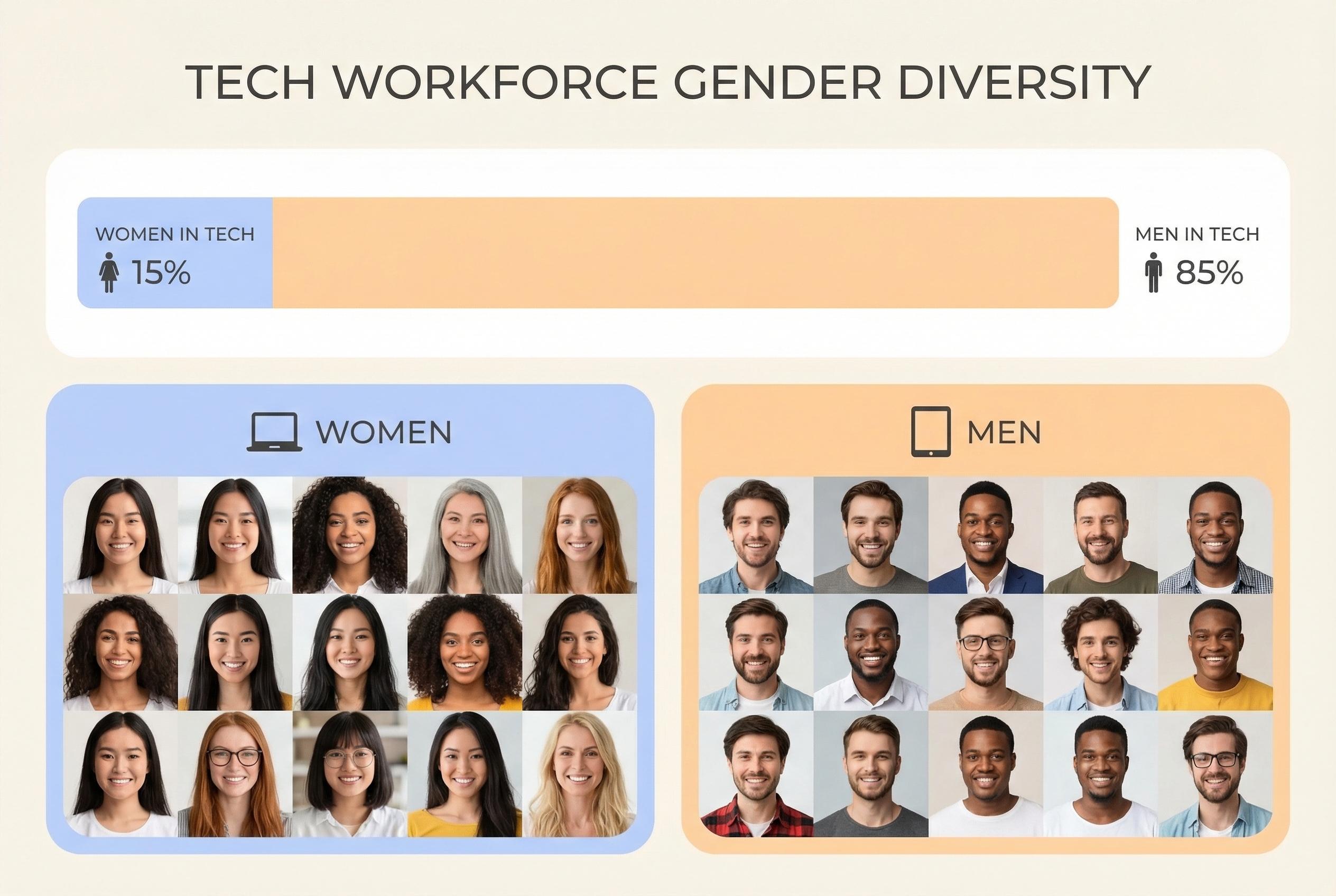
As AI becomes embedded in everyday decision-making, experts highlight the importance of increasing gender diversity in its development to mitigate biases, enhance innovation, and embed ethical principles from the outset.
Artificial intelligence is no longer an abstract promise; it now influences everyday decisions from credit approval to fraud detection and customer service. Yet the people shaping these systems matter as much as the code: teams lacking varied life experiences risk embedding and amplifying existing social biases into the models they build. According to reporting and industry commentary, correcting that imbalance requires deliberate attention to who is designing, testing and deploying AI. (Sources: industry commentary).
The technology and payments sectors continue to show a substantial gender gap that starts long before careers begin. Educational choices, cultural assumptions about computing and recruitment practices all contribute to a smaller pipeline of women entering technical roles. Experts argue that interventions in schools, visible role models and outreach will help expand that pipeline, while employers must scrutinise hiring and consider bold targets such as equal graduate intake to create a workforce that mirrors the populations AI will affect. According to ITWeb and workplace analysis, both early outreach and corporate recruitment reform are essential.
Beyond representation, gender diversity changes how problems are framed and solved. Diverse teams are more likely to identify dataset blind spots, question assumptions embedded in historical records and stress-test algorithms for disparate impacts. Research and industry commentary show that mixed-gender teams tend to be stronger at creative problem solving and innovation, which in turn reduces operational and reputational risk when systems are rolled out. SHRM and sector analyses point to improved outcomes when teams reflect a range of perspectives.

Women are increasingly visible in forums that set ethical AI agendas, helping to steer debates on fairness, transparency and explainability. Organisations and advocacy groups led by women are pushing ethical concerns from discussion into practice, arguing that ethics must be embedded at the design stage rather than treated as an afterthought. Observers say institutionalising these values across product development, procurement and board-level decision-making will be crucial to preventing bias from becoming encoded in deployed systems. Commentary from WomenTech and sector groups underscores this shift from principle to implementation.
The skills women commonly bring to collaborative work, such as high levels of emotional intelligence and an orientation toward empathy, have practical value when AI governs choices that affect people’s lives. These so-called soft skills help teams anticipate unintended consequences and assess whether automated outcomes feel equitable across different communities. Academic and NGO research warns that excluding these perspectives not only undermines fairness but can also perpetuate gendered harms, making continuous monitoring and clear ethical standards essential.
Achieving responsible, trusted AI therefore demands both cultural and structural change: broaden the talent pipeline, set measurable diversity goals, embed ethics in engineering workflows and hold organisations accountable for outcomes. Industry commentators stress that diversity is not merely symbolic but a practical governance mechanism that improves robustness, equity and public trust in AI-enabled services. As payments and technology firms accelerate AI adoption, making gender inclusion a strategic priority will determine whether these systems serve everyone or entrench existing inequities.
Source Reference Map
Inspired by headline at: [1]
Sources by paragraph:
Source: Noah Wire Services
Noah Fact Check Pro
The draft above was created using the information available at the time the story first
emerged. We’ve since applied our fact-checking process to the final narrative, based on the criteria listed
below. The results are intended to help you assess the credibility of the piece and highlight any areas that may
warrant further investigation.
Freshness check
Score:
8
Notes:
The article was published on 6th March 2026, making it current. However, the content heavily references and paraphrases existing articles from Women in Tech Network, which were published between 2 weeks and 4 months prior. This raises concerns about originality and potential recycling of content. ([womentech.net](https://www.womentech.net/how-to/what-role-do-women-play-in-shaping-ethics-artificial-intelligence?utm_source=openai))
Quotes check
Score:
6
Notes:
The article includes paraphrased content from various sources, but no direct quotes are used. While this avoids direct reuse of quotes, the paraphrasing of existing articles without significant original input suggests a lack of fresh perspectives. ([womentech.net](https://www.womentech.net/how-to/what-role-do-women-play-in-shaping-ethics-artificial-intelligence?utm_source=openai))
Source reliability
Score:
7
Notes:
The primary source, IT Brief UK, is a technology news outlet targeting CIOs and IT decision-makers. While it is a reputable source, the article relies heavily on content from Women in Tech Network, which is a niche publication. This reliance on a single, specialized source for key information raises concerns about the diversity and independence of the information presented. ([womentech.net](https://www.womentech.net/how-to/what-role-do-women-play-in-shaping-ethics-artificial-intelligence?utm_source=openai))
Plausibility check
Score:
8
Notes:
The claims made in the article align with widely accepted views on the importance of gender diversity in AI development. However, the heavy reliance on paraphrased content from a single source without substantial original analysis or new data diminishes the article’s overall credibility. ([womentech.net](https://www.womentech.net/how-to/what-role-do-women-play-in-shaping-ethics-artificial-intelligence?utm_source=openai))
Overall assessment
Verdict (FAIL, OPEN, PASS): FAIL
Confidence (LOW, MEDIUM, HIGH): MEDIUM
Summary:
The article is current but heavily relies on paraphrased content from a single, specialized source without adding substantial original analysis or new data. This raises concerns about originality, source independence, and the overall value added by the article. The lack of diverse verification sources further diminishes its credibility. ([womentech.net](https://www.womentech.net/how-to/what-role-do-women-play-in-shaping-ethics-artificial-intelligence?utm_source=openai))

