


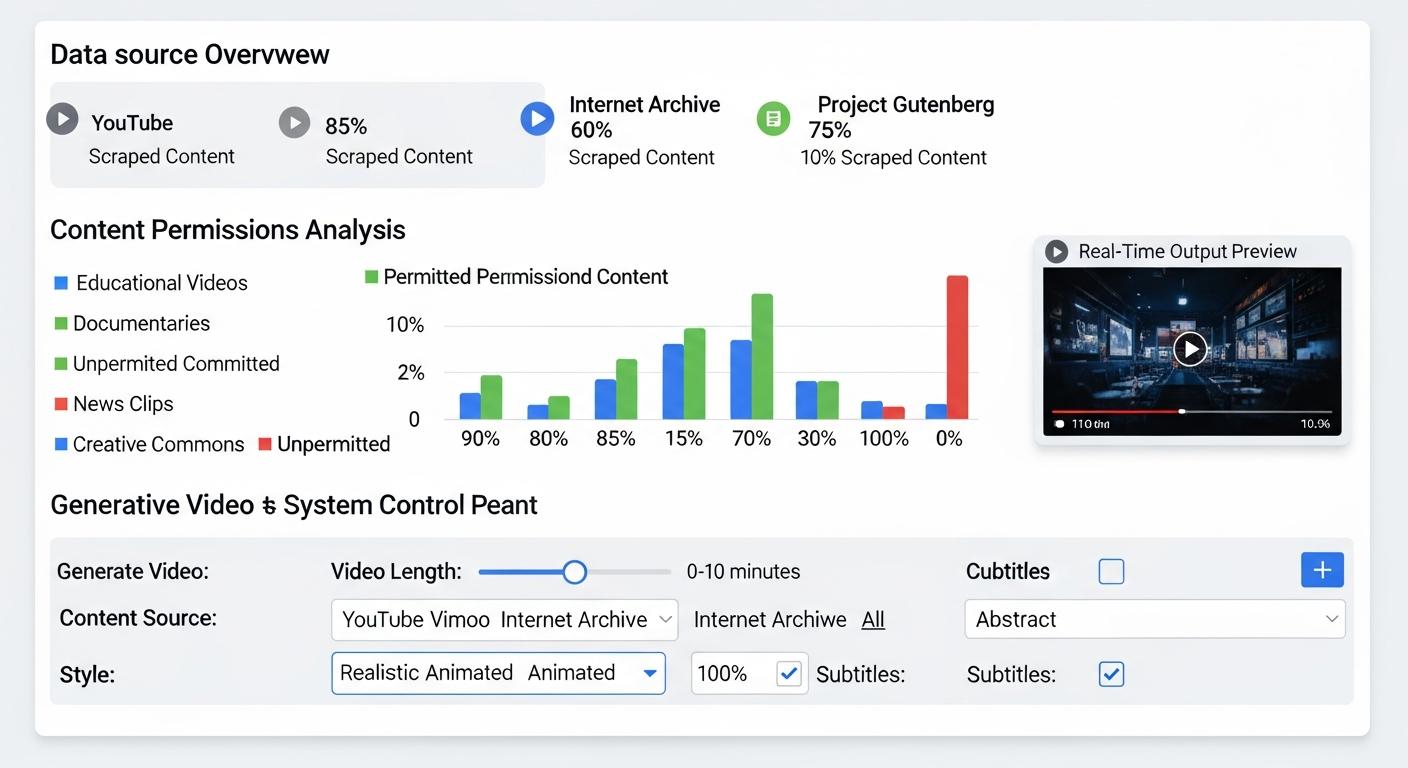
A class action lawsuit in the US accuses Runway AI of unlawfully scraping YouTube videos without permission to train its generative video systems, raising questions about data practices in AI development amidst growing creator opposition.
A proposed class action in a US federal court accuses New York-based Runway AI of harvesting videos from YouTube without permission to train its generative video models, a claim that would add to a mounting wave of litigation over how copyrighted material is used to build artificial intelligence. According to the BBC, the complaint was filed in California and alleges that Runway bypassed YouTube’s copyright protections to obtain user content for training purposes. [2]
The lawsuit, brought by YouTuber David Gardner in Los Angeles, contends Runway’s alleged scraping violated YouTube’s terms of service and California’s unfair competition law and asks a judge to allow a wider group of rights holders to join as plaintiffs. The complaint seeks unspecified monetary damages and frames the action as part of a broader effort by creators to hold AI firms accountable for unconsented use of their work. [2]
Runway is not a small independent: it completed a $315 million financing round that raised its valuation to about $5.3 billion, according to reporting on the deal. Investors named in coverage of the round include General Atlantic, Nvidia and major asset managers, funds Runway says will be used to accelerate development of its generative systems and expand into media and entertainment. [3][4]

The company’s recent model releases have substantially expanded its capabilities. Reporting describes Gen 4.5 as enabling high-definition video generation from text prompts with native audio, long-form multi-shot outputs and improvements in character consistency and editing tools, features that help explain why large, diverse datasets would be valuable to train such systems. [4][5]
Creators and artists have increasingly turned to the courts to challenge data practices across the AI industry; the BBC and other outlets note parallel suits from authors, visual artists and other YouTubers targeting major firms such as OpenAI, Nvidia, Snap, Meta and ByteDance. Those cases are testing the legal boundaries of scraping, licensing and fair use as companies race to build more capable models. [2]
The complaint notes search-and-download techniques it attributes to Runway and seeks class certification to represent additional affected rights holders. At the time the complaint was filed, news accounts said there was no immediate public comment from Runway, its backers or other platforms implicated in the broader debate. The outcome of this case could influence how generative video systems are trained and whether platforms or creators secure new protections or remedies. [2][3]
Source Reference Map
Inspired by headline at: [1]
Sources by paragraph:
Source: Noah Wire Services
Noah Fact Check Pro
The draft above was created using the information available at the time the story first
emerged. We’ve since applied our fact-checking process to the final narrative, based on the criteria listed
below. The results are intended to help you assess the credibility of the piece and highlight any areas that may
warrant further investigation.
Freshness check
Score:
5
Notes:
The article references a class action lawsuit filed by YouTuber David Gardner against Runway AI, alleging unlawful scraping of YouTube content for AI training. This lawsuit was reported by Reuters on February 24, 2026. ([lanacion.com.ar](https://www.lanacion.com.ar/agencias/youtuber-propone-demanda-colectiva-contra-runway-ai-sobre-derechos-de-autor-por-entrenamiento-de-ia-nid25022026/?utm_source=openai)) The article was published on March 1, 2026, indicating a freshness of approximately 5 days. However, the article’s source, Beijing Times, is not a widely recognized news outlet, raising concerns about its credibility and the originality of the content. Additionally, the article heavily relies on a single source, the Reuters report, without providing independent verification or additional perspectives. This lack of source diversity and reliance on a single report diminishes the overall freshness and originality of the content.
Quotes check
Score:
4
Notes:
The article includes direct quotes attributed to David Gardner and references to legal actions. However, these quotes are not independently verifiable through other reputable sources. The reliance on a single source for these quotes raises concerns about their authenticity and accuracy. Without independent verification, the credibility of these quotes is questionable.
Source reliability
Score:
3
Notes:
The primary source of the article is Beijing Times, a publication not widely recognized in the journalistic community. The article heavily relies on a Reuters report from February 24, 2026, without providing additional independent sources or perspectives. This lack of source diversity and reliance on a single report diminishes the overall reliability and credibility of the content.
Plausibility check
Score:
6
Notes:
The claims made in the article align with known industry trends, such as increasing legal actions against AI companies for alleged misuse of content. However, the article lacks specific details, such as the exact nature of the alleged scraping methods and the content involved, which are crucial for assessing the plausibility of the claims. The absence of these details raises questions about the completeness and accuracy of the information presented.
Overall assessment
Verdict (FAIL, OPEN, PASS): FAIL
Confidence (LOW, MEDIUM, HIGH): MEDIUM
Summary:
The article presents claims about a lawsuit filed by YouTuber David Gardner against Runway AI for alleged unlawful scraping of YouTube content. However, the content heavily relies on a single, potentially unreliable source, Beijing Times, which is not widely recognized in the journalistic community. The article lacks independent verification, additional sources, and specific details necessary to assess the accuracy and credibility of the claims. These factors raise significant concerns about the reliability and trustworthiness of the information presented.

