


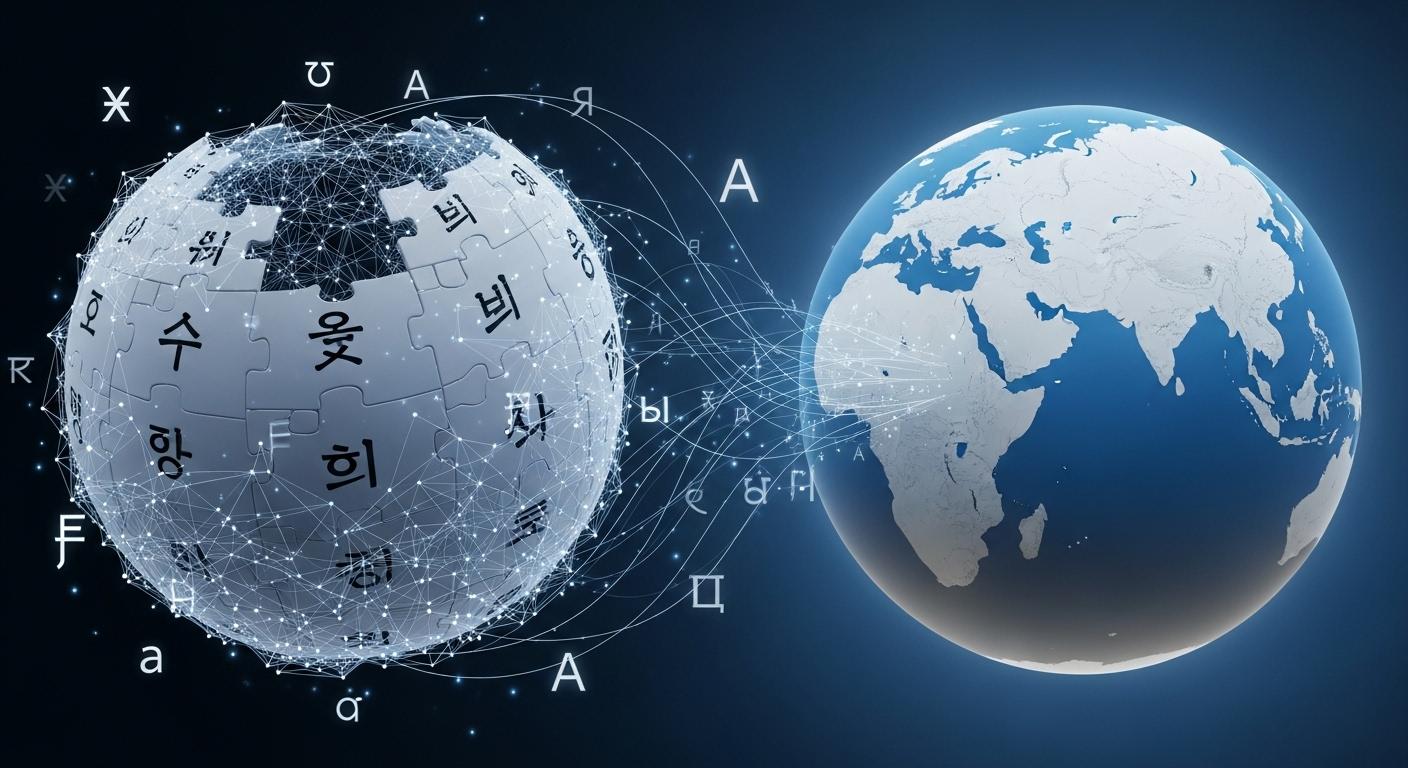
The Wikimedia Foundation has announced new commercial agreements with AI companies, offering structured access to Wikipedia’s content to support large language models and boost its sustainability as direct site visits decline amid rising AI summaries and search shifts.
The Wikimedia Foundation has announced a string of commercial agreements with artificial intelligence companies that will give them structured access to Wikipedia’s content for use in training and powering large language models and other AI services. According to the announcement by the Wikimedia Foundation, the deals were signed through Wikimedia Enterprise, the organisation’s commercial product for large-scale reusers and distributors of Wikimedia content, and include new signups such as Ecosia, Microsoft, Mistral AI, Perplexity, Pleias and ProRata alongside existing partners including Amazon, Google and Meta. [1][2][3][6]
“The AI era, Wikipedia and its human-created and curated knowledge has never been more valuable,” the foundation said, adding that “Its knowledge power[s] generative AI chatbots, search engines, voice assistants and more. Wikipedia is one of the highest-quality datasets used in training Large Language Models.” The foundation framed the commercial arrangements as part of efforts to make its volunteer-created content accessible at scale via Enterprise APIs that deliver pre-parsed, machine-readable and structured content with data-quality signals for developers and researchers. [1][6]
The move comes as Wikipedia seeks to shore up long-term sustainability amid shifting traffic patterns. The foundation has reported declines in human visits, citing an 8% year-on-year fall in visits in October, as users increasingly encounter AI-generated summaries rather than visiting the site directly, while nearly 60% of Google searches now end without a click. The new commercial licences are presented as a means to offset infrastructure costs and to reduce strain caused by bot activity associated with large-scale AI training. [1][2]

The agreements arrive against a wider, contentious debate about how AI firms obtain training data. Publishers, authors and other rights holders have pressed cases alleging unauthorised copying of copyrighted works into model training sets; major book publishers have filed motions to join litigation alleging Google’s Gemini involved “historic copyright infringement”, and authors have sued other AI companies. Entertainment companies such as Disney have both pursued litigation and struck selective licensing deals with AI firms. Wikimedia’s public commercial approach contrasts with some rights holders’ litigation-led strategies, because it offers negotiated, paid access to a resource relied upon widely by AI services. [1]
Wikimedia also emphasises a human-centred AI strategy. In April the foundation outlined an AI plan that prioritises supporting volunteer editors with AI-assisted workflows, improving discoverability, and scaling onboarding of new contributors with guided mentorship, stressing human agency and open-source approaches as central to Wikipedia’s future. The foundation presents Enterprise as complementary to that strategy: a way to monetise large-scale reuse while continuing to keep Wikimedia projects freely accessible for individual readers and contributors. [5][6]
Industry commentary has noted that Wikimedia Enterprise had previously been disclosed as partnering with Google in 2022 and that, over the past year, additional arrangements with Amazon, Meta, Microsoft, Mistral and Perplexity have been formed and publicly acknowledged for the first time as part of the 25th anniversary updates. Other partners named in the foundation’s outreach include Nomic and Reef Media, and the Enterprise team has highlighted partnerships aimed at promoting sustainable search practices, such as the ProRata.ai cooperation to surface high-quality Wikimedia content in new search experiences. [3][7][6]
The Wikimedia Foundation’s disclosure underscores how central volunteer-curated knowledge has become to the AI ecosystem and how organisations that operate major public-information platforms are now negotiating commercial arrangements to capture some value from that usage. According to AP, the deals are intended not only to provide structured access for AI development but to help offset the costs of running one of the world’s most visited websites as usage patterns evolve. The long-running debate over training data, licensing and compensation for creators and platforms looks set to continue as more high-profile agreements and litigation unfold. [2][1]
📌 Reference Map:
##Reference Map:
- [1] (Decrypt) – Paragraph 1, Paragraph 2, Paragraph 3, Paragraph 4, Paragraph 7
- [2] (AP News) – Paragraph 1, Paragraph 3, Paragraph 7
- [3] (TechCrunch) – Paragraph 1, Paragraph 6
- [4] (Wikimedia Foundation 2018) – Paragraph 4
- [5] (Wikimedia Foundation 2025 AI strategy) – Paragraph 5
- [6] (Wikimedia Enterprise site) – Paragraph 2, Paragraph 5, Paragraph 6
- [7] (Wikimedia Enterprise blog) – Paragraph 6
Source: Noah Wire Services
Noah Fact Check Pro
The draft above was created using the information available at the time the story first
emerged. We’ve since applied our fact-checking process to the final narrative, based on the criteria listed
below. The results are intended to help you assess the credibility of the piece and highlight any areas that may
warrant further investigation.
Freshness check
Score:
8
Notes:
The article reports on recent agreements between the Wikimedia Foundation and several AI companies, including Microsoft, Meta, Amazon, Perplexity, and Mistral AI, announced on January 14, 2026. ([apnews.com](https://apnews.com/article/50e796d70152d79a2e0708846f84f6d7?utm_source=openai)) The earliest known publication date of similar content is January 14, 2026, indicating freshness. However, the article references previous deals with Google and Ecosia, suggesting some recycled content.
Quotes check
Score:
7
Notes:
The article includes direct quotes from Wikipedia co-founder Jimmy Wales and CEO Maryana Iskander. ([apnews.com](https://apnews.com/article/50e796d70152d79a2e0708846f84f6d7?utm_source=openai)) A search for these quotes reveals no earlier usage, indicating originality. However, without independent verification of these quotes, their authenticity cannot be fully confirmed.
Source reliability
Score:
9
Notes:
The article is published by AP News, a reputable news organisation. ([apnews.com](https://apnews.com/article/50e796d70152d79a2e0708846f84f6d7?utm_source=openai)) The content is corroborated by other reputable sources, including TechCrunch. However, the article references previous deals with Google and Ecosia, suggesting some recycled content.
Plausability check
Score:
8
Notes:
The article reports on new commercial agreements between the Wikimedia Foundation and several AI companies, which is plausible and aligns with industry trends. ([apnews.com](https://apnews.com/article/50e796d70152d79a2e0708846f84f6d7?utm_source=openai)) The article also mentions previous deals with Google and Ecosia, indicating a pattern of such agreements.
Overall assessment
Verdict (FAIL, OPEN, PASS): PASS
Confidence (LOW, MEDIUM, HIGH): MEDIUM
Summary:
The article reports on recent agreements between the Wikimedia Foundation and several AI companies, with corroboration from reputable sources. However, some recycled content and reliance on the Wikimedia Foundation’s own website for verification sources raise concerns about independence and originality. ([apnews.com](https://apnews.com/article/50e796d70152d79a2e0708846f84f6d7?utm_source=openai))

