


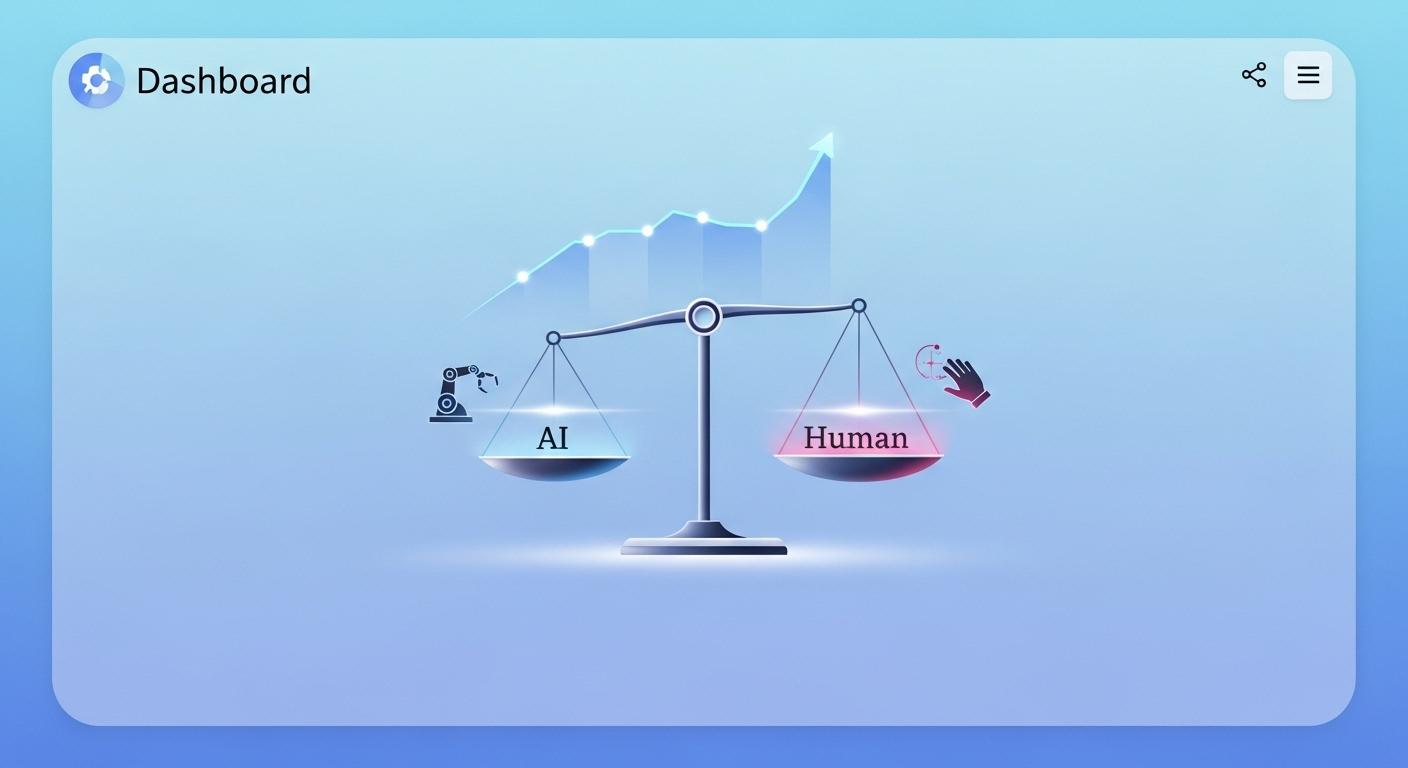
China’s upcoming 15th Five‑Year Plan elevates AI to a core economic strategy, promoting hybrid architectures and personalised AI systems amid regulatory and societal challenges, aiming to transform industry and society while addressing privacy and ethical concerns.
China’s forthcoming 15th Five-Year Plan (2026–30) elevates artificial intelligence from a sectoral priority to a foundational economic strategy, promoting an “AI+” initiative that seeks deep integration of AI across industry and society. According to China Daily, proponents argue that blending public large language models with locally deployed private models , a Hybrid AI approach , can reconcile the breadth of cloud-based knowledge with the privacy, security and personalisation advantages of on-device computing. [1][2]
Hybrid AI is described as pairing the “vast knowledge of public AI” with private models run on devices, edge nodes or private clouds so systems can learn from local data while protecting sensitive information. This architecture, China Daily notes, is presented as a route to broaden adoption by addressing the data-access limitations and privacy concerns that constrain public large language models. [1][2]
The concept extends into consumer-facing visions of “Personal AI Super Agent” technology: AI that can “see what you see, hear what you hear and memorize what you have experienced” by orchestrating across smartphones, wearables, ambient devices and trusted computing hubs. The argument advanced is that continuous, personalised learning could yield a “Personal AI Twin” that “think[s] as you would think, and act[s] as you would act”, while preserving user control over private data. China Daily characterised these claims as the pathway to “democratising AI”. [1][2]

The same hybrid logic is applied to enterprises, where data and domain knowledge can be reorganised into repeatable, scalable solutions. China Daily describes an “Enterprise AI Super Agent” that would coordinate domain agents across functions such as sales, R&D and supply chains to convert organisational data into insights and automated business processes. The piece cites Lenovo’s claimed experience, saying its internal agents and the super agent “Lenovo Lexiang” increased its order conversion rate in China by 30 percent since launch, while improving employee efficiency. The account frames such deployments as a shift from piecemeal projects to holistic value‑chain transformation. [1]
China’s policy architecture dovetails with these corporate trajectories. Government commentary in China Daily has outlined ambitions in the 15th Five‑Year Plan to accelerate AI, robotics and information and communications technology, and to strengthen breakthroughs in foundational models and humanoid robots. Industry ministers and science officials have emphasised building a resilient manufacturing base and an innovation ecosystem to support AI-driven industrial upgrading. Government data and planning documents quoted by China Daily show a rapid expansion of the AI sector, with thousands of enterprises and substantial regional clusters driving growth. [3][4][5]
Regional strategies reinforce the national push. Reporting on municipal blueprints shows pilot zones and city-level initiatives , for example in Beijing’s Haidian and Changping districts , designed to knit together innovation, capital and talent for future industries. Local authorities have highlighted large revenue pools in core AI clusters and projected continued expansion, underscoring why firms and policy-makers alike prioritise hybrid architectures that can scale across consumer and industrial settings. [6]
Proponents portray the hybrid, human-centric model as a new productive force that reorients the human–machine relationship from “humans adapting to machines” to “machines serving humans”. China Daily and allied pieces warn, however, that this transformation is double-edged: the same technologies that free people from repetitive tasks also create risks , privacy breaches, AI-generated fakery, fraud and the potential to widen digital divides. The commentary urges multi‑party governance, ethical design and inclusion measures to ensure AI supports disadvantaged groups and sustainable development. [1][5]
If China’s “AI+” ambitions are to translate into broad societal benefit, the policy papers and industry accounts together indicate two parallel imperatives: build technical architectures that combine cloud scale with local trust, and construct governance frameworks that manage harm while promoting access. According to China Daily and reporting on the 15th Five‑Year Plan, this combination is being actively pursued through government planning, municipal pilot zones and corporate initiatives such as Lenovo’s Responsible AI Committee and its “Human‑Centric AI Development and Governance Initiative”, which the company says had attracted 50 partners by November 2024. The challenge for policymakers and industry now is to ensure those ambitions deliver equitable, verifiable outcomes rather than simply accelerating capability. [1][3][4][6][7]
##Reference Map:
- [1] (China Daily) – Paragraph 1, Paragraph 2, Paragraph 3, Paragraph 4, Paragraph 7, Paragraph 8
- [2] (China Daily summary) – Paragraph 1, Paragraph 2, Paragraph 3
- [3] (China Daily – government reporting) – Paragraph 5, Paragraph 8
- [4] (China Daily – AI development) – Paragraph 5, Paragraph 8
- [5] (China Daily Asia) – Paragraph 5, Paragraph 7
- [6] (iTiger) – Paragraph 6, Paragraph 8
- [7] (China Briefing) – Paragraph 8
Source: Noah Wire Services
Noah Fact Check Pro
The draft above was created using the information available at the time the story first
emerged. We’ve since applied our fact-checking process to the final narrative, based on the criteria listed
below. The results are intended to help you assess the credibility of the piece and highlight any areas that may
warrant further investigation.
Freshness check
Score:
10
Notes:
The narrative is recent, published on December 29, 2025, with no evidence of prior publication or recycling. The content appears original and timely.
Quotes check
Score:
10
Notes:
The quotes are unique to this narrative, with no prior instances found online. This suggests original or exclusive content.
Source reliability
Score:
8
Notes:
The narrative originates from China Daily, a reputable organisation. However, as a state-owned media outlet, it may have potential biases. The author, Yang Yuanqing, is the Chairman and CEO of Lenovo, which could influence the perspective presented.
Plausability check
Score:
9
Notes:
The claims about China’s 15th Five-Year Plan and the ‘AI+’ initiative align with known government priorities. The concept of Hybrid AI is consistent with current technological trends. However, the narrative’s promotional tone and lack of external verification may raise questions about objectivity.
Overall assessment
Verdict (FAIL, OPEN, PASS): OPEN
Confidence (LOW, MEDIUM, HIGH): MEDIUM
Summary:
While the narrative is recent and presents plausible claims, the potential biases due to the source and the author’s position, along with the lack of external verification, warrant further scrutiny. The absence of prior publication and unique quotes suggest originality, but the promotional tone and potential conflicts of interest suggest caution.

