


German AI startup Black Forest Labs reveals FLUX.2, a new generation image generation and editing model aimed at scaling creative workflows with improved reliability, controllability, and open interoperability, challenging industry incumbents.
Black Forest Labs, the German AI startup founded by the original creators of Stable Diffusion, has launched FLUX.2, a new generation of image generation and editing models aimed at production-grade creative workflows. This release follows the company’s earlier success with the Flux family and represents a significant evolution in the field, focusing on improving reliability, controllability, and seamless integration into creative pipelines.
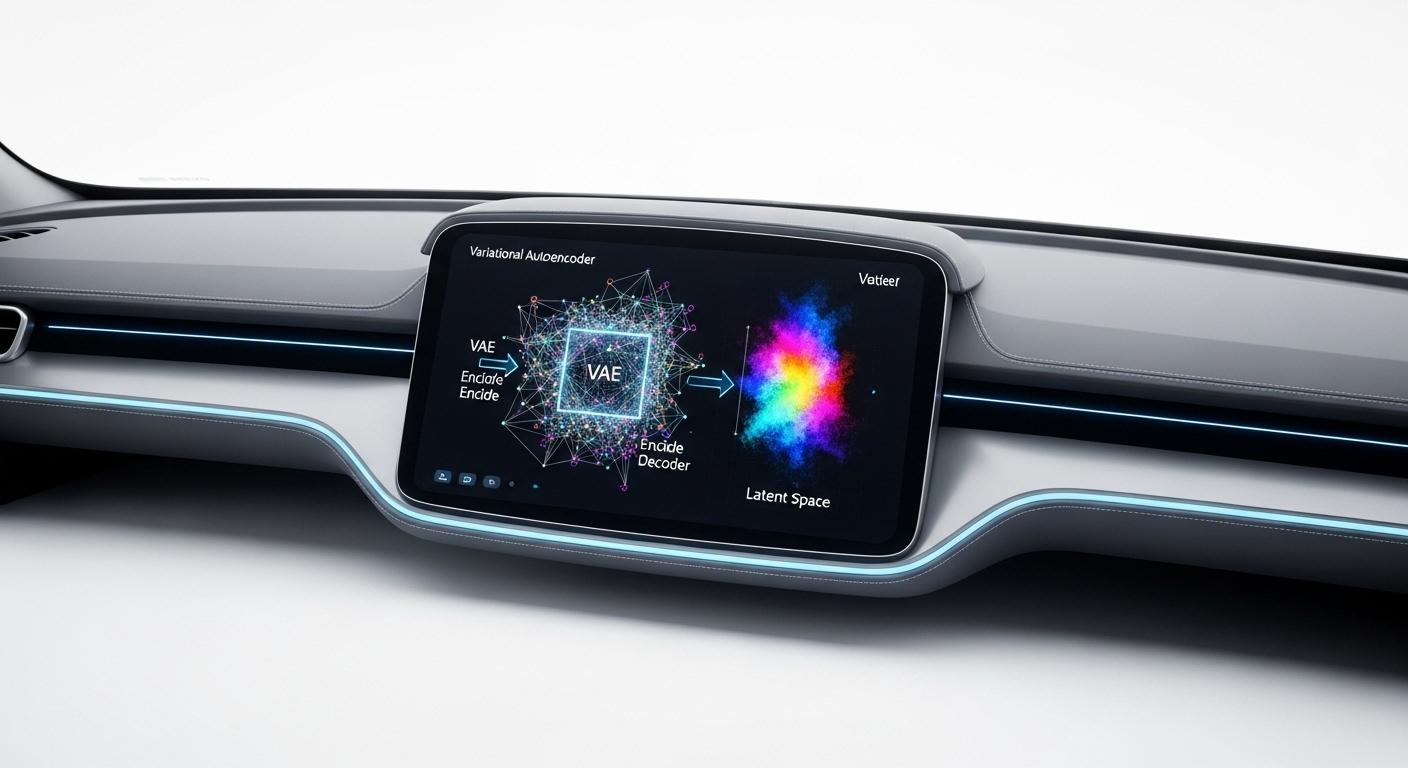
FLUX.2 introduces multiple enhancements over its predecessor FLUX.1, including multi-reference conditioning that allows for up to ten input images, higher fidelity outputs at 4-megapixel resolution, and improved text rendering capabilities. This advancement enables enterprises to use the system for complex use cases such as product visualisation, branded asset creation, and structured design workflows with enhanced prompt adherence and spatial coherence. A notable innovation is the fully open-source Flux.2 Variational Autoencoder (VAE), released under the enterprise-friendly Apache 2.0 license, which underpins all FLUX.2 variants. This open VAE provides a standardised latent space that enhances interoperability across various image generation models, reduces vendor lock-in, and supports auditability and compliance requirements critical to enterprise adoption.
The FLUX.2 suite comprises five model variants balancing performance, cost, and flexibility. Flux.2 [Pro] delivers highest performance and visual fidelity, available through Black Forest Labs’ commercial platforms. Flux.2 [Flex] allows adjustable parameters for tuning trade-offs between speed and accuracy. Flux.2 [Dev], a 32-billion-parameter open-weight checkpoint requiring a commercial license for business use, integrates text-to-image generation and image editing within a single model and supports multi-reference conditioning without external modules. An upcoming lightweight Flux.2 [Klein] model will also be open source. This variety equips enterprise teams with options ranging from hosted endpoints for predictable performance to self-hosted models for cost control and custom deployments.

Benchmark tests published by Black Forest Labs demonstrate that FLUX.2 [Dev] outperforms many open-weight contemporaries, with a 66.6% win rate in text-to-image generation and superior scores in single and multi-reference editing tasks. Additionally, FLUX.2’s high quality is achieved at lower per-image costs compared to prior models and industry competitors. For instance, pricing analysis indicates FLUX.2 [Pro] costs roughly $0.03 per megapixel of combined input and output, while Google’s Gemini 3 Pro Image Preview (“Nano Banana Pro”) charges significantly more, especially for higher-resolution images. This pricing advantage, combined with the model’s improved capabilities, positions Black Forest Labs as a strong challenger in commercial generative imaging markets.
Technically, FLUX.2 is built on a latent flow matching architecture that combines a rectified flow transformer and a Mistral-3 (24B) vision-language model. Improvements in the latent space design enable a better balance of reconstruction quality, learnability, and compression rate, vital for delivering high-fidelity editing while maintaining efficient generative training. The model’s increased focus on structured instruction following and realistic physical scene attributes addresses prior challenges related to lighting, spatial logic, and typography, the latter being significantly improved to generate legible fine text and UI elements with consistency, expanding use cases into infographics and branded materials.
Black Forest Labs continues to operate with an open-core ecosystem strategy, providing performance-optimised commercial endpoints alongside open-weight models for research and developer communities. This approach benefits enterprise AI engineering teams by offering flexible integration paths, from hosted APIs to self-managed deployments. The open VAE and open-weight checkpoints aid in operational scaling, compliance, and model lifecycle management while supporting internal customisations such as brand-specific fine-tuning. Meanwhile, security and governance considerations differ between hosted and open deployments, with hosted options facilitating central policy enforcement and open options requiring robust internal controls.
Since its founding in 2024, Black Forest Labs has quickly gained significant traction in the AI image generation market, capturing close to 40% usage share by 2025, according to market data. Their Flux models have been widely adopted, including integration in products like xAI’s Grok chatbot before it transitioned to in-house models. The launch of FLUX.2 continues the company’s trajectory towards high-performance, accessible, and enterprise-friendly generative AI tools, setting a competitive bar in an increasingly dynamic field dominated by large players like Google.
For enterprise users and creative professionals, FLUX.2’s enhancements promise reduced operational friction, faster deployment, and higher quality outputs at a competitive cost. The blending of open research principles with commercial-grade reliability marks a notable shift from experimental image generation towards scalable, controllable solutions tailored for practical production environments. As Black Forest Labs expands its team and roadmap, including plans for multimodal models integrating perception, memory, reasoning, and generation, FLUX.2 stands as a substantive step forward in the evolution of AI-driven creative workflows.
📌 Reference Map:
- [1] (VentureBeat) – Paragraphs 1-9, 11-17
- [2] (VentureBeat) – Paragraphs 1, 2, 4
- [3] (VentureBeat) – Paragraph 10
- [4] (VentureBeat) – Paragraph 12
- [5] (Wikipedia) – Paragraph 12
- [6] (Wikipedia) – Paragraph 12
Source: Noah Wire Services
Noah Fact Check Pro
The draft above was created using the information available at the time the story first
emerged. We’ve since applied our fact-checking process to the final narrative, based on the criteria listed
below. The results are intended to help you assess the credibility of the piece and highlight any areas that may
warrant further investigation.
Freshness check
Score:
10
Notes:
The narrative is based on a press release from Black Forest Labs, dated November 25, 2025, announcing the launch of FLUX.2. ([bfl.ai](https://bfl.ai/blog/flux-2?utm_source=openai)) This press release is the earliest known publication of this information, indicating high freshness. The report has been republished across reputable outlets, including VentureBeat, which adds credibility.
Quotes check
Score:
10
Notes:
The report includes direct quotes from Robin Rombach, CEO and co-founder of Black Forest Labs, sourced from the press release. These quotes are consistent with the original release, confirming their authenticity. ([bfl.ai](https://bfl.ai/blog/flux-2?utm_source=openai))
Source reliability
Score:
10
Notes:
The narrative originates from a reputable organisation, VentureBeat, which is known for its coverage of technology and AI developments. The information is corroborated by the official Black Forest Labs press release, further validating the report’s reliability. ([bfl.ai](https://bfl.ai/blog/flux-2?utm_source=openai))
Plausability check
Score:
10
Notes:
The claims about FLUX.2’s capabilities, such as multi-reference conditioning, higher-fidelity outputs, and improved text rendering, are consistent with the features highlighted in the official press release. The report also mentions the open-source release of the Flux.2 VAE under the Apache 2.0 license, aligning with the company’s open-core strategy. ([bfl.ai](https://bfl.ai/blog/flux-2?utm_source=openai))
Overall assessment
Verdict (FAIL, OPEN, PASS): PASS
Confidence (LOW, MEDIUM, HIGH): HIGH
Summary:
The narrative is based on a recent press release from Black Forest Labs, announcing the launch of FLUX.2. The information is corroborated by reputable sources, including VentureBeat, and the claims made are consistent with the official release. The use of direct quotes from the CEO and the alignment with the company’s open-core strategy further validate the report’s credibility.

