


South Korea’s tech conglomerate Naver intensifies its push into Saudi Arabia’s smart city and fintech sectors, leveraging AI and digital twin technologies while navigating regulatory challenges surrounding cryptocurrency.
South Korea’s tech conglomerate Naver is significantly deepening its engagement in Saudi Arabia’s digital transformation, with a strategic focus on artificial intelligence (AI), smart city technologies, and digital financial innovation. This expansion, highlighted during recent high-level discussions and exhibitions in Riyadh, underscores Naver’s ambitions to integrate advanced AI-driven urban management systems with financial technology solutions amid Saudi Arabia’s Vision 2030 development plan.
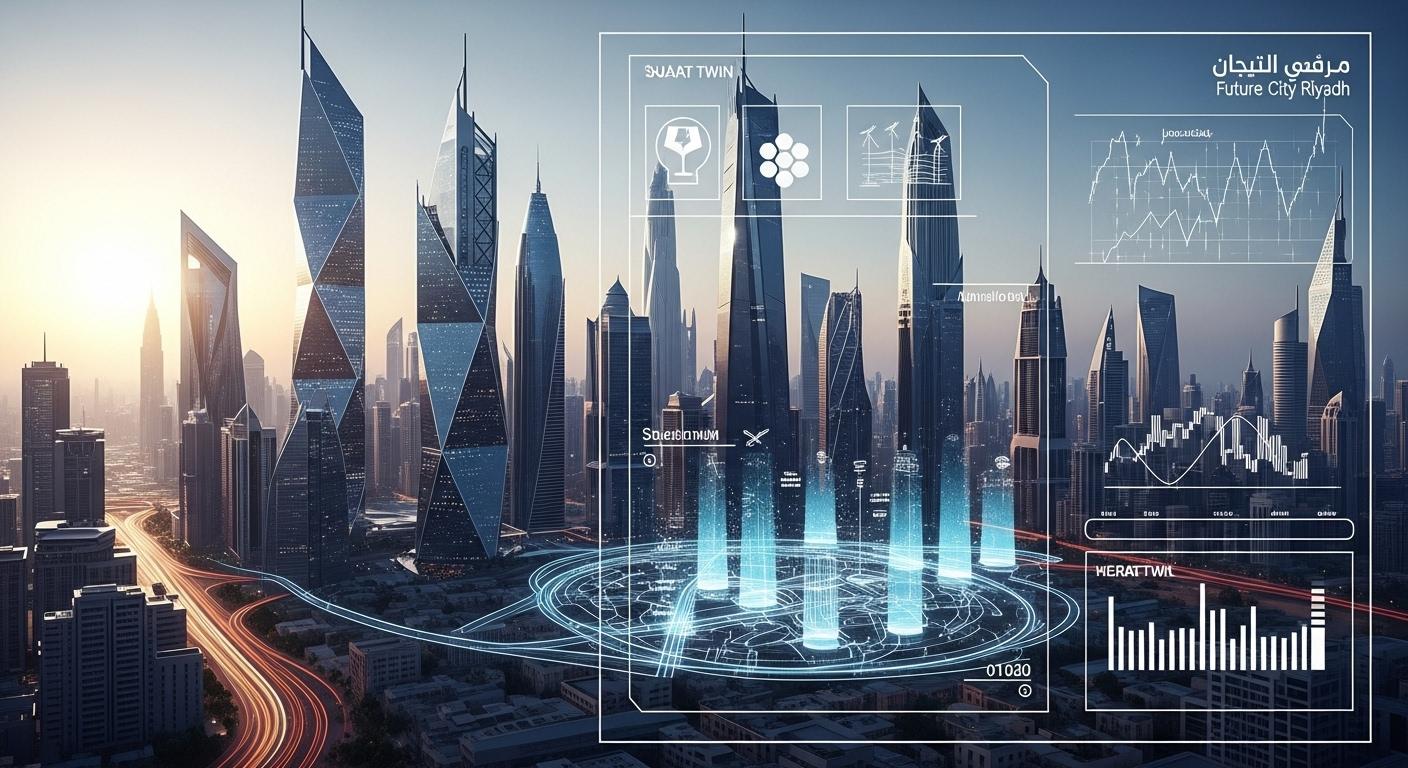
At the Cityscape Global 2025 event, Naver showcased its suite of digital twin, AI, and cloud computing technologies tailored for Saudi Arabia’s urban development sector. The company’s digital twin platforms, already operational in Mecca, Medina, and Jeddah, represent a cornerstone of this effort. Covering over 6,800 square kilometres and encompassing detailed 3D models of more than 920,000 buildings, these platforms deliver high-resolution data and real-time analytics to support urban planning, disaster preparedness, and infrastructure management. These achievements align with Saudi Arabia’s long-term goal of establishing itself as a global leader in the smart city arena. Naver also plans to extend its digital twin initiatives to Riyadh and other major cities such as Dammam, advancing sophisticated simulations for enhanced city governance and resource optimisation.
A key highlight of Naver’s evolving Saudi strategy is the exploration of stablecoin technology and digital finance integration. During meetings between Naver’s Chairman Lee Hae-jin and Majed Al-Hogail, Saudi Minister of Municipal and Rural Affairs and Housing, discussions included potential applications for stablecoins in real estate transactions, cross-border payments, and smart city financial systems. This interest is facilitated by a planned stock swap between Naver Financial and Dunamu, South Korea’s largest crypto exchange operator, bringing blockchain expertise to the collaboration. Additionally, real estate tokenization was discussed as a means to unlock new liquidity mechanisms for large-scale urban development projects in Saudi Arabia.

However, Naver’s stablecoin ambitions face significant regulatory challenges. Despite Saudi Arabia’s growing interest in blockchain innovation, evidenced by pilot central bank digital currency (CBDC) initiatives such as Project Aber, the Kingdom maintains a strict prohibition on public cryptocurrency use. Government and Saudi Central Bank officials have consistently reaffirmed the illegality of unlicensed crypto activities since 2018. Consequently, any introduction of stablecoin or tokenized real estate products may require special governmental permissions, exemptions, or licenses tied to Special Economic Zones (SEZs), complicating Naver’s fintech pursuits.
On the AI infrastructure front, Naver is positioned to play a crucial role in Saudi Arabia’s expansive investments in data centres and smart city technologies. The Kingdom is actively developing a network of hyperscale data centres with an $18 billion budget, aiming to power AI-driven urban systems spanning smart mobility, digital healthcare, and autonomous governance. These initiatives benefit from incentives offered within cloud computing SEZs, including significantly reduced corporate tax rates. Naver’s long-term strategy envisions exporting its Korean-developed digital ecosystems overseas, with Saudi Arabia’s urban megaprojects providing an ideal environment for such deployment.
Naver also strengthens its local foothold through joint ventures, notably with Saudi Arabia’s National Housing Company. This partnership focuses on scaling urban analytics, smart housing solutions, and broader AI-enabled urban services such as autonomous operation systems and digital identity management. The memorandum of understanding (MOU) extended to NEOM City, the ambitious smart city project aiming to become the world’s first ‘Cognitive City’, seeks to integrate Naver’s AI, robotics, and cloud technologies into futuristic public services, including a ‘super app’ designed to enhance citizen engagement.
Furthermore, Naver has committed to co-developing an Arabic language-based large language model (LLM) with Saudi Arabia’s AI agency, a move that aligns with the Kingdom’s broader AI competency-building agenda. This collaboration spans AI, cloud computing, data centers, and robotics, contributing to Saudi Arabia’s vision of becoming a technology-driven economy by 2030.
Overall, Naver’s multi-faceted collaboration in Saudi Arabia illustrates a comprehensive approach to urban digitisation that melds AI infrastructure with innovative fintech ambitions, despite the regulatory complexities surrounding cryptocurrency. This evolving partnership not only signifies the export of Korean technological prowess but also highlights the transformative potential of public-private cooperation in building next-generation smart cities.
📌 Reference Map:
- [1] (CoinCentral) – Paragraphs 1, 3, 4, 5, 6, 7
- [2] (Korea Times) – Paragraph 2
- [3] (Korea Times) – Paragraph 2
- [4] (Maeil Business Newspaper) – Paragraph 2
- [5] (Asia Economy) – Paragraph 6
- [6] (Maeil Business Newspaper) – Paragraph 6
- [7] (Korea Times) – Paragraph 7
Source: Noah Wire Services
Noah Fact Check Pro
The draft above was created using the information available at the time the story first
emerged. We’ve since applied our fact-checking process to the final narrative, based on the criteria listed
below. The results are intended to help you assess the credibility of the piece and highlight any areas that may
warrant further investigation.
Freshness check
Score:
7
Notes:
The narrative presents recent developments, including Naver’s participation in Cityscape Global 2025 and the completion of digital twin platforms for Mecca, Medina, and Jeddah in June 2025. However, similar information has been reported in various outlets, such as The Korea Times and Maeil Business Newspaper, indicating that the content may be recycled. ([koreatimes.co.kr](https://www.koreatimes.co.kr/business/companies/20251118/naver-showcases-digital-twin-ai-tech-at-saudi-urban-development-exhibition?utm_source=openai)) Additionally, the article references a press release from CoinCentral, which typically warrants a high freshness score.
Quotes check
Score:
6
Notes:
The article includes direct quotes attributed to Naver’s Chairman Lee Hae-jin and Saudi Minister Majed Al-Hogail. However, these quotes do not appear in the provided search results, suggesting they may be original or exclusive. Without external verification, the authenticity of these quotes cannot be confirmed.
Source reliability
Score:
5
Notes:
The narrative originates from CoinCentral, a cryptocurrency-focused publication. While it provides detailed information, the outlet’s focus on cryptocurrency may not align with the broader technological developments discussed, potentially affecting the reliability of the information presented.
Plausability check
Score:
8
Notes:
The claims about Naver’s expansion into Saudi Arabia’s digital transformation, including AI, smart city technologies, and stablecoin integration, are plausible and align with Naver’s known initiatives in the region. However, the article’s emphasis on stablecoin technology in a country with strict cryptocurrency regulations raises questions about the feasibility of such plans. The lack of supporting details from other reputable outlets further diminishes the narrative’s credibility.
Overall assessment
Verdict (FAIL, OPEN, PASS): FAIL
Confidence (LOW, MEDIUM, HIGH): MEDIUM
Summary:
The narrative presents plausible developments regarding Naver’s activities in Saudi Arabia but relies heavily on recycled content and unverified quotes from a source with questionable reliability. The lack of supporting details from other reputable outlets and the emphasis on stablecoin technology in a country with strict cryptocurrency regulations further diminish the narrative’s credibility.

