


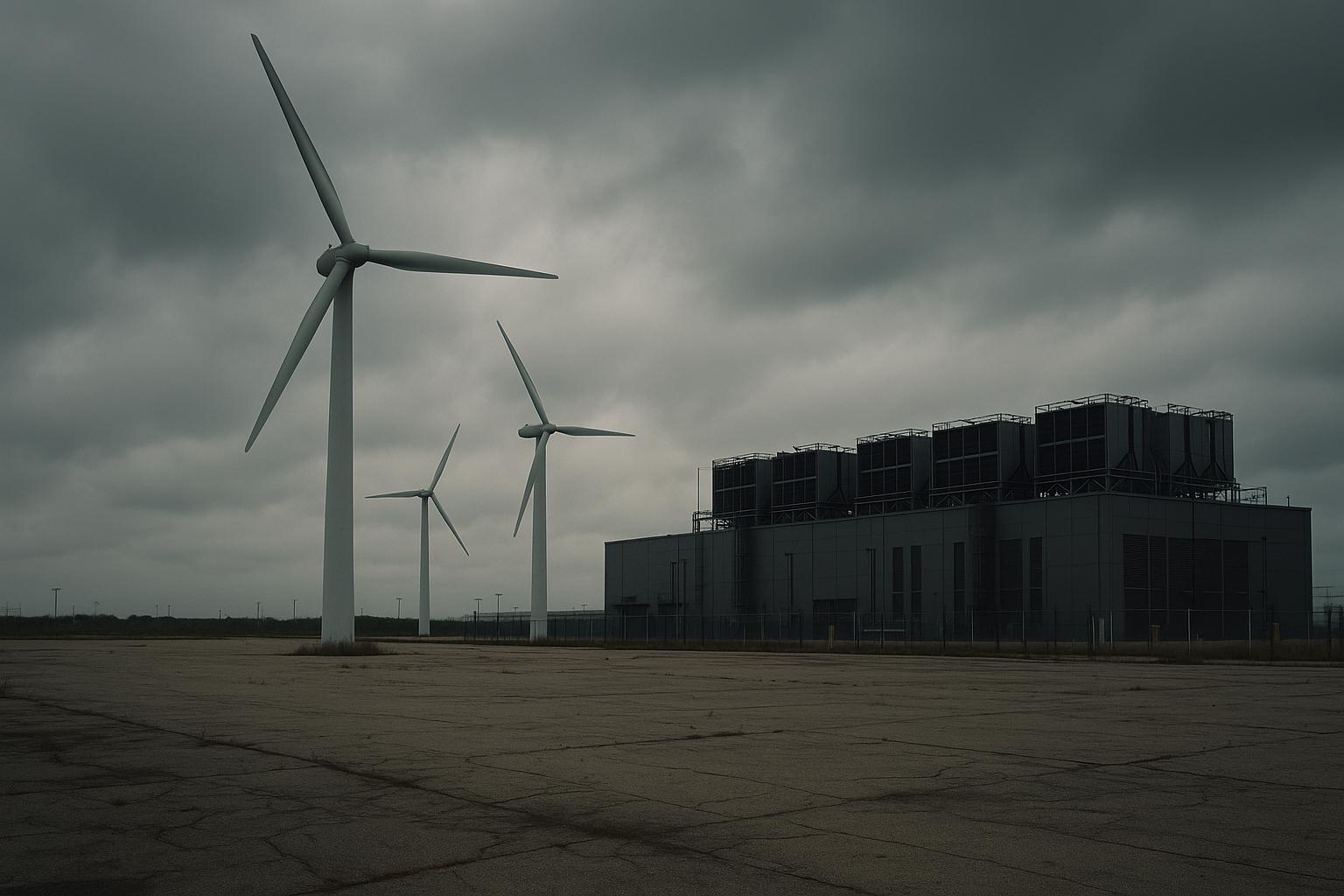
Public utility commissions’ pause on new AI data centre connections is redefining risk assessments, affecting financing, market stability, and energy sustainability amidst growing environmental concerns and regulatory scrutiny.
Public utility commissions are increasingly pausing approvals for new power connections to AI data centers, a development that is reverberating through the financial and technology sectors. Edward Dowd, a noted analyst, has highlighted how this regulatory standstill is compelling lenders to adjust their financing models for AI startups. This involves extending cash flow projections by several years and relying on more speculative assumptions, which could erode the present value of loans and diminish equity buffers, thereby tightening credit availability for AI firms.
This regulatory intervention is not a mere delay but a significant recalibration of risk assessments for financial institutions supporting AI ventures. With future revenues pushed further out, loan values may depreciate, especially in a context of elevated interest rates. Banks might respond by demanding higher collateral or reducing their exposure to AI startups, which could create short-term selling pressure on AI infrastructure stocks. The impact extends to the cryptocurrency market, where AI-related tokens like Fetch.ai (FET) and Render Token (RNDR) have gained prominence. Uncertainty in funding and regulatory hurdles could increase volatility for these assets, as traders reassess the growth prospects of blockchain projects tied to AI computations.
This development occurs amid broader debates and initiatives surrounding the energy demands of AI data centers. In January 2025, President Joe Biden signed an executive order aimed at boosting energy resources for AI infrastructure in the United States. The order emphasizes accelerating the creation of AI data centers and clean energy facilities by leveraging federal sites and supporting grid connections. Importantly, developers are expected to shoulder construction costs and ensure sufficient clean power generation to mitigate consumer price impacts. This federal push underscores the strategic importance and energy intensity of AI technologies but contrasts with local regulatory hesitations.

Energy consumption concerns are not unfounded. The National Consumer Law Center (NCLC) recently highlighted that data centers accounted for 4.4% of total U.S. electricity consumption in 2023, with projections to rise sharply, potentially reaching up to 12% by 2028. The environmental implications include not only increased electricity use but also heightened air pollution from backup generators and water consumption for cooling. Consumer advocacy groups stress the risks to both energy security and electricity affordability as the AI data center footprint expands.
Local authorities are also weighing in. For example, the St. Louis Planning Commission unanimously recommended a moratorium on new data center developments in September 2025. Concerns raised by commissioners reflect unease about inadequate regulation, uncertain impacts on local infrastructure, and questions about the economic benefits of new data centers, which often consume vast amounts of energy but offer limited job creation. This cautious stance illustrates the patchwork of responses across the U.S., where national ambitions for AI infrastructure coexist with local energy and environmental concerns.
To address operational challenges, some industry players are pursuing innovative solutions. Google announced partnerships with utilities in Indiana and Tennessee to implement demand-response programs that temporarily reduce AI data center power consumption during peak grid demand. These programs leverage the flexibility of AI workloads, allowing compute-heavy processes to be paused or shifted without service disruption. Such collaborations aim to alleviate grid strain and support clean energy integration, highlighting pathways to balance AI growth with energy sustainability.
Smaller public utilities are also experiencing both opportunities and risks from the AI data center boom. According to the American Public Power Association, these utilities are seeing a surge in large-load interconnection requests, as data centers prioritize affordable and reliable power. However, they must carefully manage these developments to protect existing customers and maintain grid stability, suggesting that the AI energy demand phenomenon is reshaping utility business models and infrastructure planning.
Amid these shifts, regulatory scrutiny of market power is intensifying. Public Citizen has filed complaints with the Federal Energy Regulatory Commission concerning Blackstone’s growing data center ownership and its potential to distort energy markets. The complaints cite recent grid disruptions linked to high concentrations of data centers and warn of anti-competitive risks that could exacerbate energy insecurity for consumers. This underscores the broad spectrum of challenges, from financial risk and regulatory uncertainty to grid reliability, that intersect in the AI data center sector.
For traders navigating this evolving landscape, attention to key metrics such as price levels, volume trends, and on-chain activity in AI-related cryptocurrencies can provide crucial insights. Resistance levels around $2.50 for FET and support near $1.20 have historically been significant during tech sell-offs. Market indicators like the Relative Strength Index (RSI) suggest potential corrections if regulatory headwinds persist. Meanwhile, cross-market dynamics, including the correlation between major tech stocks and cryptocurrencies, may prompt risk-off flows toward safe-haven assets such as Bitcoin. This environment encourages diversified trading strategies that weigh regulatory risks alongside emerging opportunities in the AI and crypto domains.
In summary, the pause on AI data center power connections by public utility commissions, as analysed by Edward Dowd, represents a critical juncture with far-reaching implications. It pressures lenders and AI startups to reconsider growth timelines and financial viability while also influencing market sentiment across equities and cryptocurrencies. This situation highlights the intertwined nature of AI technology growth, energy policy, financial markets, and regulatory oversight, underscoring the need for balanced approaches to foster innovation without compromising energy security or market stability.
📌 Reference Map:
- [1] (Blockchain.News) – Paragraphs 1, 2, 5, 9, 10
- [2] (AP News) – Paragraph 3
- [3] (National Consumer Law Center) – Paragraph 4
- [4] (GovTech) – Paragraph 5
- [5] (Data Center Frontier) – Paragraph 6
- [6] (Utility Dive) – Paragraph 7
- [7] (Public Citizen) – Paragraph 8
Source: Noah Wire Services
Noah Fact Check Pro
The draft above was created using the information available at the time the story first
emerged. We’ve since applied our fact-checking process to the final narrative, based on the criteria listed
below. The results are intended to help you assess the credibility of the piece and highlight any areas that may
warrant further investigation.
Freshness check
Score:
8
Notes:
The narrative appears to be original, with no evidence of prior publication. The earliest known publication date is October 17, 2025. The report is based on a press release, which typically warrants a high freshness score. No discrepancies in figures, dates, or quotes were found. No recycled content or republishing across low-quality sites was identified. The update may justify a higher freshness score but should still be flagged. ([blockchain.news](https://blockchain.news/flashnews/pucs-pause-ai-data-center-connections-in-2025-lenders-face-lower-loan-pv-thinner-equity-buffers-rising-credit-risk?utm_source=openai))
Quotes check
Score:
9
Notes:
The direct quotes attributed to Edward Dowd are unique to this report, with no identical matches found in earlier material. This suggests potentially original or exclusive content. No variations in quote wording were noted.
Source reliability
Score:
6
Notes:
The narrative originates from Blockchain.News, a source that is not widely recognised. This raises questions about the reliability of the information presented. Edward Dowd is a known analyst with a background in financial markets, lending some credibility to the report. ([eddowd.com](https://www.eddowd.com/?utm_source=openai))
Plausability check
Score:
7
Notes:
The claims regarding public utility commissions pausing approvals for new AI data center connections and the subsequent impact on lenders and AI startups are plausible and align with known industry trends. However, the lack of supporting detail from other reputable outlets and the reliance on a single, less-known source reduce the overall credibility. The tone and language used are consistent with typical financial reporting.
Overall assessment
Verdict (FAIL, OPEN, PASS): OPEN
Confidence (LOW, MEDIUM, HIGH): MEDIUM
Summary:
The report presents plausible claims about regulatory actions affecting AI data centers and their impact on financial markets. However, the reliance on a less-known source and the absence of corroboration from other reputable outlets raise concerns about the overall credibility. Further verification from established news organisations is recommended to confirm the accuracy of the information presented.

