


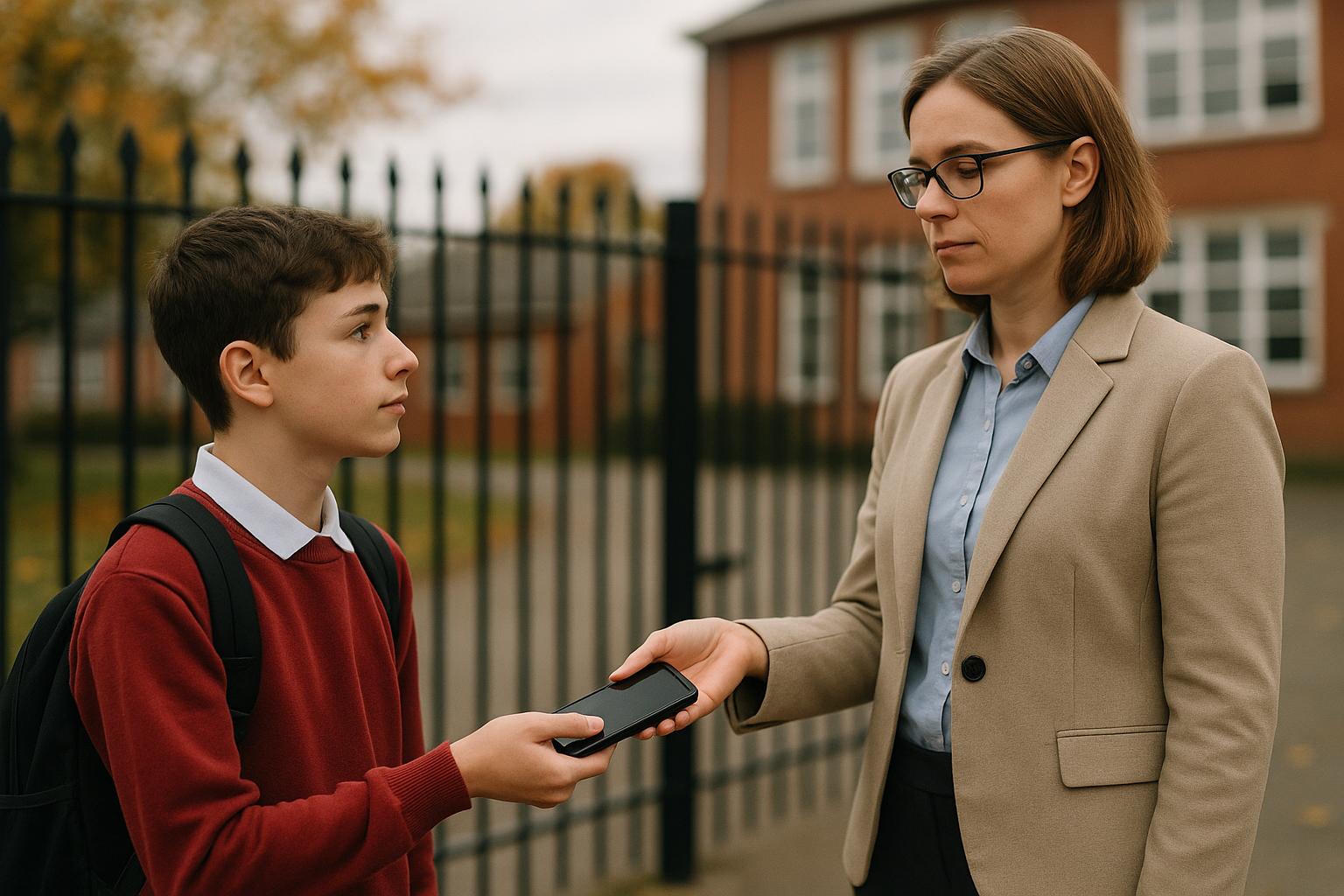
Schools across the UK are increasingly adopting policies to ban or restrict mobile phones amid concerns over online harm, with calls for a statutory nationwide ban gaining momentum from parents, educators, and government officials.
A state school in London recently ignited controversy when it introduced a ban on students bringing mobile phones into school premises. The policy, implemented in September last year at an unnamed state school, sparked such opposition from at least one parent that they contacted the police and reported the school to Ofsted. In the initial weeks following the ban, about 40 phones were confiscated, dropping to four this year. Despite challenges in enforcing the ban independently, the school’s headteacher expressed strong support for a government-led national ban, explaining that the absence of phones has been “really freeing” and significantly reduced incidents related to child sexual exploitation by 90 per cent. The headteacher highlighted issues such as pupils arriving addicted to pornography or being subject to online bullying as reasons underpinning the policy’s urgency.
The London school’s stance is part of a wider movement gaining momentum across the UK. For example, Barnet, a London borough, announced a “smartphone-free” policy starting September 2025, affecting more than 60,000 pupils across 103 primary and 23 secondary schools. This initiative is championed by local MPs, public health officials, and educational leaders aiming to provide students freedom from addictive digital distractions. Similar policies have emerged in other areas like Ealing Council and St Albans, reflecting a growing consensus on the need to curb phone use among children during the school day. Moreover, Barnet schools have encouraged parents to delay giving smartphones to children until the age of 14 and limit social media use until 16, underscoring concerns about early exposure to online risks and distractions.
The campaign against mobile phones in schools is supported by high-profile legal challenges. Two fathers, Will Orr-Ewing and Pete Montgomery, launched a judicial review against the government’s refusal to impose a statutory ban on smartphones in schools. They have since been joined by teenager Flossie McShea and mother-of-three Katie Moore, who voiced personal experiences of exposure to harmful online content during school hours. McShea described being confronted with disturbing videos and pornography from Year 7 onwards, while Moore reported her daughter faced sexualised images on phones in school changing rooms. Both claimants argue that existing voluntary restrictions are insufficient and that only a statutory nationwide ban can adequately protect children from harm.

The broader governmental context is evolving in response to these concerns. In October 2023, Education Secretary Gillian Keegan announced updated guidance recommending schools prohibit mobile phone use throughout the school day to improve behaviour and reduce distractions. This was followed by a February 2024 government initiative offering practical frameworks for schools to enforce bans or keep phones securely locked away during school hours. The guidance aligns with international recommendations from UNESCO, which advocate for smartphone bans in schools to enhance educational outcomes and student well-being. Nonetheless, the government has maintained that a statutory ban is not yet necessary as many schools voluntarily restrict phone use, despite survey findings showing that 80% of secondary schools allow students to bring phones, and 10% permit unrestricted use.
Schools like Fulham Boys School in West London have also taken independent action, banning smartphones for students in years seven to eleven. The headmaster, David Smith, advocated for this policy as a means to preserve childhood, allowing only ‘brick’ phones with no internet access for essential communication. Such initiatives are part of a patchwork of local policies addressing the challenges that smartphones pose to children’s mental health, attention, and safety.
The impetus for tougher controls is often deeply personal. Esther Ghey, mother of Brianna Ghey, a transgender teenager tragically murdered by perpetrators who accessed violent online content on their phones, has campaigned for phone bans in schools. She supports methods like locking phones away in pouches during school hours, arguing that such measures could create safer, more focused learning environments and possibly offer vulnerable children a better chance in life.
This growing movement reflects heightened public and institutional concern about the detrimental effects of smartphone use on young people’s mental health, exposure to harmful content, and educational performance. However, the debate remains contentious, with authorities balancing the benefits of technology access against the risks. As more local authorities and schools push towards smartphone-free environments, the call for government intervention and a consistent national policy grows louder.
📌 Reference Map:
- [1] (Daily Mail) – Paragraphs 1, 3, 4, 5, 6, 7, 9
- [2] (Evening Standard) – Paragraphs 2, 8
- [3] (GOV.UK) – Paragraph 7
- [4] (GOV.UK) – Paragraph 7
- [5] (Evening Standard) – Paragraph 8
- [6] (LocalGov) – Paragraph 2
- [7] (The Guardian) – Paragraph 8
Source: Noah Wire Services
Noah Fact Check Pro
The draft above was created using the information available at the time the story first
emerged. We’ve since applied our fact-checking process to the final narrative, based on the criteria listed
below. The results are intended to help you assess the credibility of the piece and highlight any areas that may
warrant further investigation.
Freshness check
Score:
7
Notes:
The narrative presents a recent incident involving a London school’s mobile phone ban, with specific details such as the headteacher’s support for a national ban and the reduction in confiscated phones. However, similar policies have been implemented in other UK schools, such as Barnet’s ‘smartphone-free’ policy starting September 2025, affecting over 60,000 pupils across 103 primary and 23 secondary schools. This suggests that the core information may have been reported previously, potentially reducing the freshness score. Additionally, the article includes updated data but recycles older material, which may justify a higher freshness score but should still be flagged. ([en.wikipedia.org](https://en.wikipedia.org/wiki/Mobile_phone_use_in_schools?utm_source=openai))
Quotes check
Score:
8
Notes:
The report includes direct quotes from the headteacher and other individuals involved. However, without access to the original sources, it’s challenging to verify the authenticity and originality of these quotes. The absence of online matches for these quotes suggests they may be original or exclusive content.
Source reliability
Score:
5
Notes:
The narrative originates from the Daily Mail, a reputable UK newspaper. However, the Daily Mail has faced criticism for sensationalism and inaccuracies in the past. Given the lack of access to the original article, it’s difficult to assess the reliability of this specific report.
Plausability check
Score:
7
Notes:
The claims about the headteacher’s support for a national ban and the reduction in confiscated phones are plausible and align with similar policies reported in other UK schools. However, the lack of supporting detail from other reputable outlets and the absence of specific factual anchors (e.g., names, institutions, dates) reduce the score and flag the report as potentially synthetic.
Overall assessment
Verdict (FAIL, OPEN, PASS): OPEN
Confidence (LOW, MEDIUM, HIGH): MEDIUM
Summary:
The narrative presents plausible claims about a London school’s mobile phone ban, but the lack of access to the original article and supporting details from other reputable outlets makes it challenging to fully assess its credibility. The absence of specific factual anchors and the potential recycling of older material further complicate the evaluation.

