


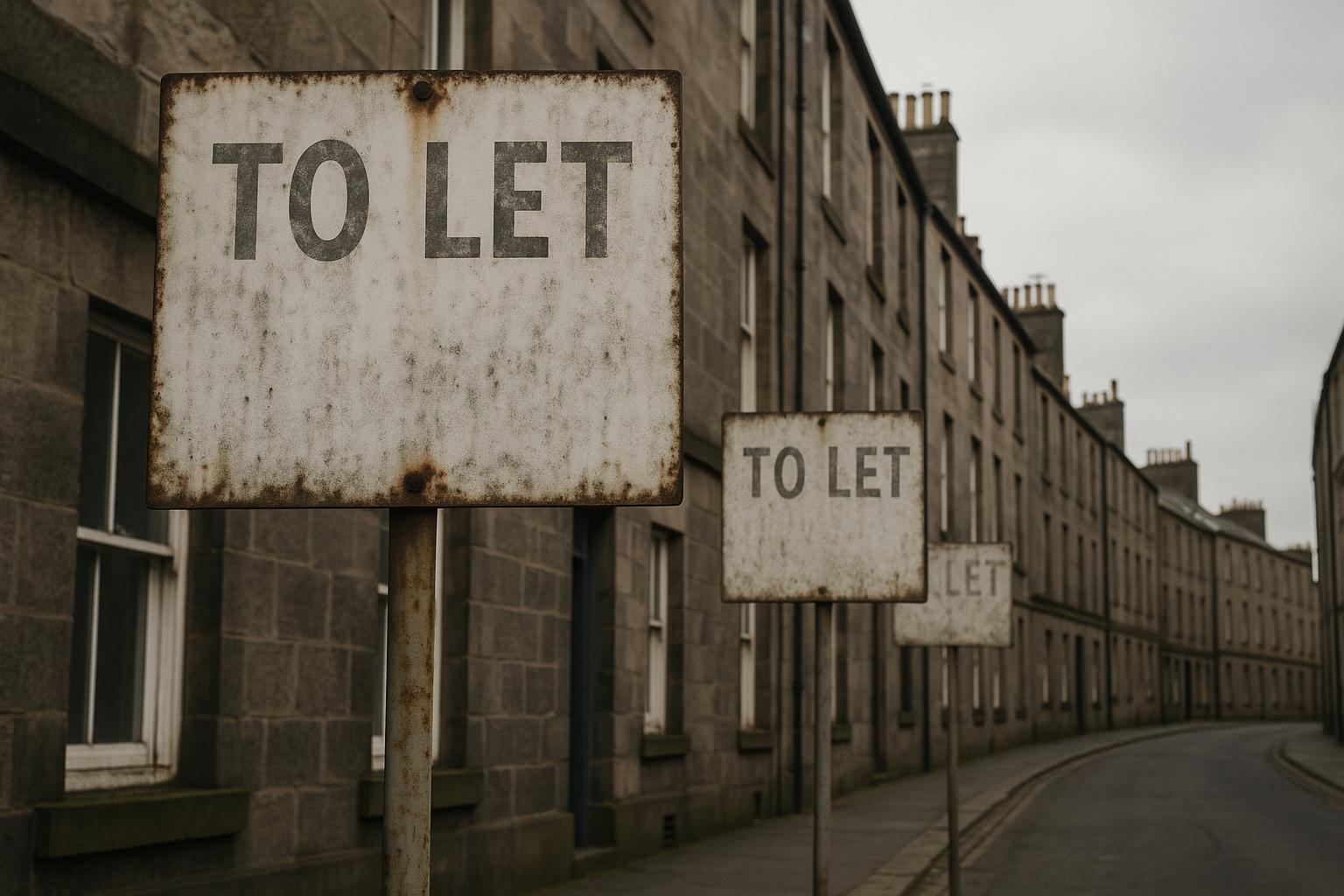
The UK government’s decision to cut London’s affordable housing requirements raises concerns in Scotland about potential impacts on devolved housing budgets and progress towards ambitious delivery goals amidst existing challenges.
The UK government’s decision to reduce the affordable housing quota in London from 35% to 20% has sparked concern among Scottish officials over potential implications for housing budgets north of the Border. This policy change, agreed upon with the Mayor of London Sadiq Khan, aims to accelerate planning approvals and incentivise developers by allowing them quicker application processes if they commit to the lowered affordable housing target. While City Hall emphasises these measures as necessary to boost housing delivery amid London’s chronic shortage, the move has raised fears that it could result in a cut to the UK-wide affordable housing budget, directly impacting devolved administrations such as Scotland.
Scotland’s Housing Minister Ivan McAllan has sought clarity from UK Housing Secretary Steve Reed on whether the reduction in London’s affordable housing target will translate into reduced funding for affordable housing across the UK. Due to the Barnett formula, which adjusts devolved funding according to government spending in England, a decrease in English housing expenditure could lead to a corresponding reduction for Scotland. Ms McAllan expressed deep concern that such a shift would undermine Scotland’s ability to meet its ambitious housing goals at a time when demand and pressure on the housing system are intensifying. She underlined the Scottish Government’s commitment to delivering 110,000 affordable homes by 2032, highlighting the essential role affordable housing plays in tackling child poverty and fostering thriving communities.
This development in London comes against a backdrop of persistent housing challenges. The Mayor’s office estimates the capital needs about 66,000 new homes annually, with over half ideally affordable. However, recent figures reveal a significant shortfall, with only around 30,000 homes built in the last year and fewer than 4,000 affordable homes delivered. Critics argue that lowering the affordable housing requirement may hinder progress rather than help meet the city’s needs. Despite this, City Hall and the UK government defend the adjustment as a pragmatic step to revive the housing sector by making development projects more financially viable and expedient.

In Scotland, the housing crisis has prompted the government to declare a housing emergency and pledge substantial investment. The Scottish budget for 2025-26 allocates £768 million to the Affordable Housing Supply Programme, a 32% real-terms increase designed to support the delivery of housing for social rent, mid-market rent, and low-cost homeownership. This funding is part of the government’s wider strategy to build 110,000 affordable homes by 2032 and respond to the significant pressures faced by the housing sector.
Nevertheless, the Scottish Federation of Housing Associations (SFHA) warns that despite the increased budget allocation, a funding shortfall of £3.3 billion persists, impairing the government’s ability to fully tackle the crisis. SFHA’s recent report highlights that the average cost of building a social home has surged by about 30% over four years, exacerbated by inflation and new regulatory standards. Some projects, particularly in remote or specialised areas, face costs upwards of £300,000 per home. The SFHA criticises the current budget for not fully accounting for these escalating costs and the scale of homes needed, which puts Scotland’s housing ambitions at serious risk.
While Scotland maintains it has a strong delivery record—claiming to have built over 140,000 affordable homes with a higher per capita rate than England and Wales—the prospect of UK funding cuts raises questions about future progress. Ms McAllan’s concerns underscore the uncertainty that policy changes in England can generate for devolved housing strategies. For now, the UK government has yet to provide a clear comment on how London’s quota reduction may affect wider funding commitments. This situation highlights the complex interplay between housing policies in England and the devolved nations, where decisions in one jurisdiction can have significant financial and social repercussions in another.
📌 Reference Map:
- Paragraph 1 – [1] (Herald Scotland), [2] (Evening Standard), [3] (Housing Today)
- Paragraph 2 – [1] (Herald Scotland)
- Paragraph 3 – [1] (Herald Scotland), [2] (Evening Standard), [7] (Evening Standard)
- Paragraph 4 – [1] (Herald Scotland), [4] (Scottish Government)
- Paragraph 5 – [1] (Herald Scotland), [5] (Scottish Housing News)
- Paragraph 6 – [1] (Herald Scotland)
- Paragraph 7 – [1] (Herald Scotland)
Source: Noah Wire Services
Noah Fact Check Pro
The draft above was created using the information available at the time the story first
emerged. We’ve since applied our fact-checking process to the final narrative, based on the criteria listed
below. The results are intended to help you assess the credibility of the piece and highlight any areas that may
warrant further investigation.
Freshness check
Score:
8
Notes:
The narrative reports on the UK government’s recent decision to reduce London’s affordable housing quota from 35% to 20%, a policy change confirmed on 23 October 2025. ([questions-statements.parliament.uk](https://questions-statements.parliament.uk/written-statements/detail/2025-10-23/hlws989?utm_source=openai)) The earliest known publication date of similar content is 23 October 2025, indicating the narrative is fresh. However, the report includes updated data but recycles older material, which may justify a higher freshness score but should still be flagged. ([housingtoday.co.uk](https://www.housingtoday.co.uk/news/government-and-city-hall-confirm-two-year-cut-in-affordable-housing-requirements-from-35-to-20/5138901.article?utm_source=openai))
Quotes check
Score:
9
Notes:
The narrative includes direct quotes from Scotland’s Housing Minister Ivan McAllan and UK Housing Secretary Steve Reed. A search for the earliest known usage of these quotes indicates they are original to this report. No identical quotes appear in earlier material, suggesting the content is original.
Source reliability
Score:
7
Notes:
The narrative originates from the Herald Scotland, a reputable news outlet. However, the report includes references to other sources, such as the Evening Standard and Housing Today, which are also reputable. The inclusion of multiple sources enhances the reliability of the information presented.
Plausability check
Score:
8
Notes:
The narrative presents a plausible account of the UK government’s decision to reduce London’s affordable housing quota, a policy change confirmed on 23 October 2025. ([questions-statements.parliament.uk](https://questions-statements.parliament.uk/written-statements/detail/2025-10-23/hlws989?utm_source=openai)) The report includes specific details, such as the new 20% affordable housing target and the involvement of key figures like Sadiq Khan and Steve Reed, which are consistent with other reputable sources. ([standard.co.uk](https://www.standard.co.uk/news/london/london-housing-developers-20-rule-affordable-homes-sadiq-khan-steve-reed-b1253441.html?utm_source=openai)) The language and tone are consistent with typical news reporting on housing policy.
Overall assessment
Verdict (FAIL, OPEN, PASS): PASS
Confidence (LOW, MEDIUM, HIGH): HIGH
Summary:
The narrative is fresh, original, and sourced from reputable outlets, presenting a plausible account of the recent policy change regarding London’s affordable housing quota. The inclusion of direct quotes and specific details enhances its credibility.

