




Agrihoods come in several sizes and price points, but all integrate agriculture and environmental conservation, along with convenience and an active lifestyle
Picture waking up each morning to open space and rolling fields, where the gentle rustling of corn stalks mingles with birdsong and the fragrance of ripening tomatoes drifts through your kitchen window. Herb Brown, a current resident of Serenbe in Chattahoochee Hills, Georgia in his seventies, and his wife purposely chose to live in a walkable community with its own organic farm, known as an agrihood (cleverly blending the words “agriculture” and “neighborhood”).
“Living here gives us easy access to fresh, delicious, nutritious fruits and vegetables,” says Brown. “Moreover, several local farms are becoming part of a food network within bike-riding distance that provide fresh eggs and a variety of meats as well as additional veggies and fruits. All in all, we’ve found our choice of living in an agrihood enhances our sense of happiness and well-being.”
Agrihoods are one type of residential community that has become an increasingly popular trend for retirement living. In fact, Zillow’s top outdoor searches include words like “barn,” “farm,” “horses,” and even “pond,” proving that #CountryCore is having a moment. If you’re looking to optimize your life at this stage by surrounding yourself with like-minded people who prioritize a healthy lifestyle, community engagement and nature connection, then agrihood living may be right for you.
“All in all, we’ve found our choice of living in an agrihood enhances our sense of happiness and well-being.”
What Is an Agrihood?
Also referred to as a conservation community, agri-village, or community-supported agriculture, an agrihood is a planned community with a working farm, says Daron “Farmer D” Joffe, founder and project lead of Farmer D consulting and a nationally recognized biodynamic farmer, designer, speaker, entrepreneur, educator, and author of “Citizen Farmers: The Biodynamic Way to Grow Healthy Food, Build Thriving Communities and Give Back to the Earth.” Instead of being built around a golf course, tennis courts or a pool, these housing developments are centered around a working farm, so residents (and potentially the larger surrounding community) have access to fresh, locally grown produce and a whole host of farm-based activities.
This idea has been around for thousands of years, as people have been living off the land in agrarian communities, and more recently through intentional communities like ecovillages or spiritual communes. But now most housing developments, especially in the suburbs, are so disconnected from farming and food, says Joffe.
The first officially named agrihood in the U.S., Prairie Crossing in Illinois, was built in the mid-1990s. Joffe’s company, along with other innovators in the real estate development space, continue to design communities centered around a farm, while also preserving precious land.
Agrihoods come in a variety of sizes, price points and flavors, but all integrate agriculture and environmental conservation, along with convenience and an active healthy lifestyle. Some farms have crops, livestock, orchards, community gardens and/or vineyards. Other amenities may include nature trails, bee hives, horse stables, a farm-to-table restaurant, a farmer’s market, swimming pools, tennis and pickleball courts, fitness center, wellness spa, classrooms and event space, and more. People may choose to be permanent or seasonal residents, living in communities ranging from 100 to thousands of homes.
Why Agrihoods are Gaining Traction
Planned, farm-centered neighborhoods are on the rise. “There’s no doubt that there’s a growing interest. I’m shocked at how many people reach out,” notes Joffe. It is estimated that there are now over 200 agrihoods across the United States, according to the Urban Land Institute, with more breaking ground in the coming months or years.
“I think there’s been this big explosion around really understanding how much we’ve toxified our environments.”
More people are waking up to decisions impacting their health and well-being, says Neal Collins, co-founder and CEO of Latitude, Development & Capital Market Consulting and host of The Regenerative Real Estate Podcast. “I think there’s been this big explosion around really understanding how much we’ve toxified our environments. We now know how to create amazing connected, mixed-use communities, so instead of having that golf course, let’s have a farm.” He believes that it’s not just about the agriculture; it’s actually about the urban planning, architectural integrity and amenities mixed in with the agriculture that make these communities so attractive.
While many people don’t necessarily want to be responsible for growing their own food, 73% of Americans consider access to fresh, healthy foods to be a top or high priority when deciding where to live, according to the Urban Land Institute. Other reasons include health professionals increasingly promoting the benefits of fresh, locally grown produce; the desire to preserve and connect with the land; and concerns over food security. As more individuals 50+ seek lifestyle options that reflect their values of sustainability, community and active living, the popularity of agrihoods for retirement is expected to rise.
Benefits and Special Features
Agrihoods represent a shift from traditional retirement communities, offering more vibrant, health-focused and socially engaging living environments. Here are some of the unique amenities found at agrihoods and the benefits they provide.
Connection to the Land and Fresh Food
The farm adds to the charm of agrihoods, offering a plethora of unique experiences and benefits. “You have a built-in local supply of fresh food, you know your farmer and you’re engaged in your farm,” says Joffe. This direct access to locally grown fruits and vegetables not only boosts nutrition but encourages a deep sense of place and purpose for residents.
“You have a built-in local supply of fresh food, you know your farmer and you’re engaged in your farm.”
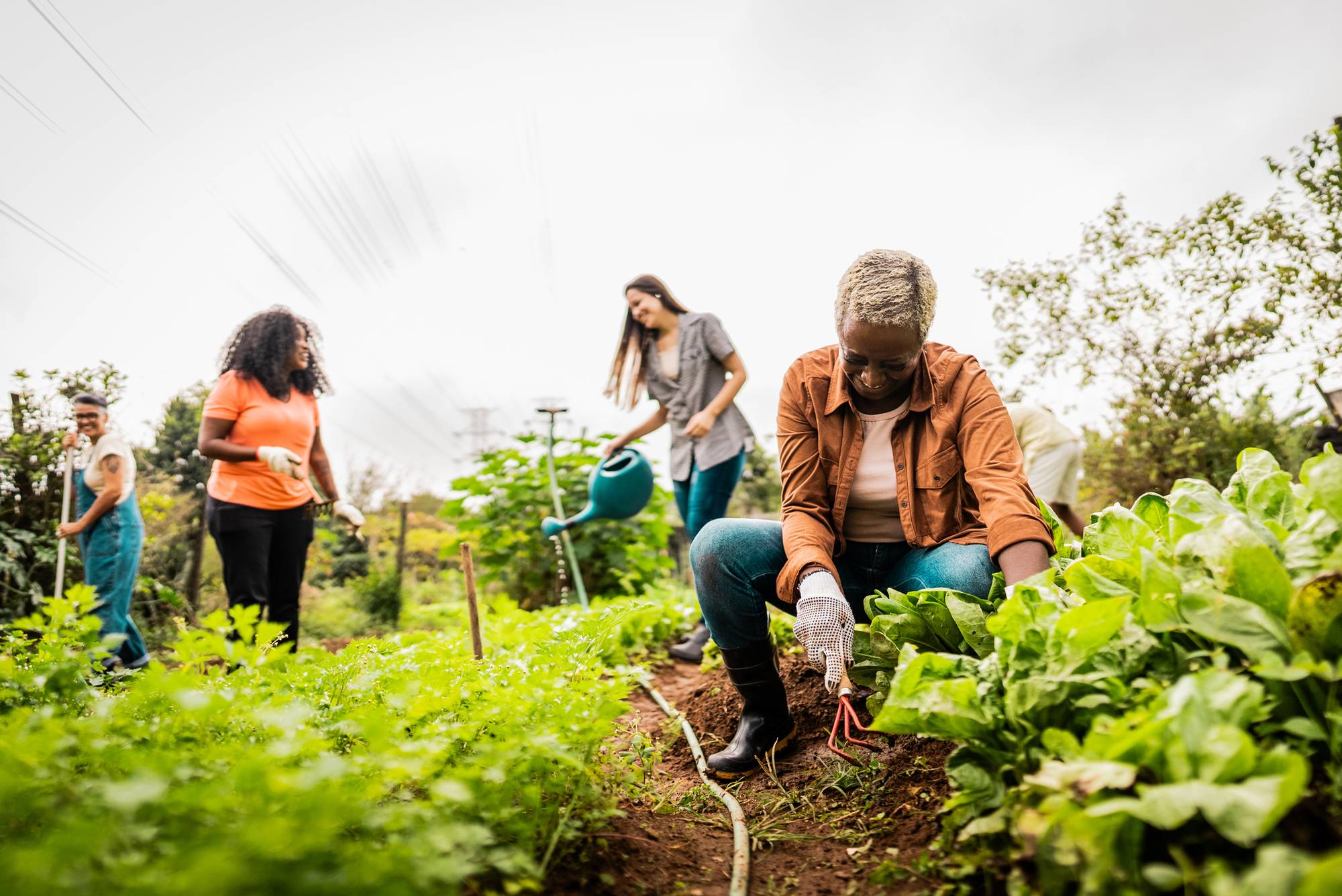
Then there’s the connection and sense of community around the farm. “It’s the environment and the learning that happens on the farm,” says Joffe. Gardening and farming are wonderful aging activities because they keep people outdoors and active. “You get great food and you know it’s good for your overall mental health and physical health. And it’s a nice social activity to do.”
“The farm and orchard program at Rancho Mission Viejo is an extension of our agricultural heritage and gives residents the opportunity to work alongside one another, which provides a sense of stewardship and appreciation for the environment,” says Amaya Genaro, vice president of community services at Rancho Mission Viejo (The Ranch), the largest master-planned community in Southern California and Orange County’s last working ranch that includes age-qualified Gavilán 55+ neighborhoods. Residents take part in workshops and volunteer on the farm under the guidance of a professional farm team. The community organizes u-pick days, produce stands, honeybee events, farm to table dinners and even set times to pick fruit from the trees lining the neighborhood streets.
“It is meditative and physical and a nice surprise when we get to dig our hands in the dirt and spend time in nature,” says Karen Winters, Rancho Mission Viejo 55+ resident and community farm volunteer. “I also enjoy taking home farm bags with fresh produce bearing the fruit of our labor.”
Active Outdoor Lifestyle
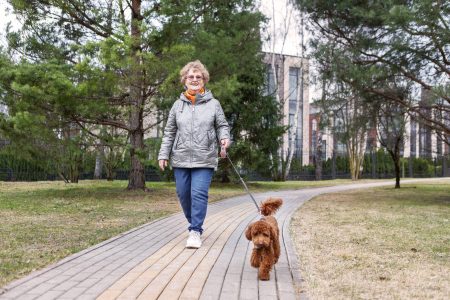
Agrihoods are often surrounded by conservation land, offering miles of trails for walking, biking and hiking along the natural habitat. Some may even have a lake or river to enjoy boating and fishing. In addition, there are all types of amenities to promote an active outdoor lifestyle, from pools to courts to stables. “It’s designed for you to be out in nature, not in your house,” notes Joffe. “You have a massive, shared backyard with trails, open space and a farm.”
At Rancho Mission Viejo, residents love the laid-back lifestyle and picturesque views. In a recent survey, 82% of residents said they agree or strongly agree that the community supports their wellbeing. “The land is our brand,” says Genaro. “Open space, nature trails, beauty and serenity come up as highly important with 88 to 95% satisfaction rates. That really tells us that the outdoor amenities are important.”
Community and Social Connection
The desire for social connection opportunities in communities is on the rise, according to AARP’s latest Home and Community Preferences Survey. Through shared activities centering around the farm like communal farming and harvest festivals, agrihoods create endless opportunities for social interaction.
“There’s a lot of spontaneous ‘grab a coffee with the neighbor on the front porch’ that doesn’t happen in a typical suburban environment.”
Not only does this make it fun to live in this type of community, but it shields retirees from feeling isolated as they age. “Connectivity is one of the core values, as social isolation makes you at a higher risk for dementia and depression, which are significant issues for older people,” says Ann Lindsay, MD, board president of Life Plan Humboldt in McKinleyville, California, a soon-to-be-built senior community for adults aged 62+ rooted in sustainability and innovation. “Community engagement like this is a protective factor.”
In addition to the farm, agrihoods typically include design features to encourage interaction such as shared spaces like gardens, parks and cafes; pedestrian-friendly streets; and walking paths. “People socialize in a real community context because it’s designed to support them interacting with each other on a day-to-day basis,” says Joffe. “The sense of community and the free-range nature of these places is off the charts. You have this combination of walkability, social cohesion and connectivity. There’s a lot of spontaneous ‘grab a coffee with the neighbor on the front porch’ that doesn’t happen in a typical suburban environment.”
Some agrihoods also integrate solar power, energy-efficient home features and sustainable water systems.
Commitment to Sustainability
Residents of agrihoods typically prioritize environmental values like organic farming, says Joffe. “It’s a biophilic community, so the idea is you are very connected to nature,” he says. The whole premise is based on designing a neighborhood that fits within the existing character of the land, has a low impact on the environment and preserves valuable farmland. Some agrihoods also integrate solar power, energy-efficient home features and sustainable water systems.
Another perk is all the opportunities for residents to take part in conservation and sustainability efforts through volunteering. There is a nature conservancy at Rancho Mission Viejo, for example, where many of the 55+ residents get involved. “It offers astronomy nights, nature hikes and ways to volunteer like clearing the trails,” says Genaro. “It goes with our mantra: take care of the land and the land will take care of you. That becomes a connection not only to the land, but then to the people in the community.”
Convenient Living
Finally, many agrihoods are designed as walkable communities with retail and other facilities built into the neighborhood. They help reduce food miles since food is grown on-site and the village concept is key since it reduces sprawl and prioritizes conservation, says Joffe.
Life Plan Humboldt, for example, is being built right next to the town center so residents can easily walk to stores, doctors, etc. There will be mixed use development, including a farmer’s market, natural food store, senior center, library, parks, gym and swimming pool, says Lindsay. Some of these communities also provide shuttle bus services so residents can leave their cars behind and easily attend off-site events together.
Read the full article here